At the conclusion of day 4, I ask myself where days 1 – 3 went. (updated through Day 3 on Thursday, 4/17)
For anyone with the slightest inclination toward rowing, Jim Dietz’s and Mark Wilson’s AARC is an experience not to be missed wherever it may be held. With Sibenik (pronounced “shibenik”) as a base camp, we have spent half of each day practicing, reviewing videos, and taking about the finer points of correct rowing technique and why they matter. The other half of the day we have explored the wonders of a locale rich in European history dating to the early Middle Ages.
DAY 1 (4/13): From Split to Shibenik and an introduction to rowing camp
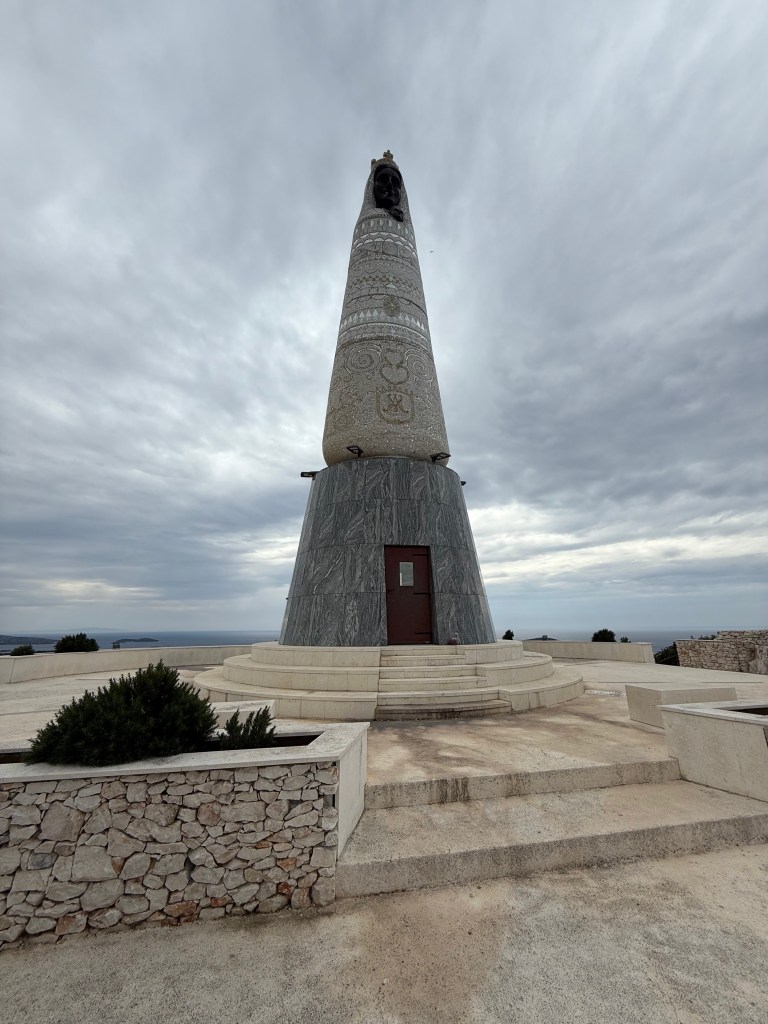
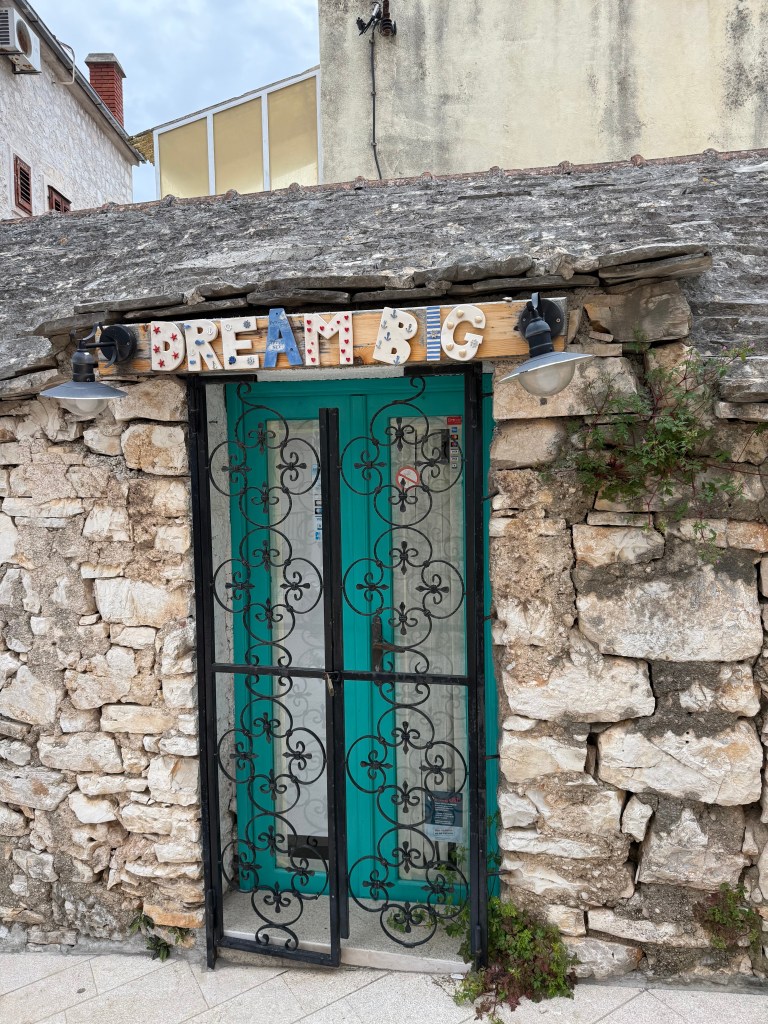
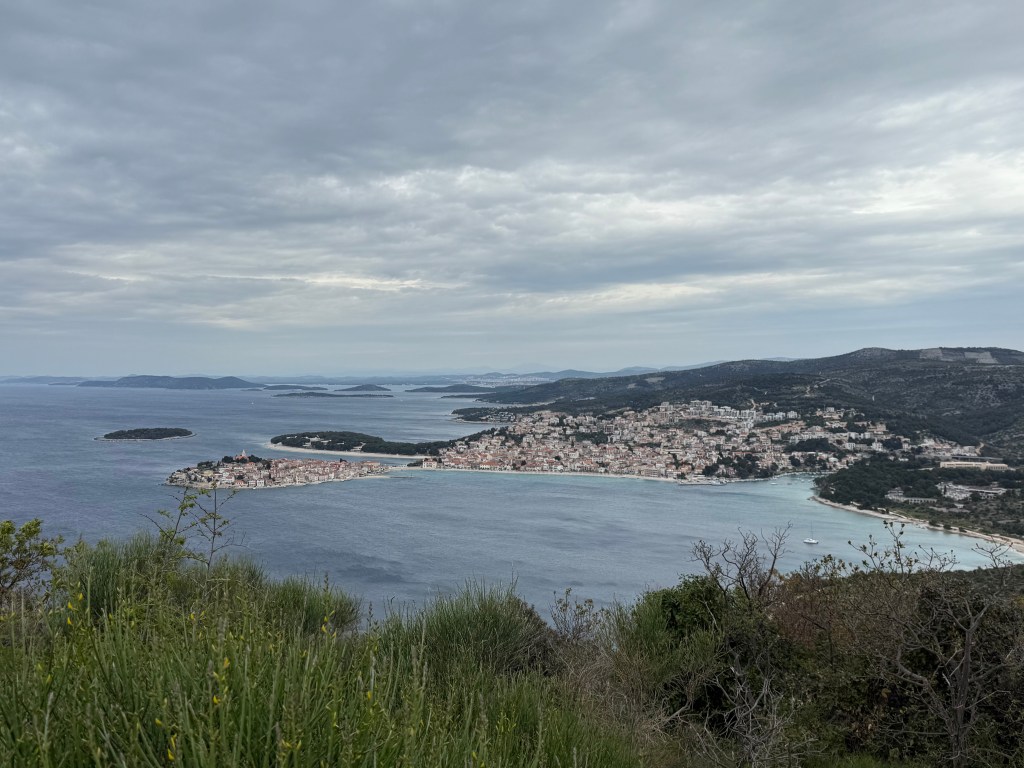
Left: Madonna and Child overlooks the village of Primosten. It’s a sister monument to one 80 miles away in Livorno Italy. Middle: (hearkening of Bainbridge Island Rowing’s decades-long fundraising campaign) a small business in the village of Primosten. Right: I bird’s eye view of Primosten from the monument.
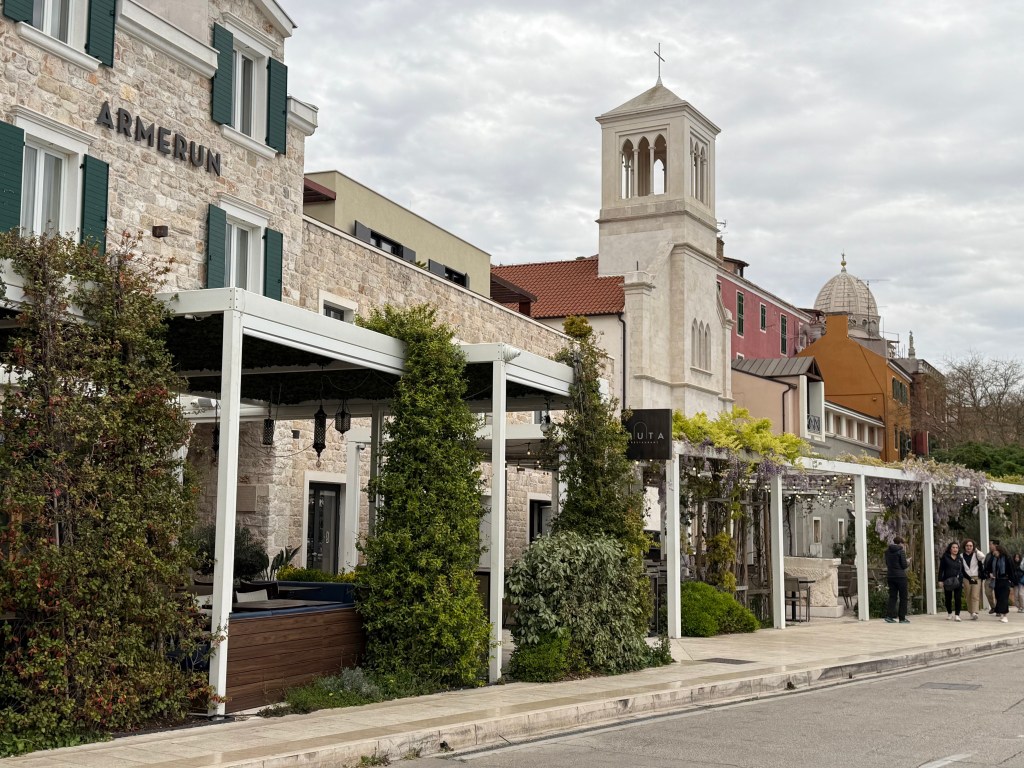
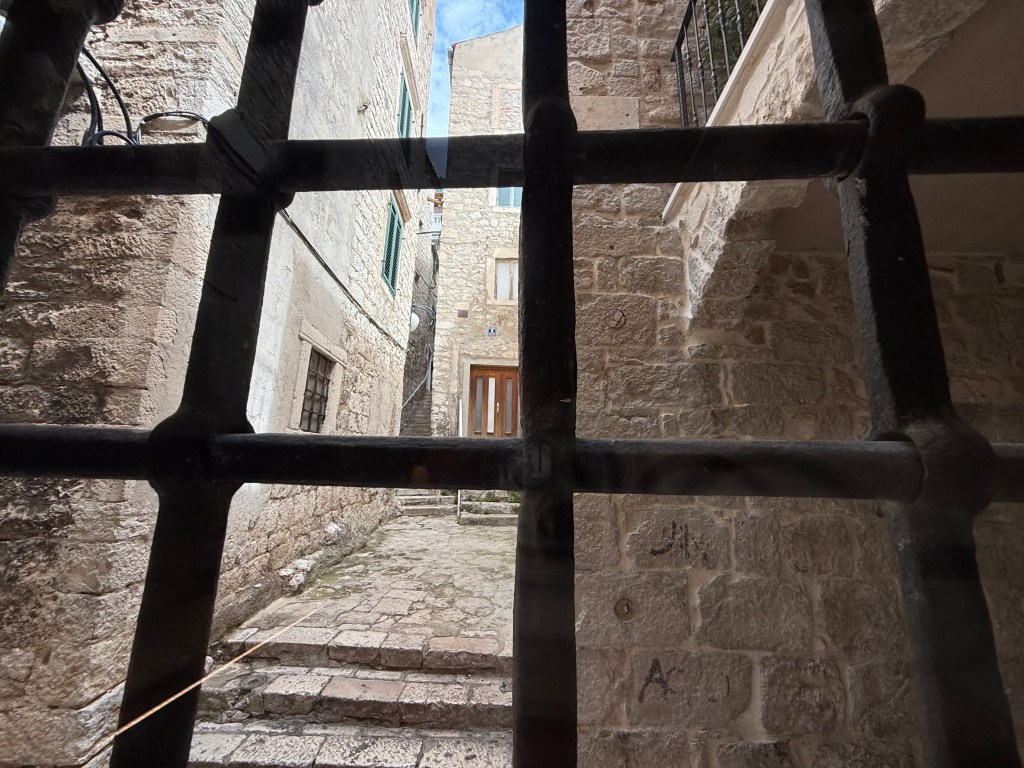
Left: Hotel Amerun; Right: Walkway visible from the stairway well in the hotel.
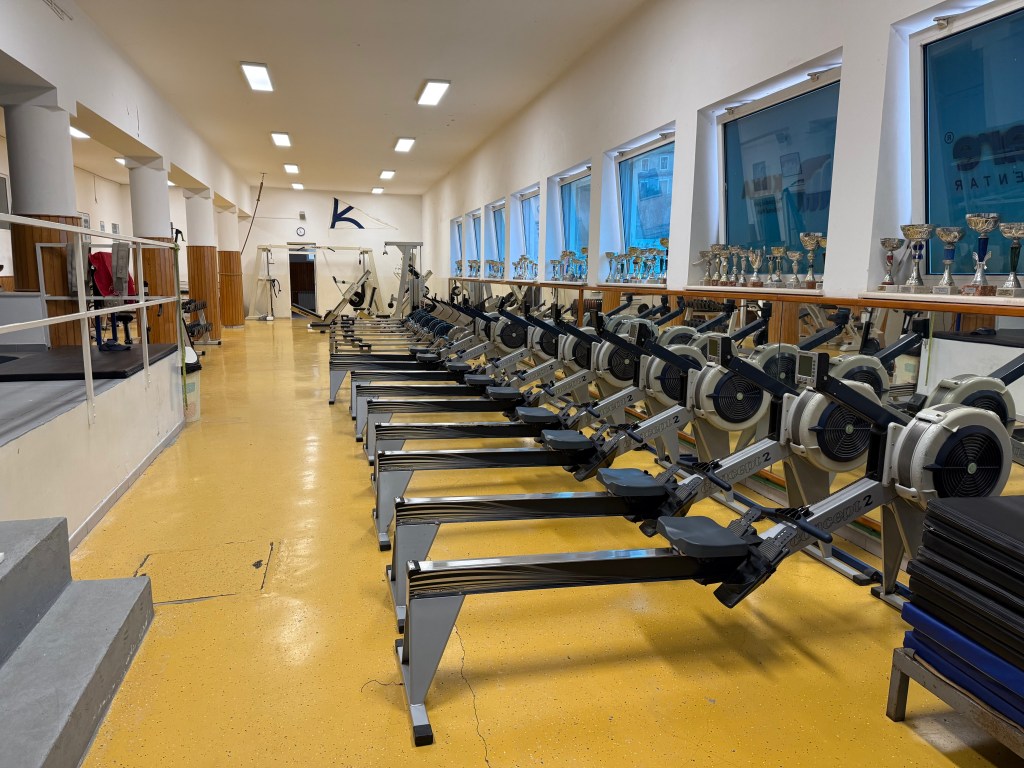
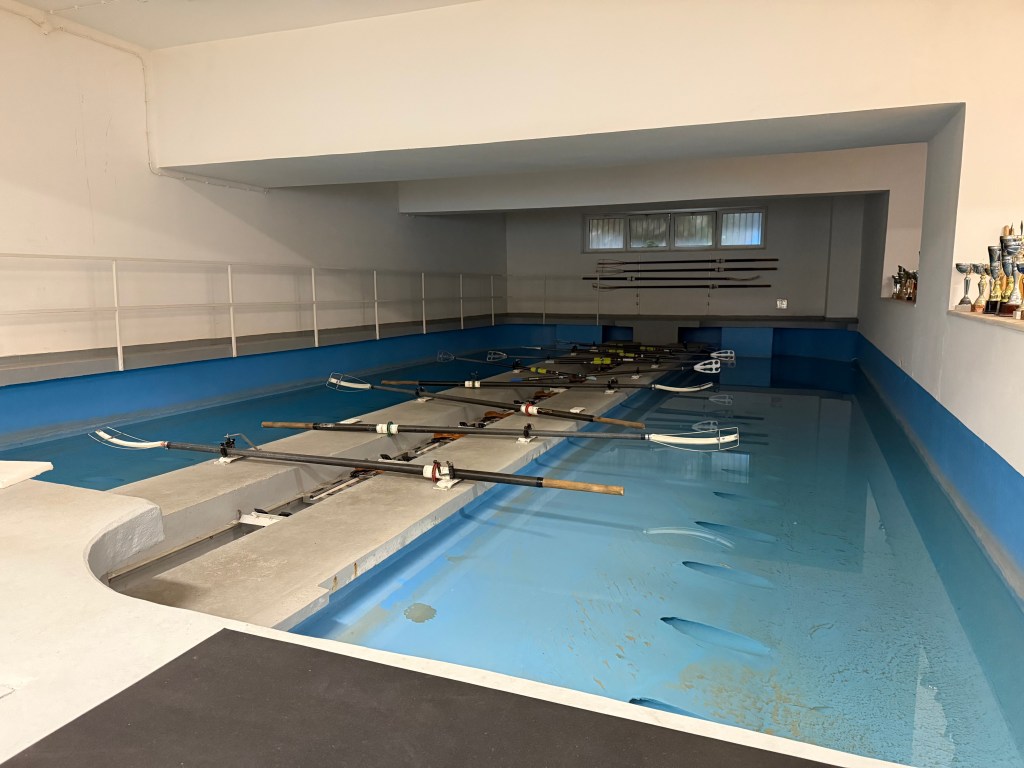
Equipment we would soon become well-acquainted with! Concept2 and Row-Perfect rowing machines and a rowing tank.
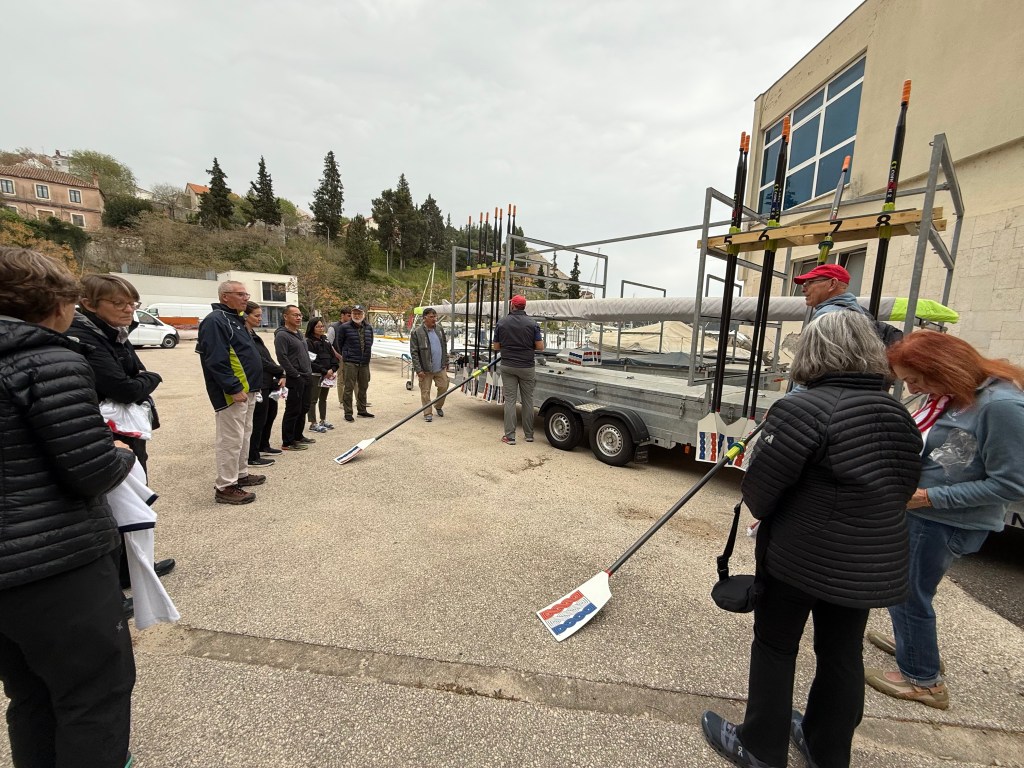
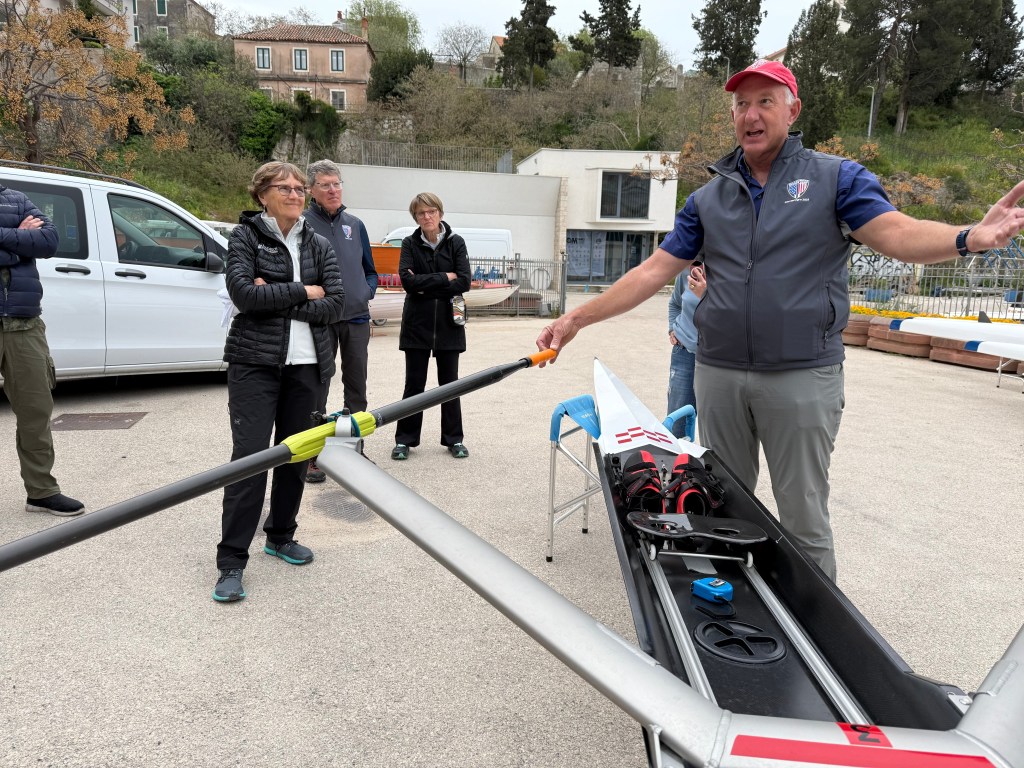
Scull assignments and adjustments … and WHY the adjustments unique to each rower are needed. Jim Dietz in red ball cap left. Mark Wilson in similar cap on right.
DAY 2 (4/14): On the water for the first time – for a few hours – in coxed quad gigs. And a phenomenal tour of Shibenik and Fort St Nicholas on its outskirts.
It’s challenging to write about all we learned today on the water, even for such a short time, and during subsequent video review (about two and a half hours). Initiation of the catch at maximum compression and maximum blade angle and completion of most of the leg drive before starting body swing and followed arm pull achieves the longest stroke possible with the greatest power input for the fastest boat speed. Keeping the back straight, pivoting at the hip, reduces the potential for back injury and yields the best leverage during leg drive and body rotation. Metrics of success are keeping the chin up during the stroke, pulling through to the sternum with level hands and elbows out, and tapping down on the handles with forearms for a clean release. Most of our training was done with blades square.
Ante Caric, a professional tour guide, gave us a superb walk-around tour of the town of Shibenik.
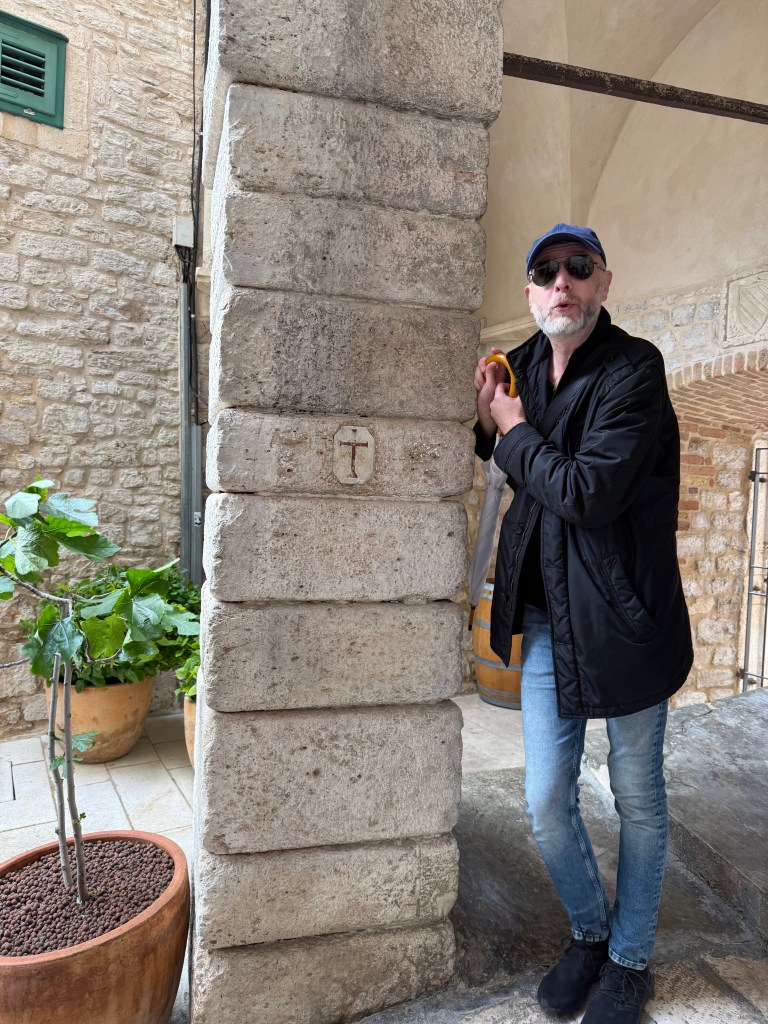

Ante Caric points out a form of the Knight’s cross which appears at wide intervals throughout town – a reminder of duty to Christian ideals. Right: Latin mottos are seen above doors throughout town This one states “recte faciendo neminem timeas” which translates to “by doing the right thing, may you not fear anyone.”
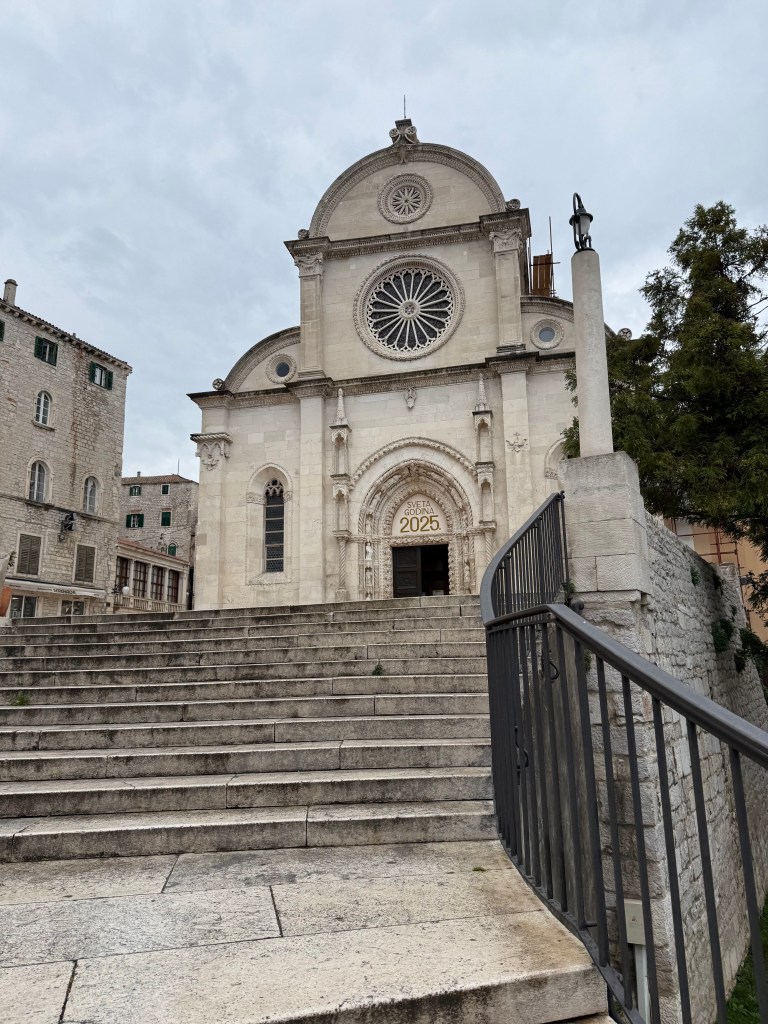
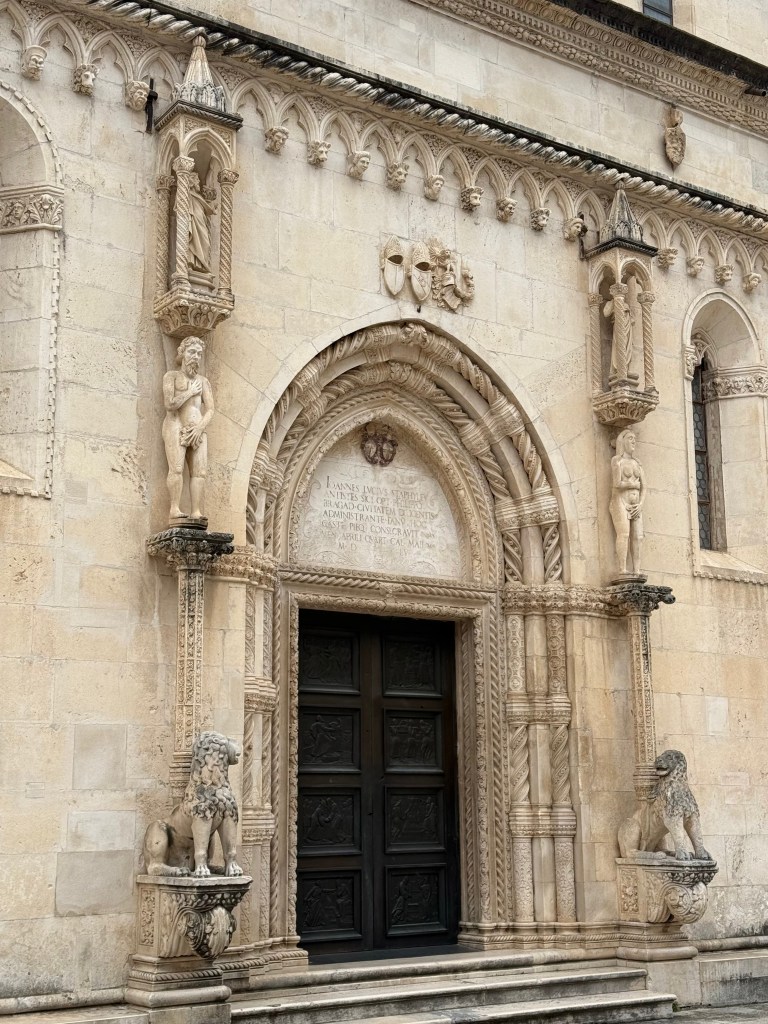
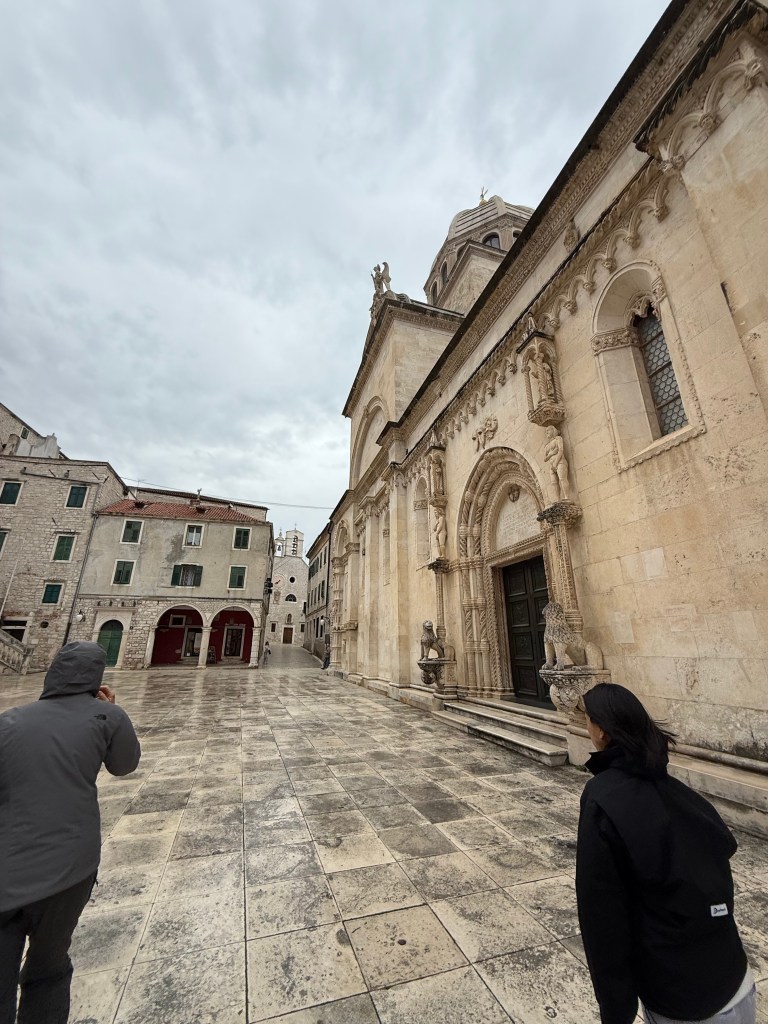
The prominent and largest of 24 churches in Sibenik adjoined by a large courtyard across from which sits a government building.
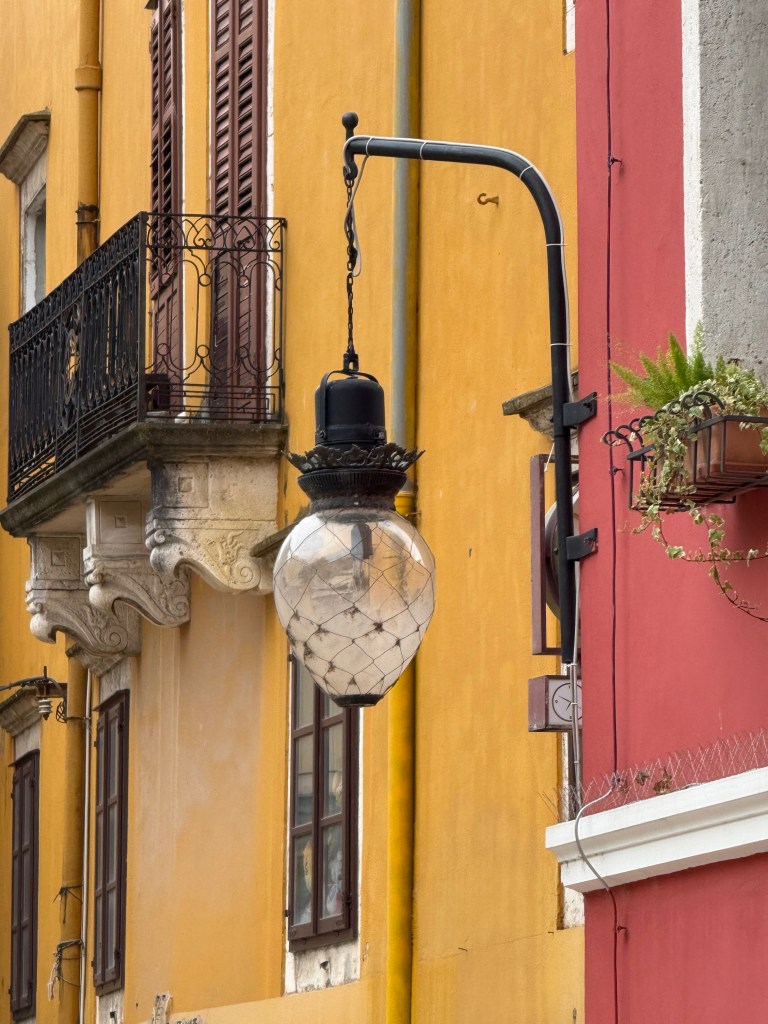
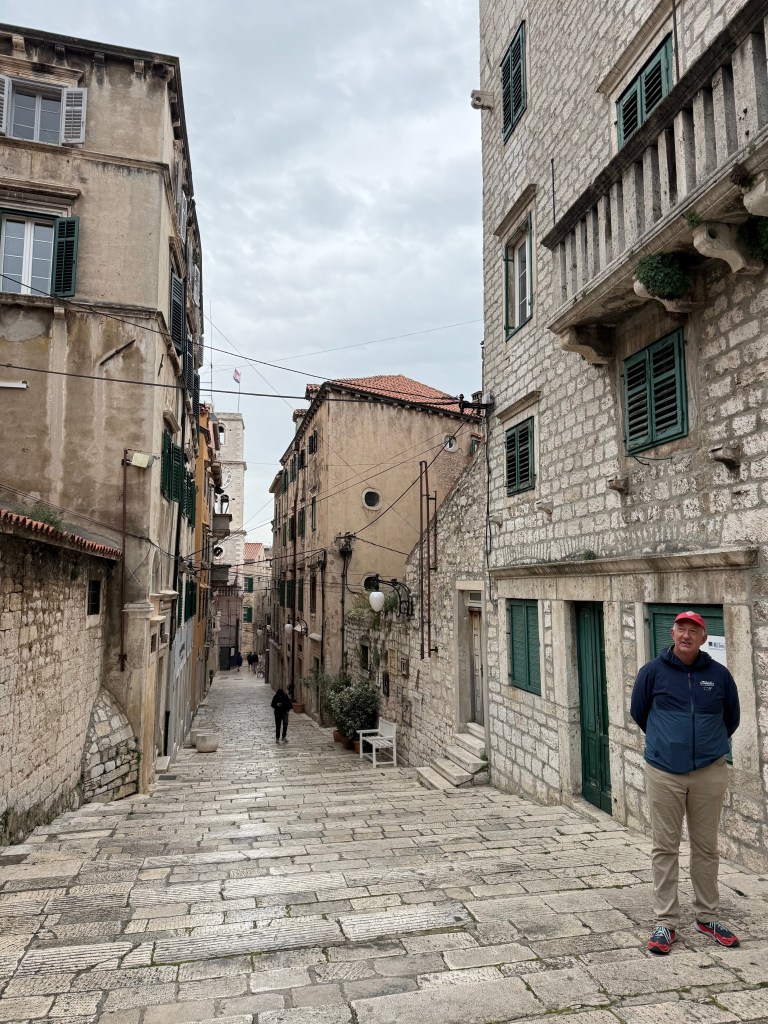
In 1895, Nicolai Tesla, working with engineers, completed a hydro-electric plant on the Krka River and brought the first AC-powered street lights to any city. The one on the left is a close-to-original design while the white lamps on the right are modern versions of similar form.
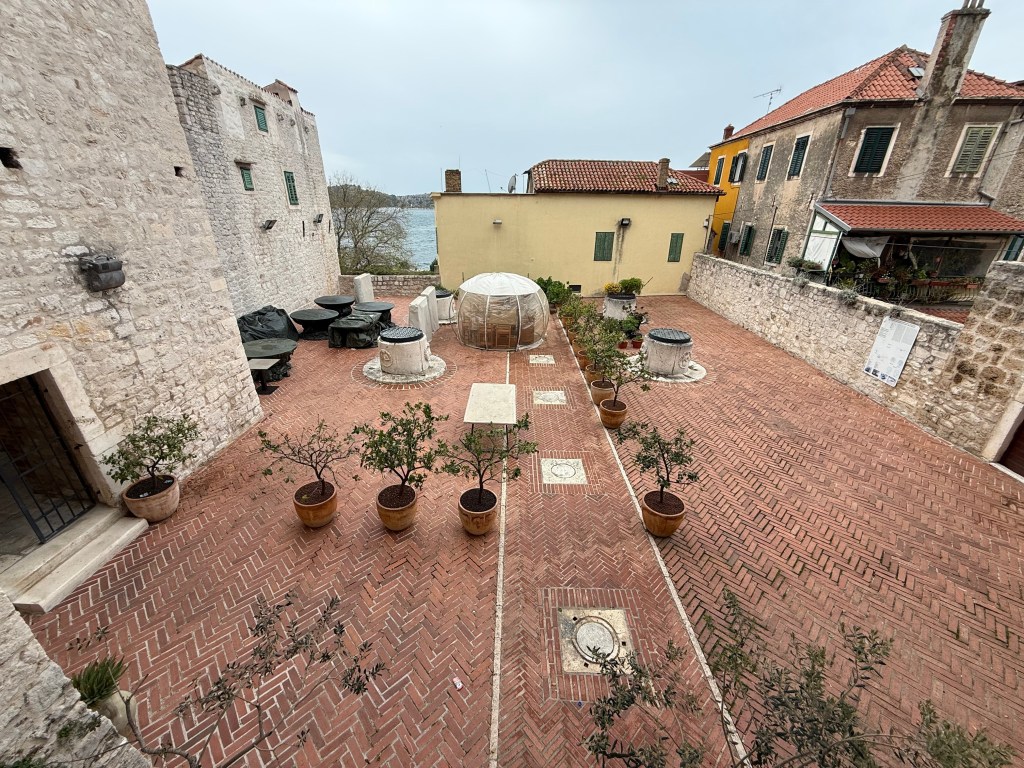
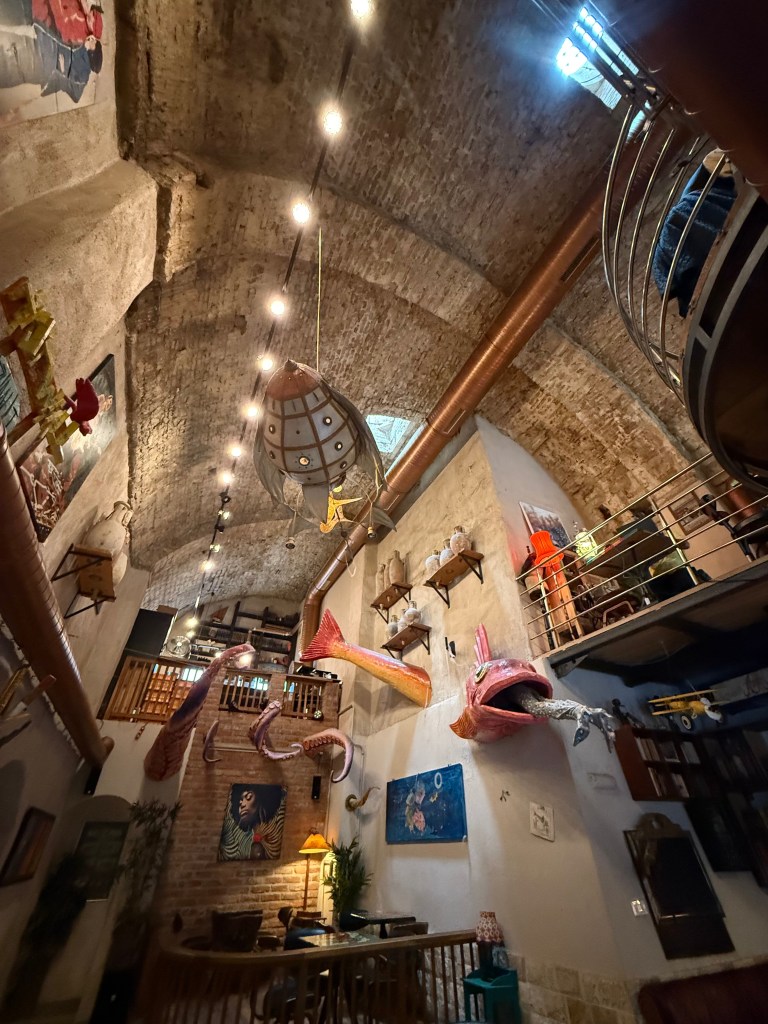
Many centuries ago, the city built two adjoining, huge long cisterns with semi-cylindrical roofs to collect fresh water. Left: four water drains held gravel and sand to filter the water. Four stubby access towers served to retrieve collected water. Today, Azimut, a popular bar has filled both rooms with tables and chairs and a band stand, and offers trivia nights to locals.
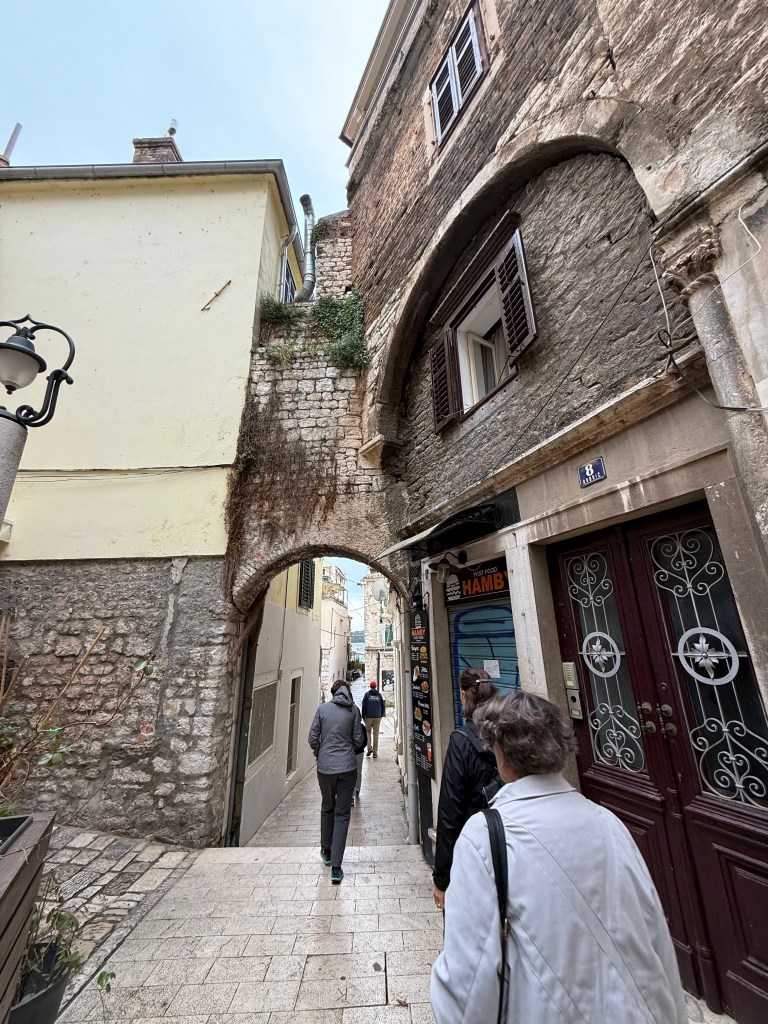
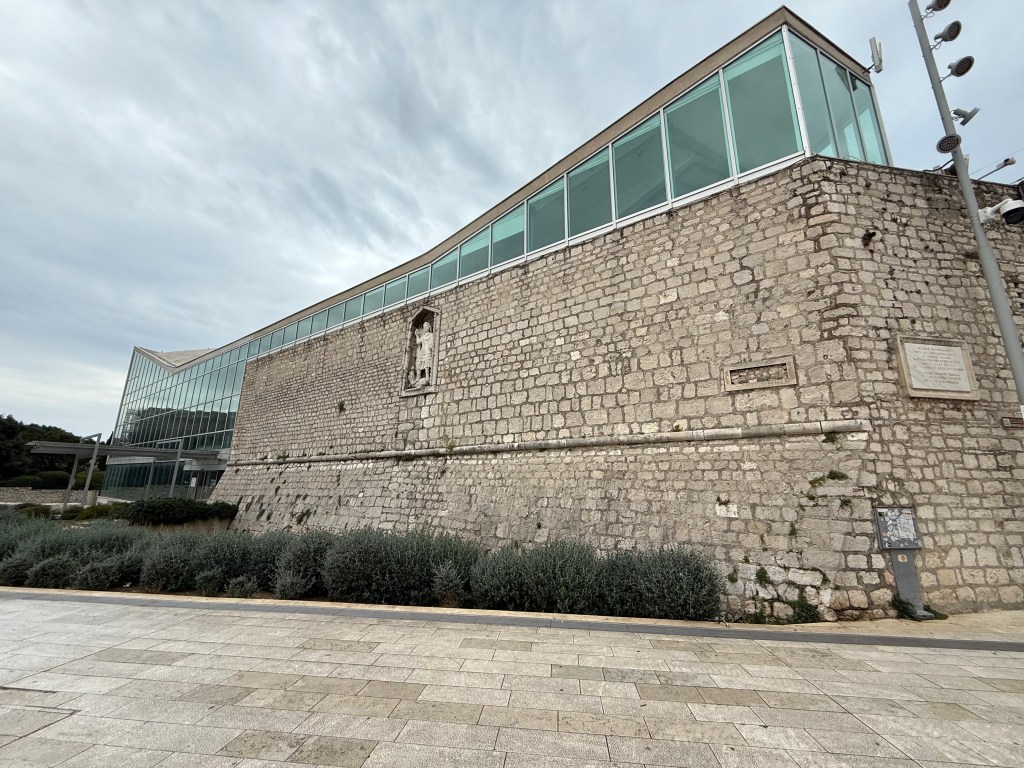
Left: remnants of a wall that surrounded the original city appear in places throughout town. Right: A large portion serves as a wall of the local library.
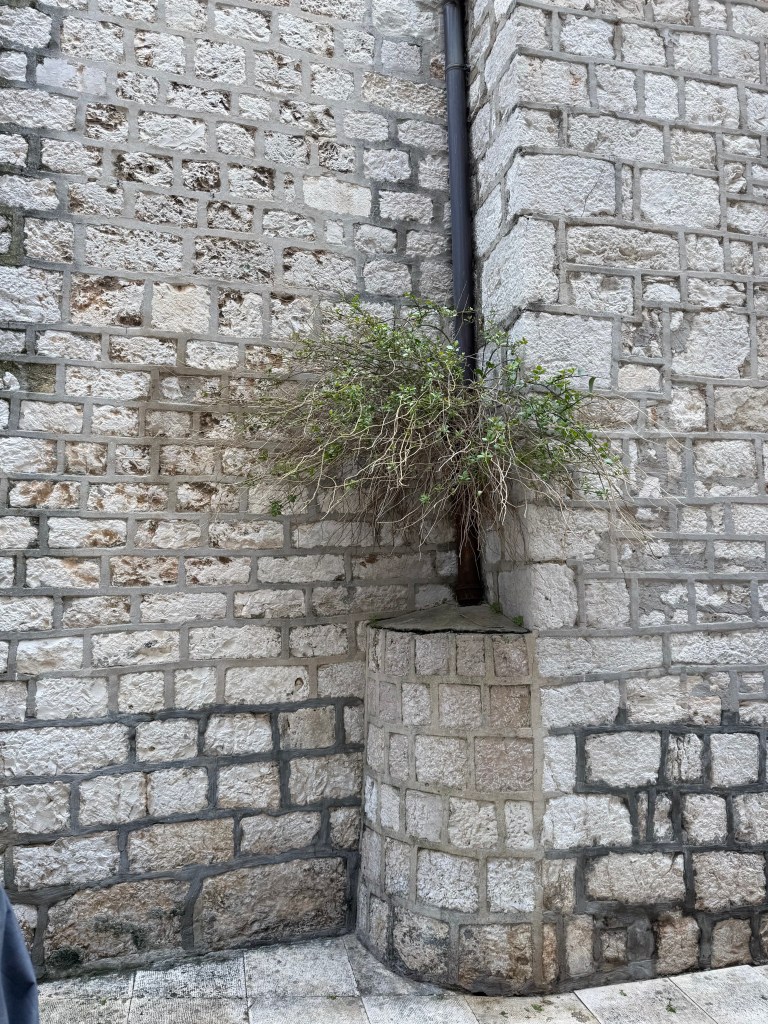
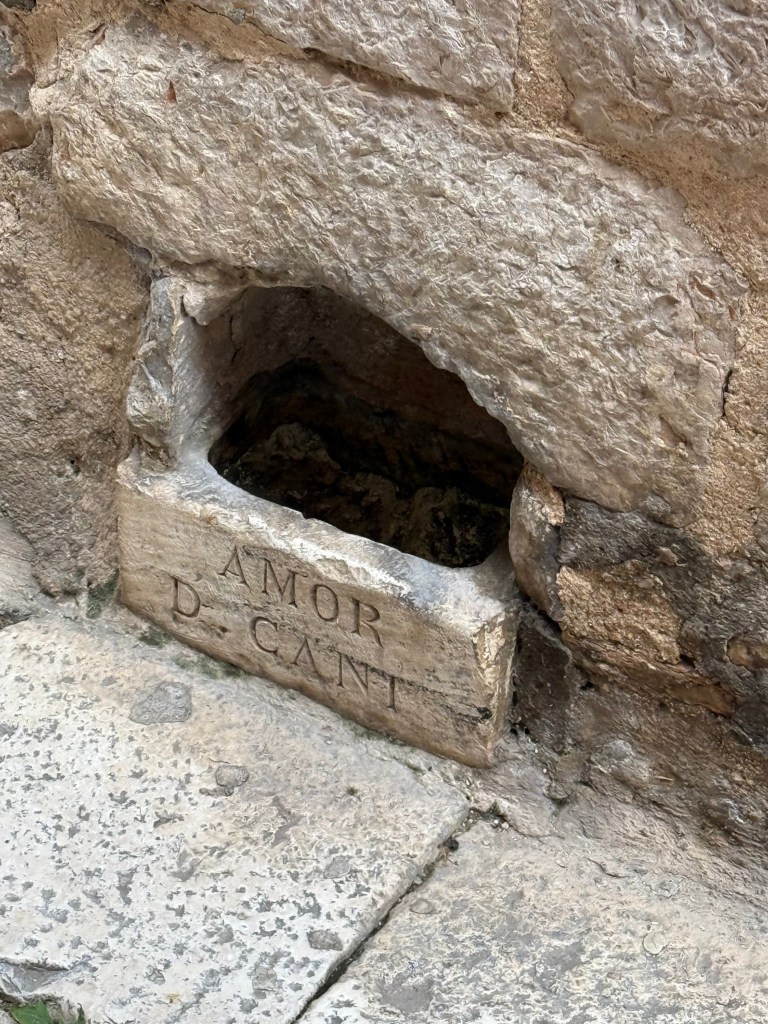
Left: Caper bushes are common in town likely planted by birds. Right: pet-friendly water troughs appear at ground level of one building along one of many wandering corridors.
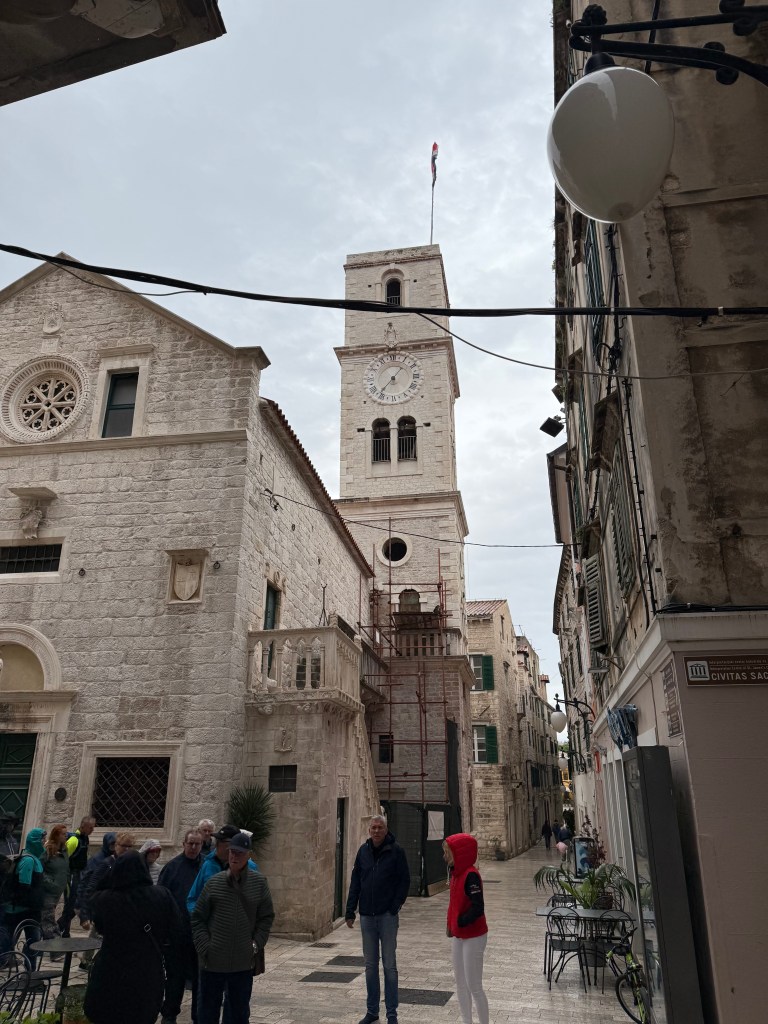
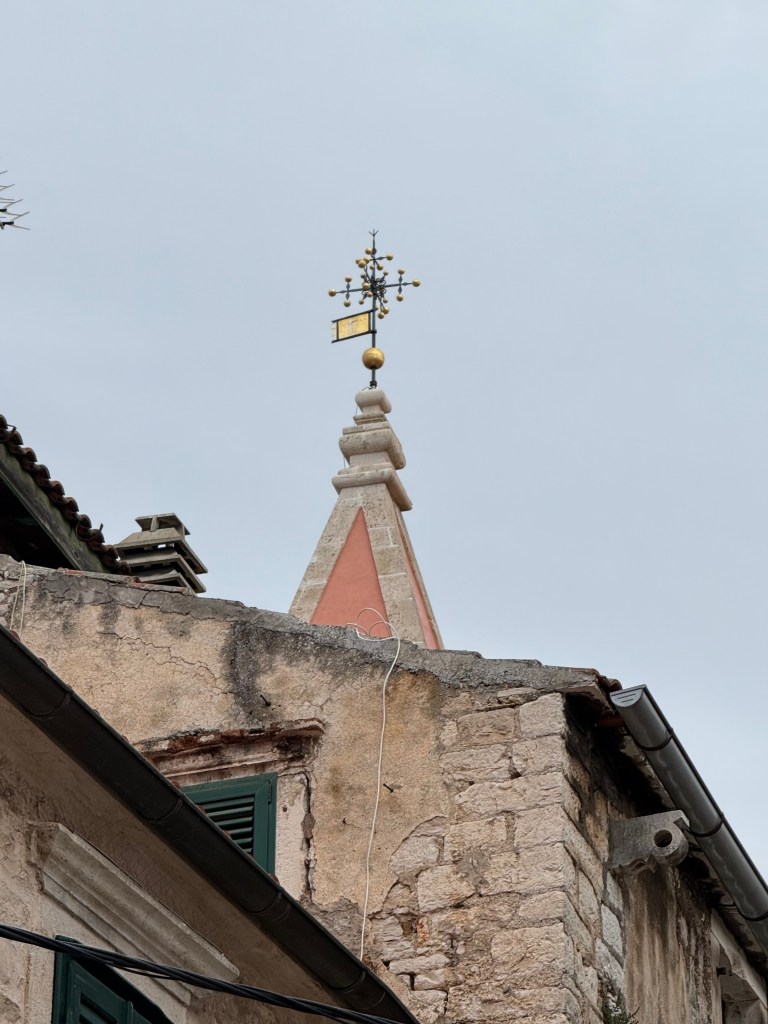
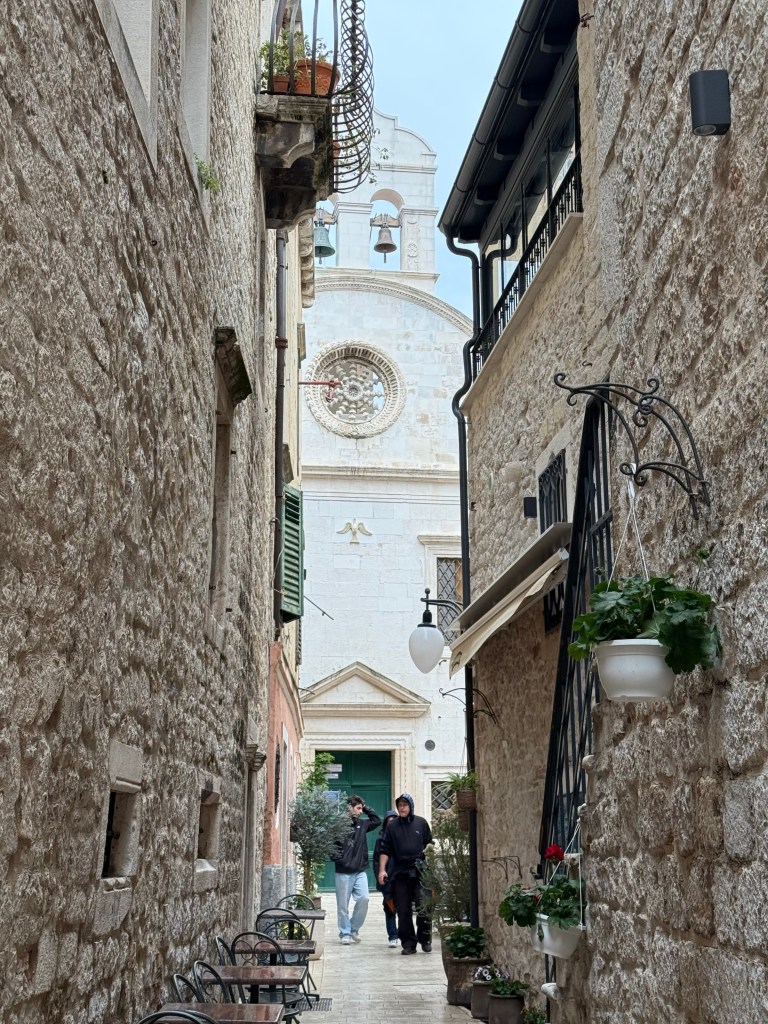
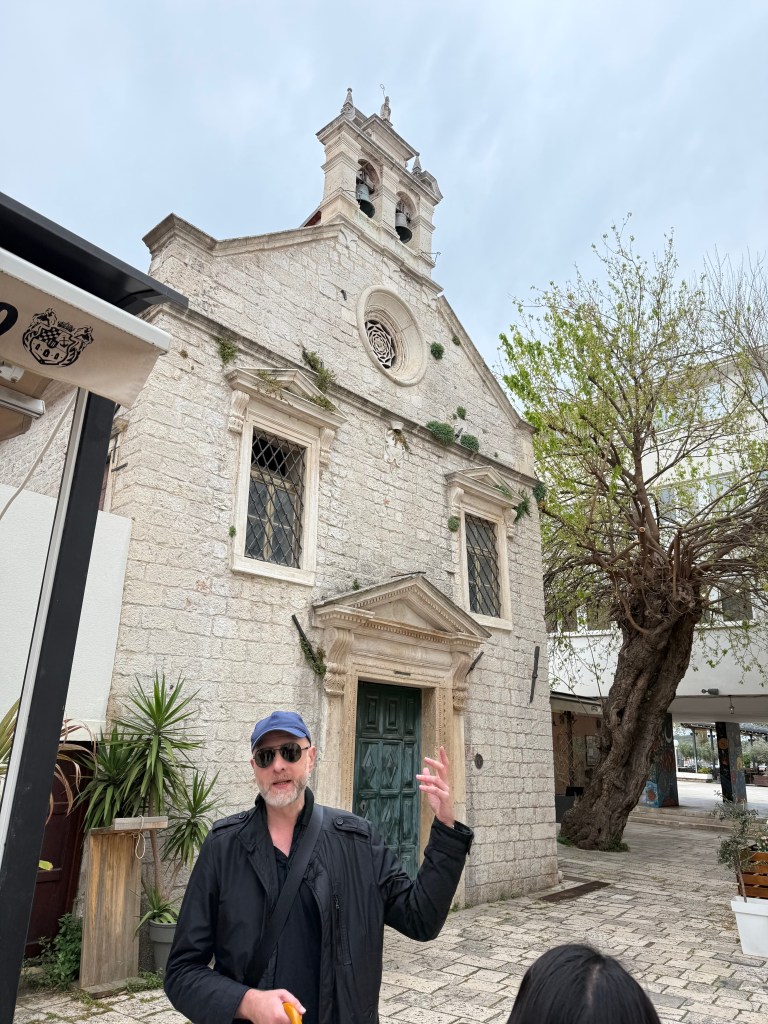
Four more Sibenik churches. Ante describes the Church of St Christopher (Patron saint of travelers) below – an old one that was outside the city’s wall. The huge mulberry tree to its right was planted at the time the church was built.
[posted 4/17]: DAY 3 (4/15): ‘Hugo’ winds have howled since early yesterday – a focus on erg and tank training. And a tour of Stella Croatica Park and the Klis fortress.
I have never rowed in a tank before, so today was interesting. We practiced exactly the same movements, sequences, and technique in the tank that we spent comparable time in the morning on ergs. A sequence would go something like this – all square-blade: sit tall at the release as if someone were pulling on your hat; arms away (“1”); body prep (“2”); one stroke legs-only (after which you are already at body prep); repeat 2-3 times. Each stroke begins with a “patient” approach to the full catch in unison and lifting hands slightly right at max compression to place the blade in the water “earlier” before starting leg drive. Then single stroke with swing (add body rotation) pausing at the release (after which you are already at arms away). Then “2” (body prep). Similar repeats. Then complete a single full stroke and finish alternately at the release, at arms away, and at body prep. Then proceed with three- and five-stroke sets concentrating on sitting tall, keeping chin up, forcing yourself to complete MOST of the leg drive before beginning body rotation followed by pulling with one’s lats. Finishes are directed by the coach and keep the rower on his/her toes. Release/arms away/body prep.
We did these exercises in unison on both the ergs or in the tank. There is ample time doing things this way to a) warm up and b) refine and reinforce one’s technique. Jim and Mark took videos of us during early the earliest session which we reviewed as a group. They encouraged us to set up a video with TV or, as we had at the Krka rowing center, a mirror so we could watch our movement and timing. Most of us rowed the oar in every stroke (i.e. were late dropping blades in thus passing max compression and starting the drive before blades were buried.)
It is astounding how much easier it is to achieve decent splits rowing correctly! We are thinking of banding together with Tim and Kathleen Fowler who’ve attended two sessions with Jim and Mark and conjuring up modifications both for Learn to Row sessions AND masters warm-ups both on ergs in the winter and on-water. The dividends will be huge. Very exciting!
Our first stop after lunch was Stella Croatica Park where the processes of oil extraction from lavender and from olives are thoroughly described and demonstrated. There is a laboratory there for research and training purposes and a product sales building where one can purchase soaps, oils, candied fruits and nuts, jams, etc. Pretty delectable, so we are bringing much home to share!

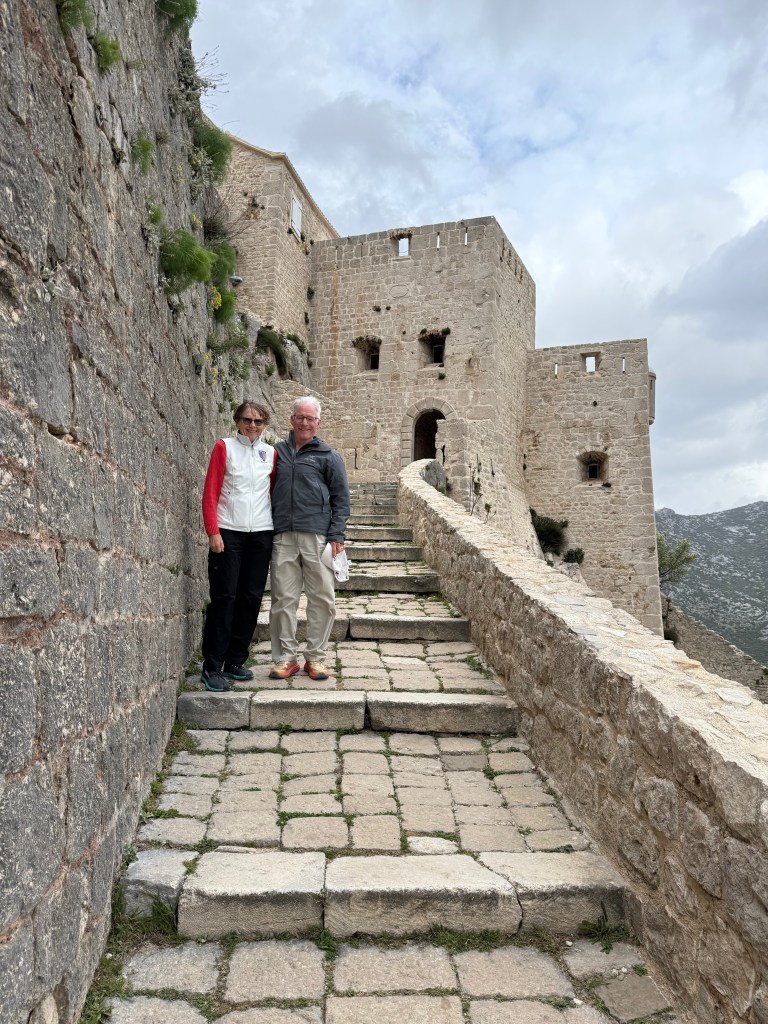
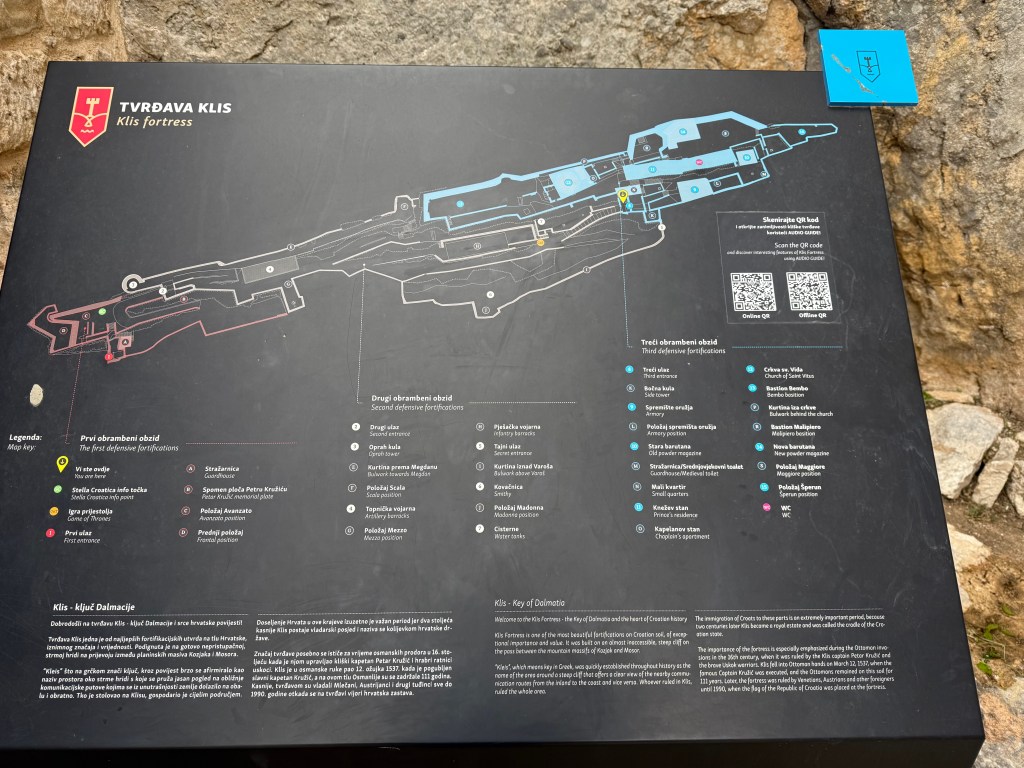
The Klis fortress was strategically built on a long, steep ridge between two tall mountains with arable plains to the north and sloping down to the sea near Split to the south. As it changed hands from Venetians, Croats, and Turks from the seventh century through the Middle Ages and Renaissance, it was expanded and otherwise modified. Wikipedia provides an extraordinary list of of nearly continuous conflicts affecting the region through both World Wars and the War of Croatian Independence that makes for interesting reading. https://en.wikipedia.org/wiki/List_of_wars_involving_Croatia The War of Croatian Independence took place between 1991 and 1995 involving Croat forces loyal to the Government of Croatia who declared independence from the Socialist Federal Republic of Yugoslavia (SFRY)—and the Serb -controlled Yugoslav People’s Army.
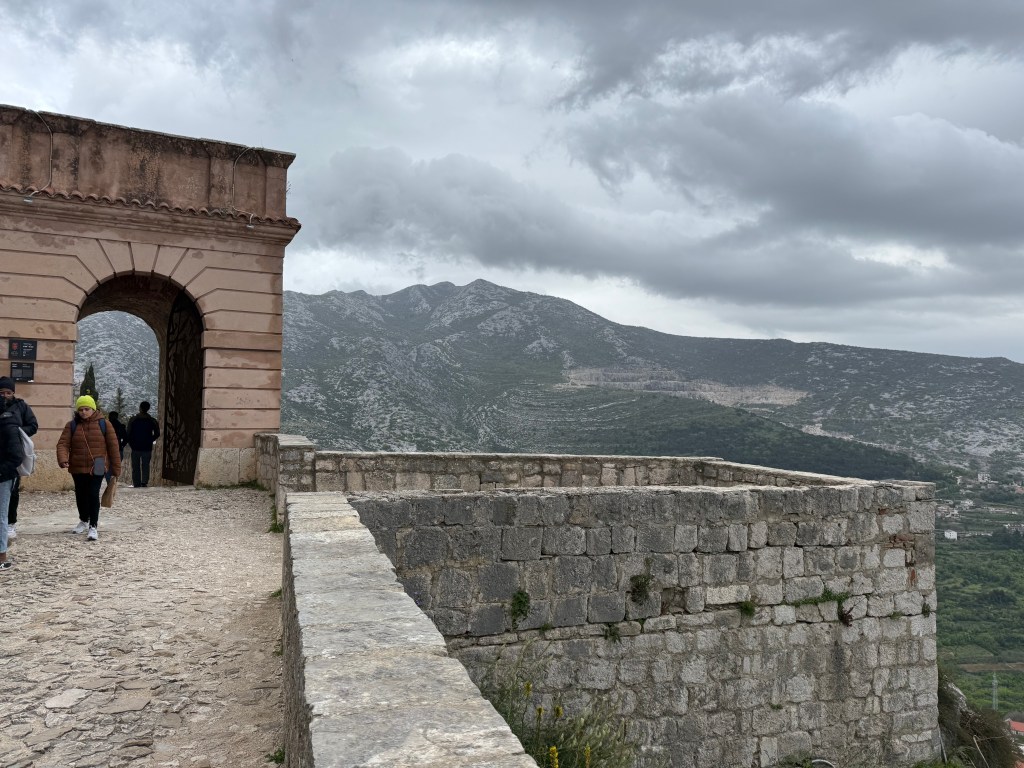
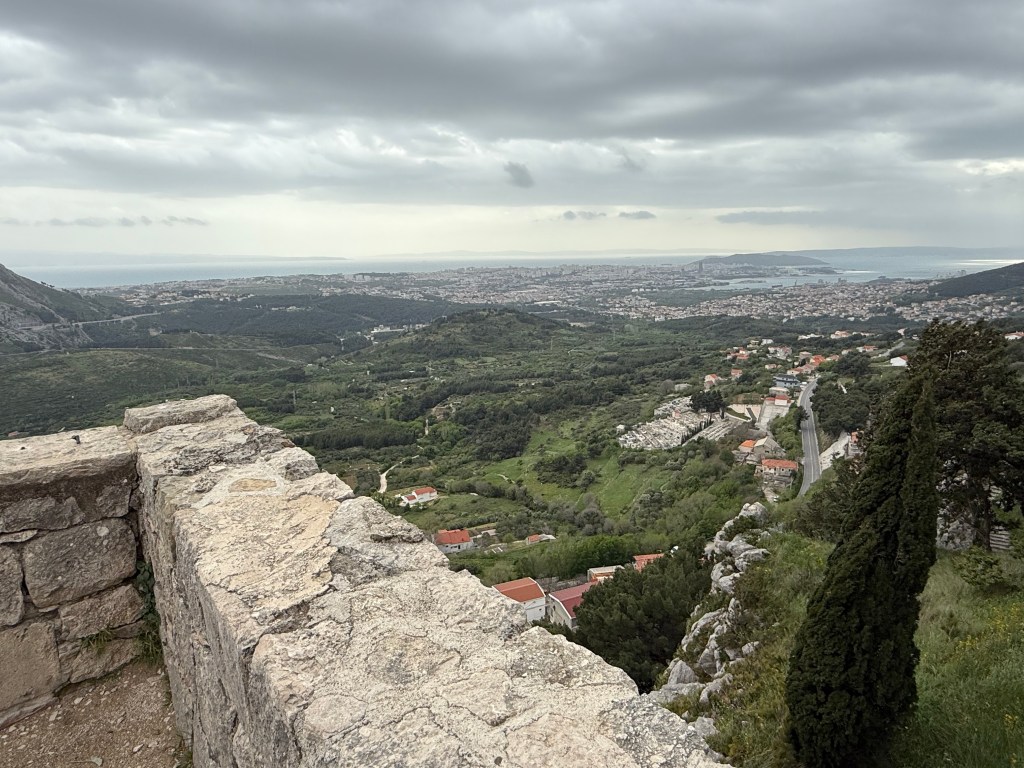
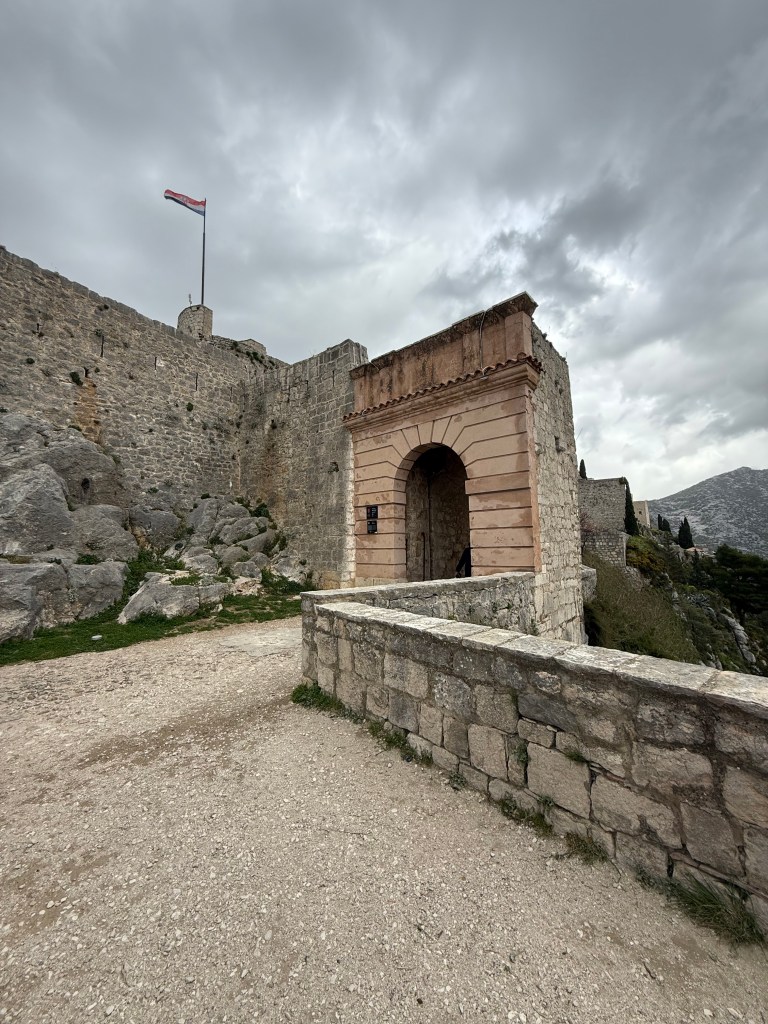
Three pictures of lower parts of the fortress above. Middle: looking southwest toward Split. It was an extraordinarily windy day – as has been the entire week – as one can see from the flag in the picture at the right!! Daily steady winds have ranged from 20-35kt gusting from 40-55kts.

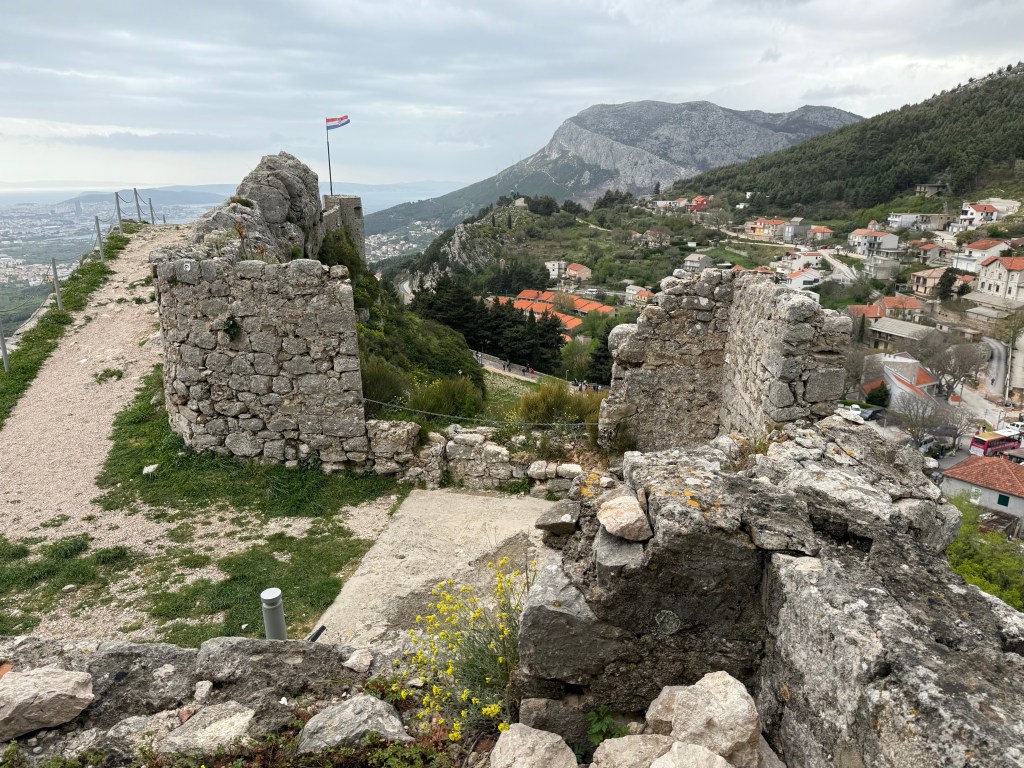
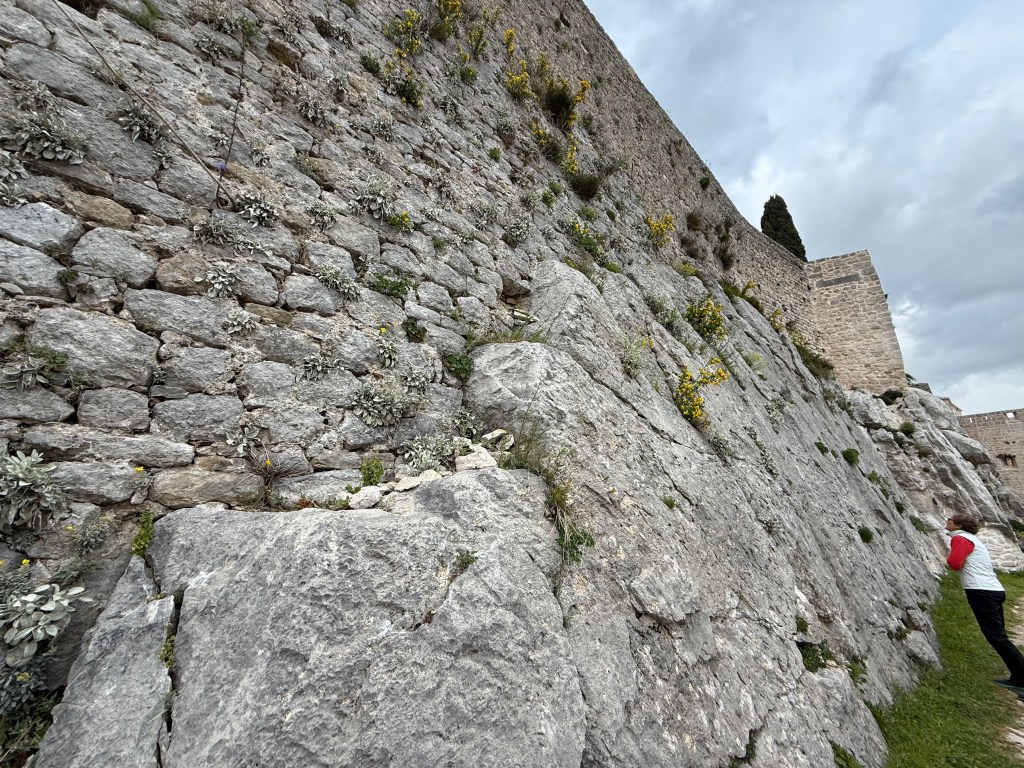
Spring brings about flower blossoms from most nooks and crannies in the rocks. There are three defensive walls of the fortress on the south side, but the north side is steep and tall enough to defy any hope of a successful attack.
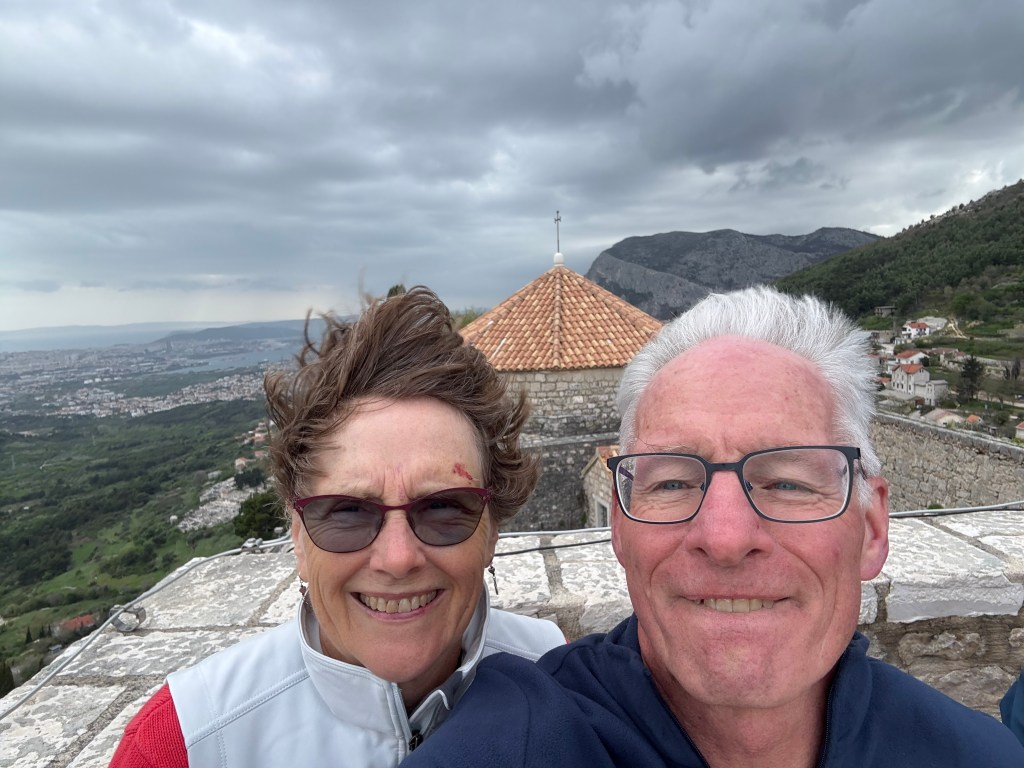
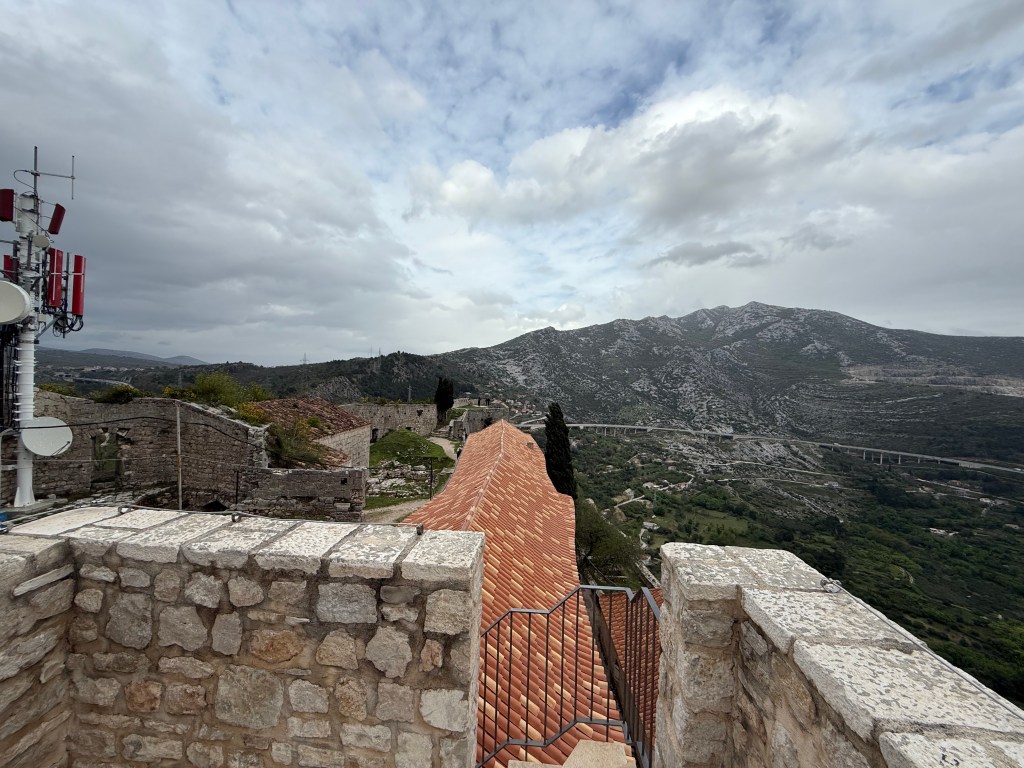
Wind effect is obvious! Observe the fascinating geology across the valley to the south from the highest point in the fortress at the bottom.

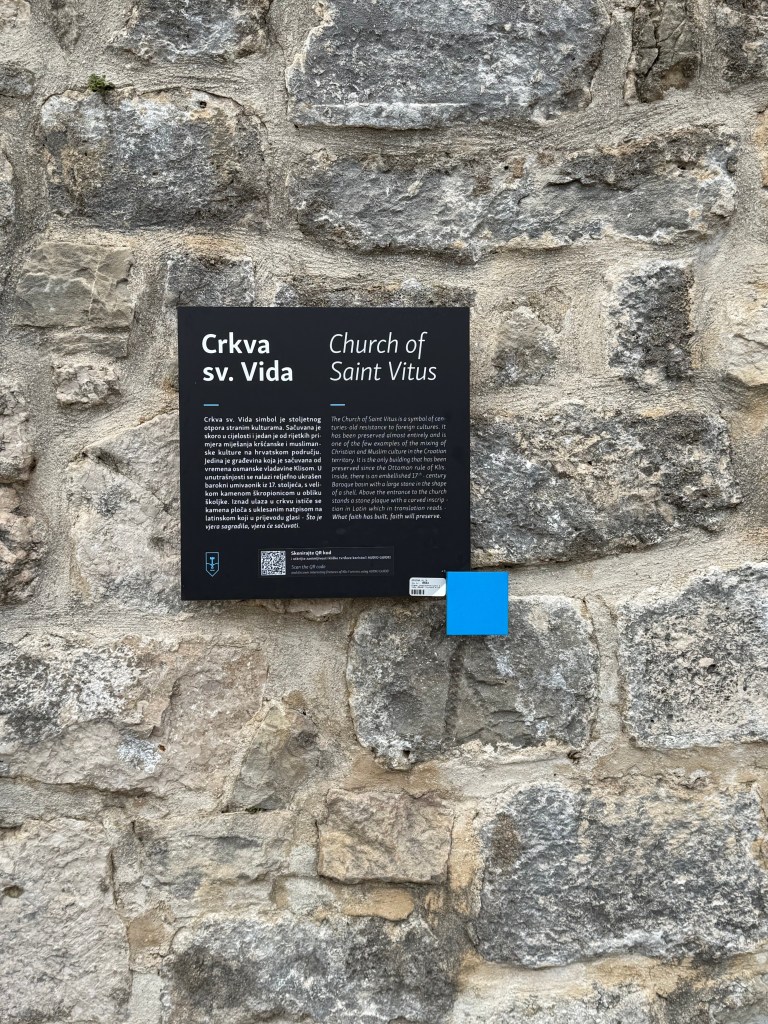
The Church of St Vitus is tiny and beautiful.
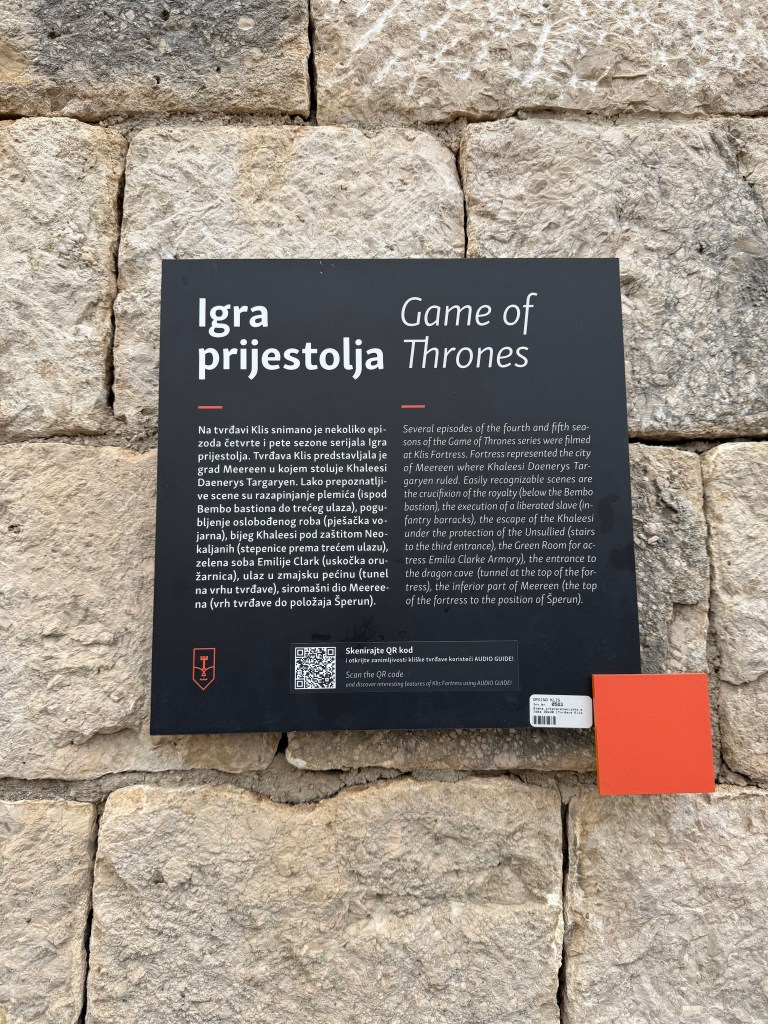
Yep – portions of The Game of Thrones were shot here. We need to watch it!
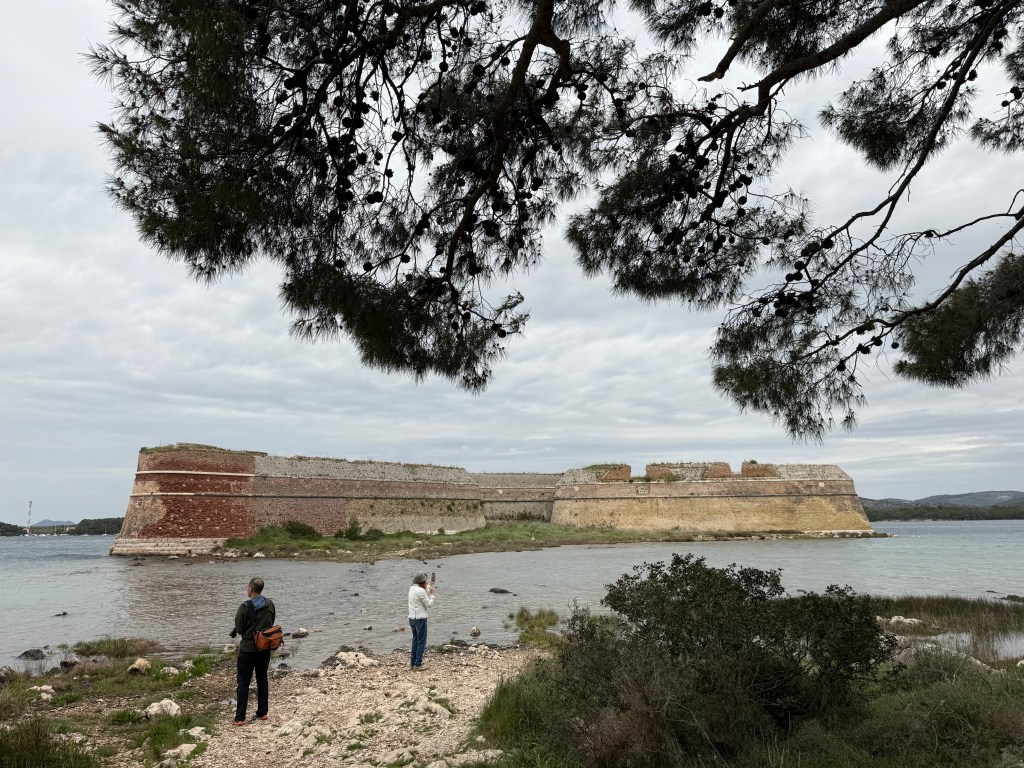
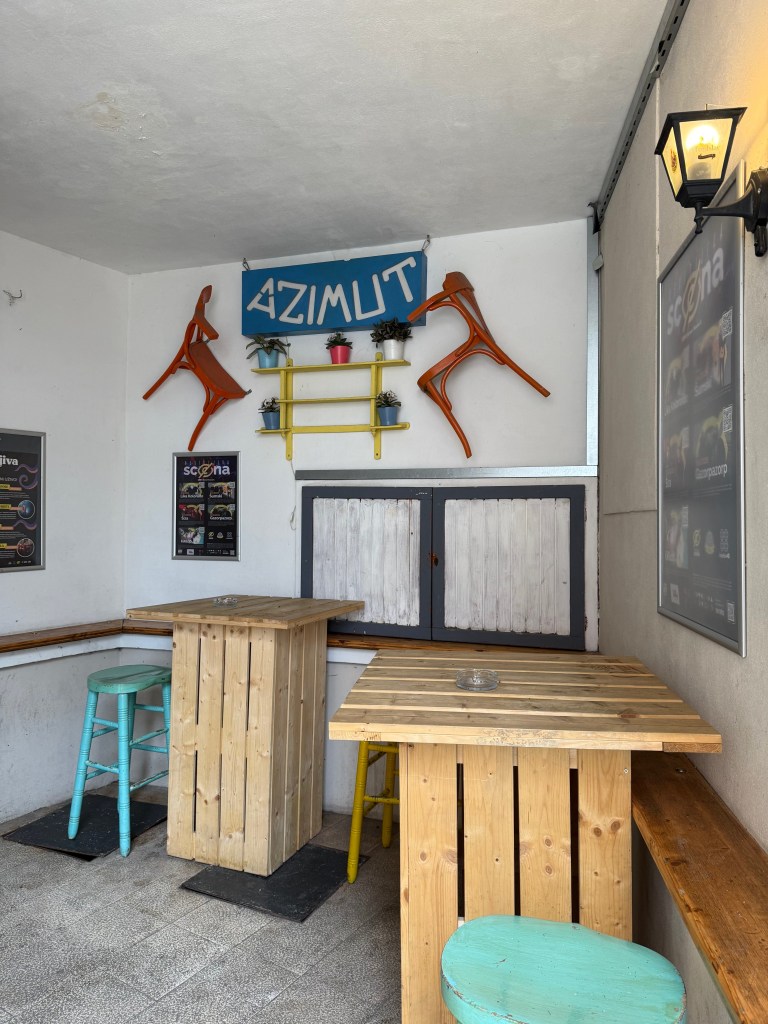
Left: Fort St Nicholas near Split. Right: entry to Azimut – the very cool pub within the two huge cisterns described above.
DAY 4 (4/16): On the water a second time briefly. And a visit to National Park Krka (as in Krka River) and Skradin (coming soon!)
DAY 5 (4/17): Blown out our last day! Excellent warmup and workout on ergs to include multiple 2 minute-on 1 minute-off pieces. We sought to carefully control and gradually, with each piece, reduce our average split by 1 (I did a few!) second(s). We then watched historical videos taken by Mark and Jim and discussed rigging (adjusting span) and oars. (coming later!!)


Marc,
As a submariner, you should get someone to take you out in a boat from Stibenik and show you the caves used by the Germans to hide their submarines during WWII. They are very cool.
Alan
>
LikeLike
Thank you Alan!
Can’t say enough positive about the All American Rowing Experience.
LikeLike
Love reading these! Great to live vicariously through your adventures my friend.
XXOO C
mobile: +1.206.992.1866 @cpsarason https://twitter.com/cpsarason | cpsarason.github.io
LikeLike