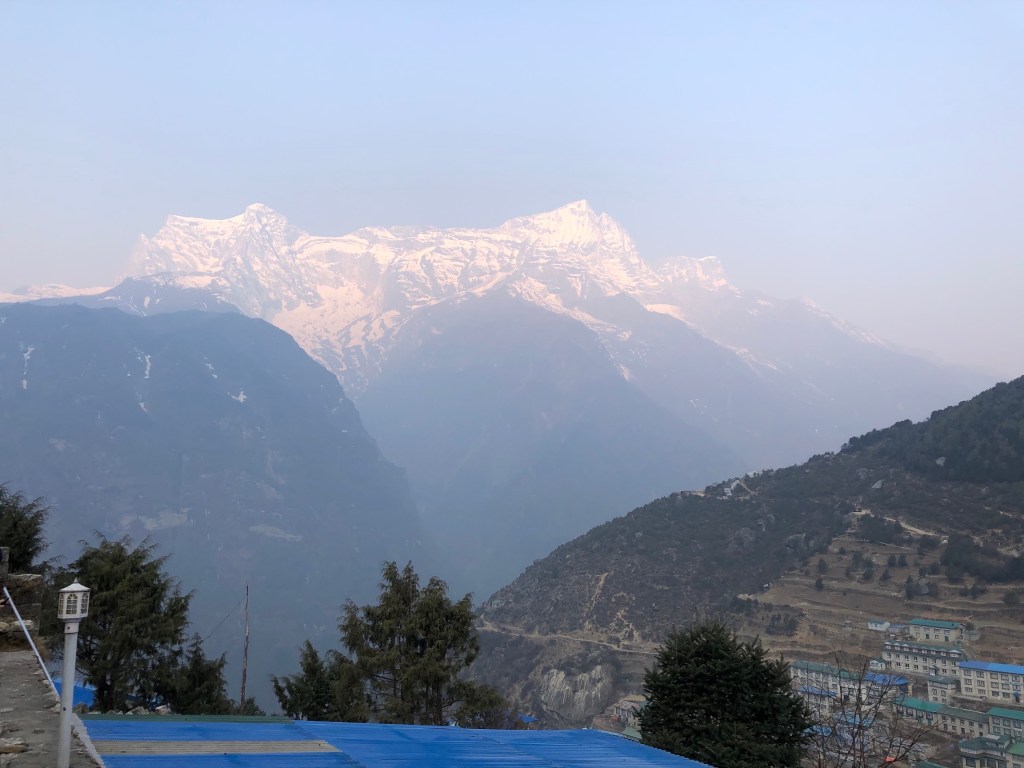
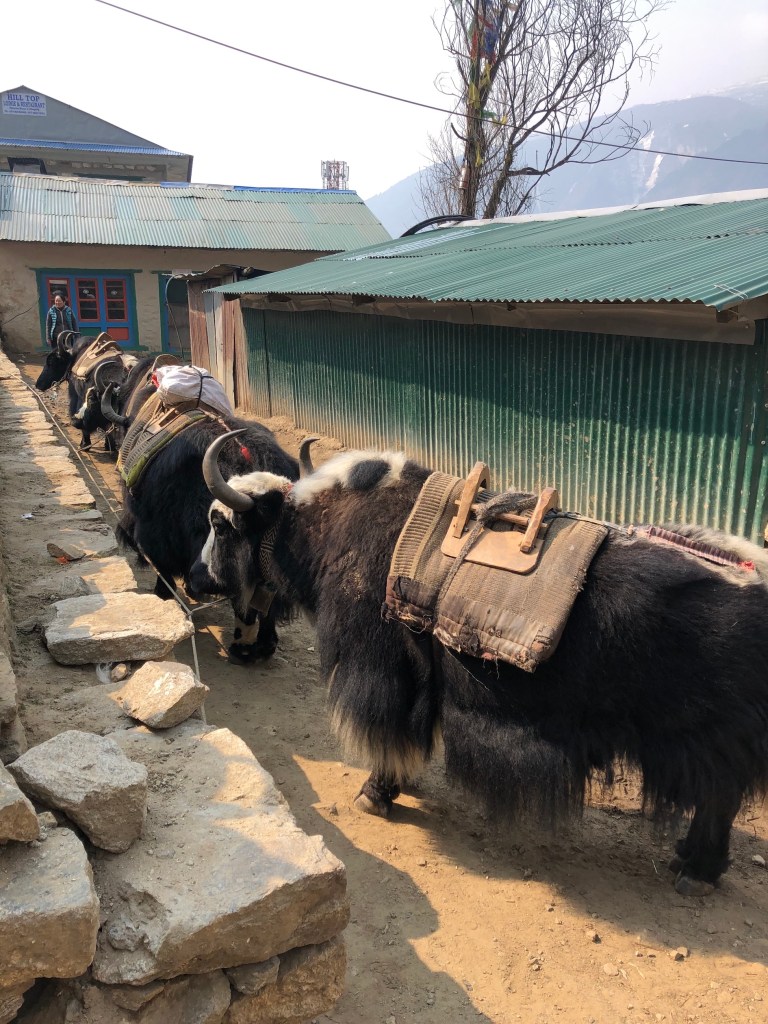
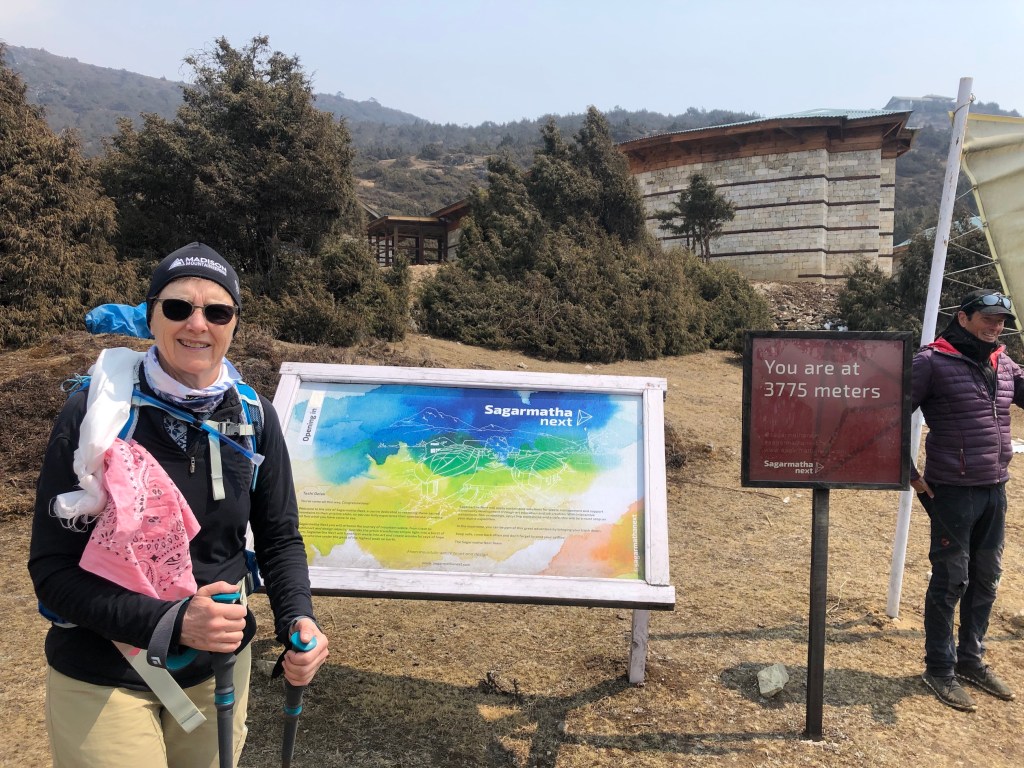
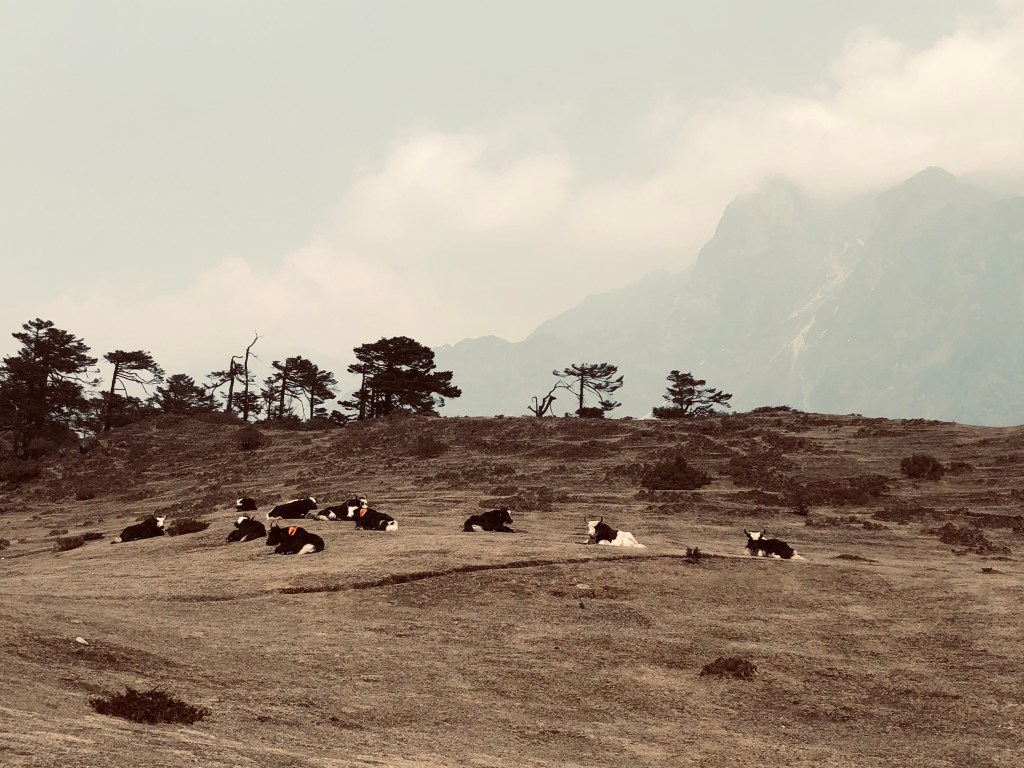
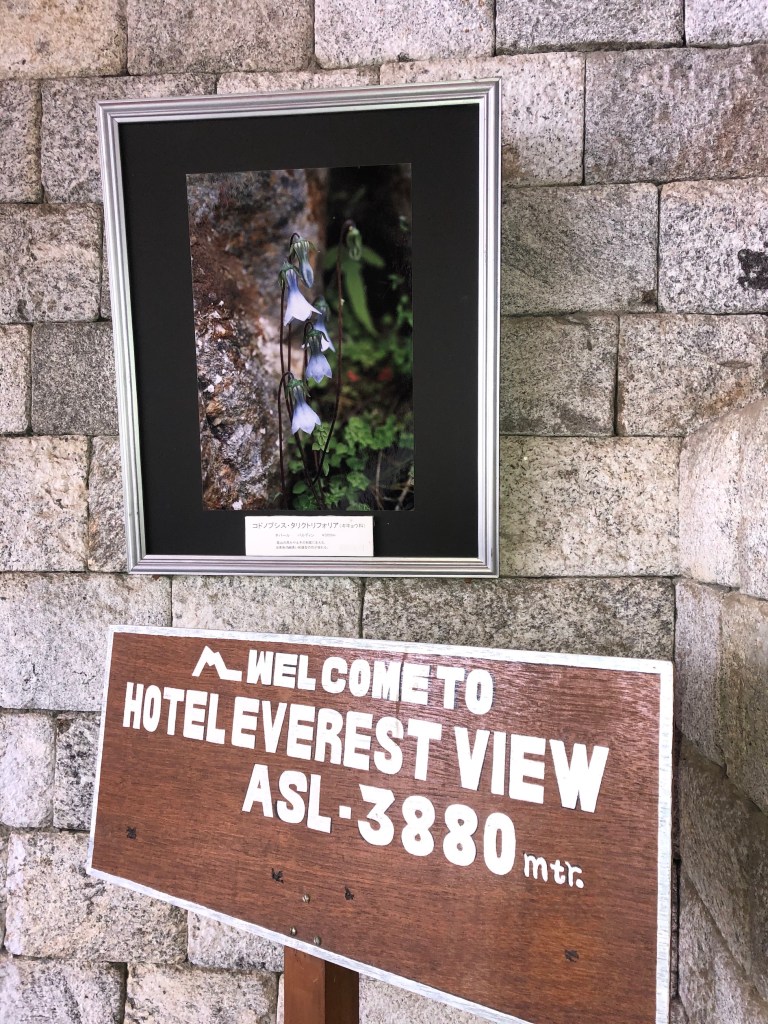
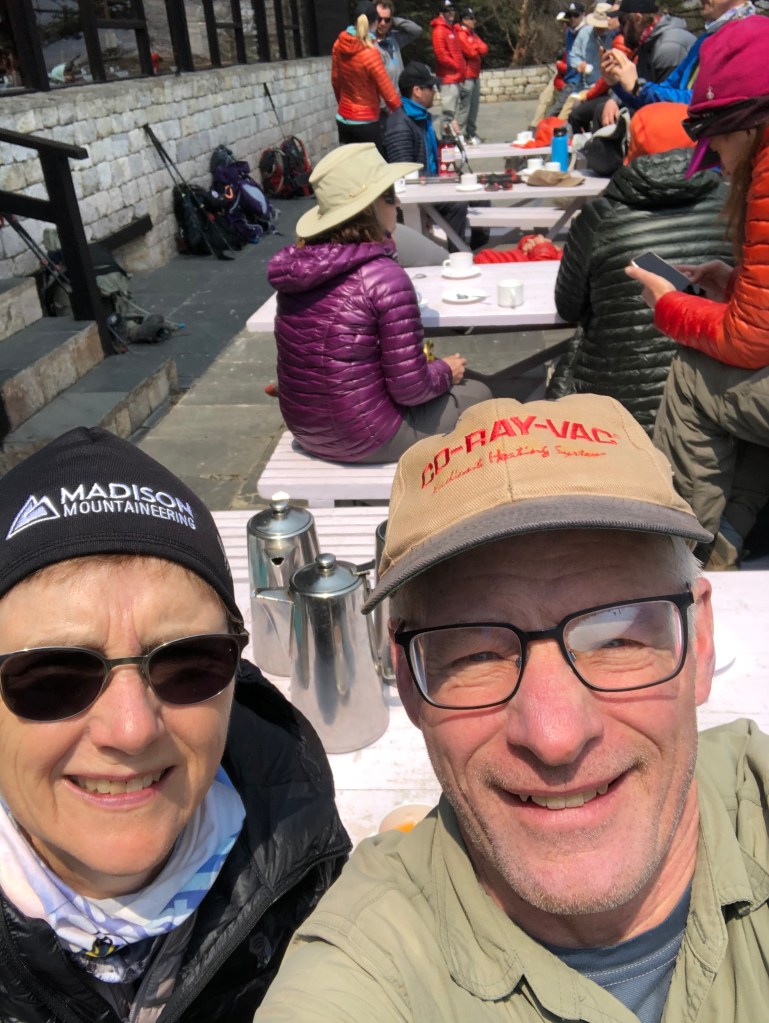
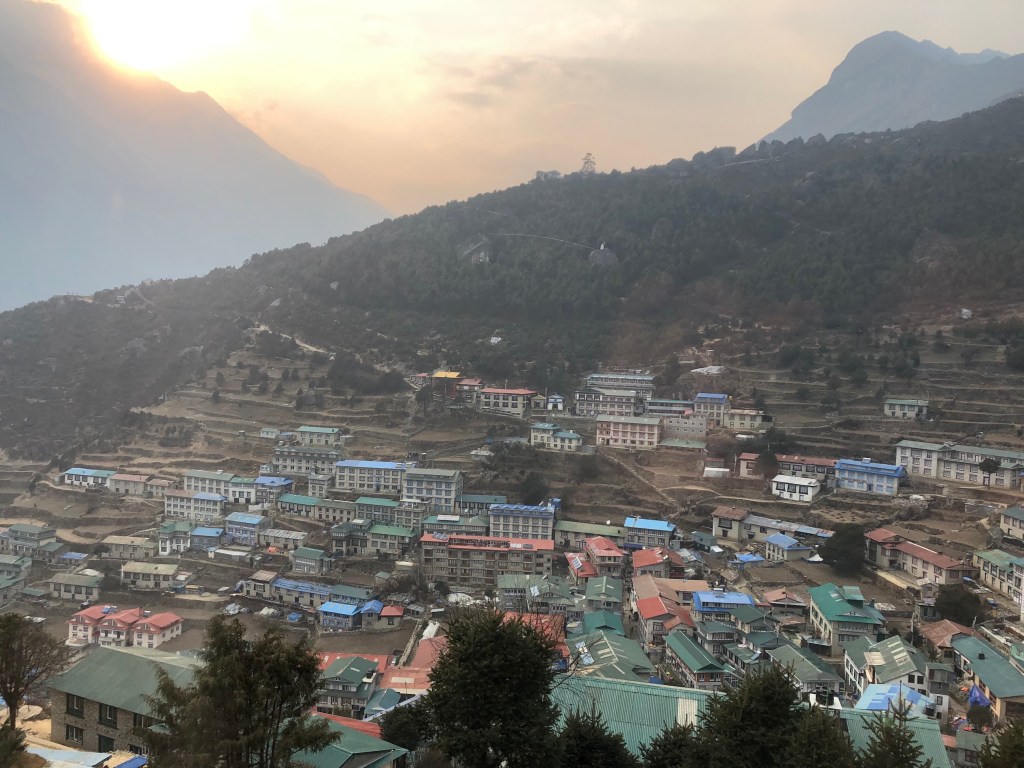
Today’s acclimatization hike felt surprisingly good after yesterday. We climbed from 3500m from Namche Bazar to 3880m (just over 12,000ft) over two hours before resting and enjoying lemon tea and snacks. The trail was quite steep for the first 45 minutes, eased a bit to the first high point, and then traversed the rest of the way to the hotel. From there we could see Nuptse and Aba Dablam. Because of heavy haze and clouds, Everest was not visible unfortunately. Numerous helicopters were busy shuttling gear to Everest Base Camp. Astoundingly, there is a baby grand piano in the great room of the very attractive, spacious hotel. On the trip up, we passed our first true yaks, loaded with cargo, distinguished from Zochios (Dochios?) by longer fur, smaller size, and horns that sweep aft at the tips. Good looking beasts! A small ‘wild’ herd was bedded down in a high meadow not far from the hotel. We also spotted a vulture or possibly a Nepalese condor soaring overhead. It was a very large bird. Finally, we were passed by a small group of climbers, one of whom was blind, who are bound for Everest. They were flying a drone to capture their progress.
.
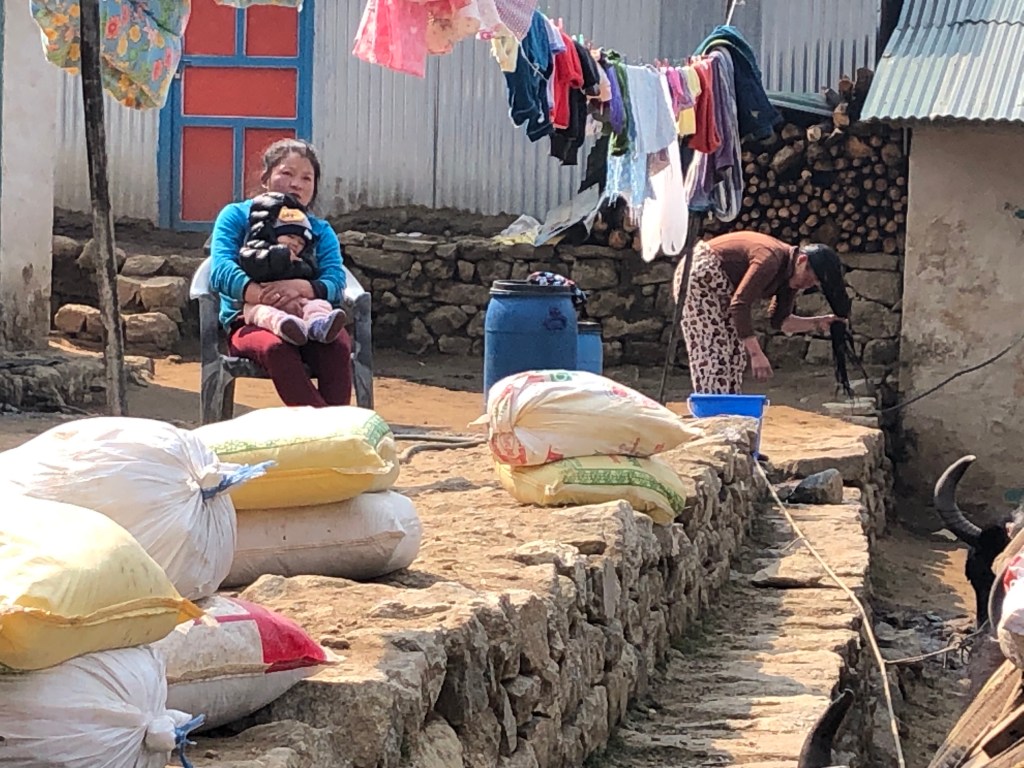
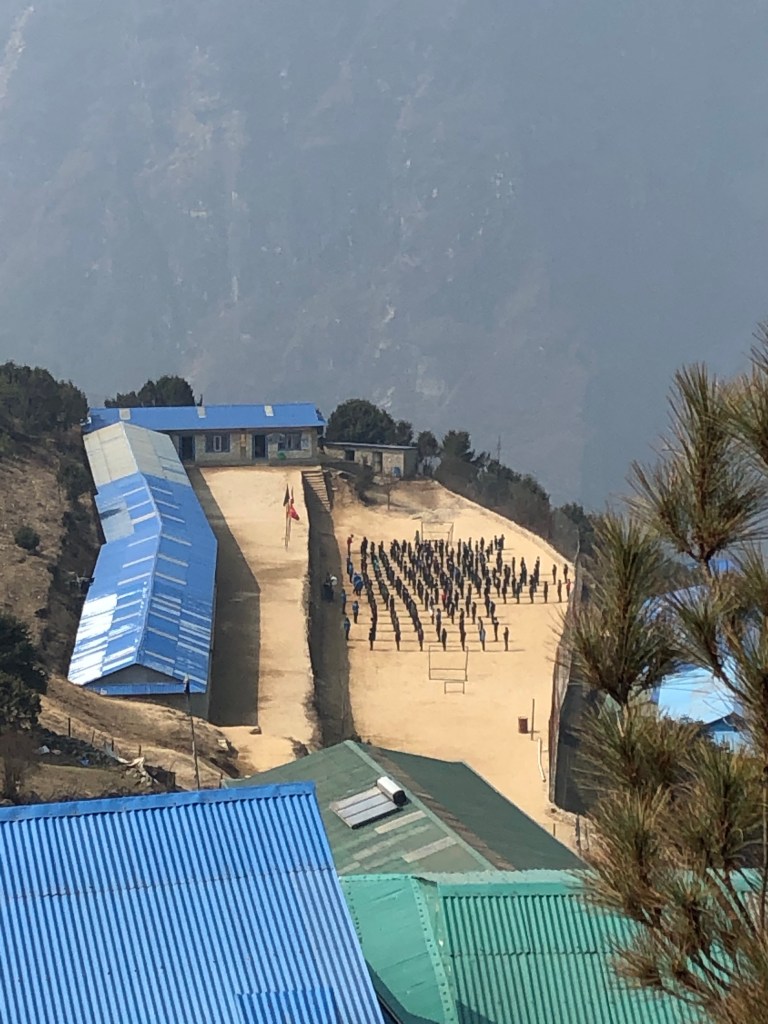
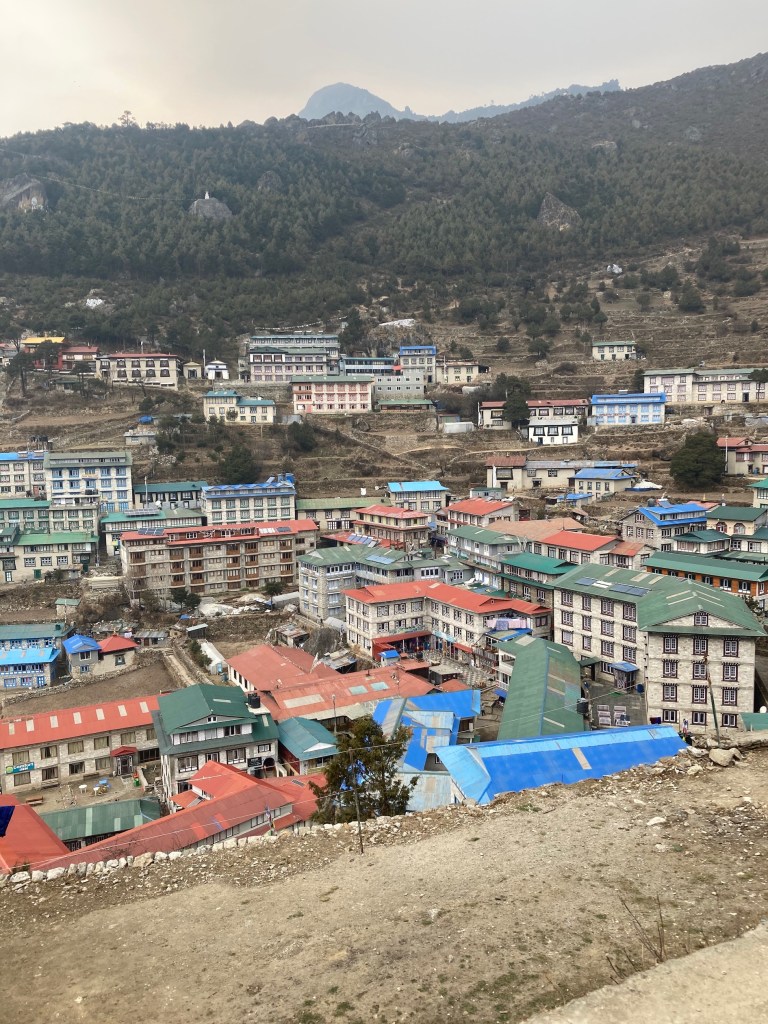
Nupla left, Kongde Ri right keeping watch over Namche BazarTrue yaks: note longer fur, smaller bodies, swept-back horns. Handsome capable beasts.Nepalese school at Namche Bazar. Calesthenics, marching, singing (national anthem), very cool.Noble effort to spark a business of exporting ‘recyclable trash’ … to create art. Look up Sagarmathanext.com.Yaks in their home countryLevel ground is hard to come byNamche Bazar
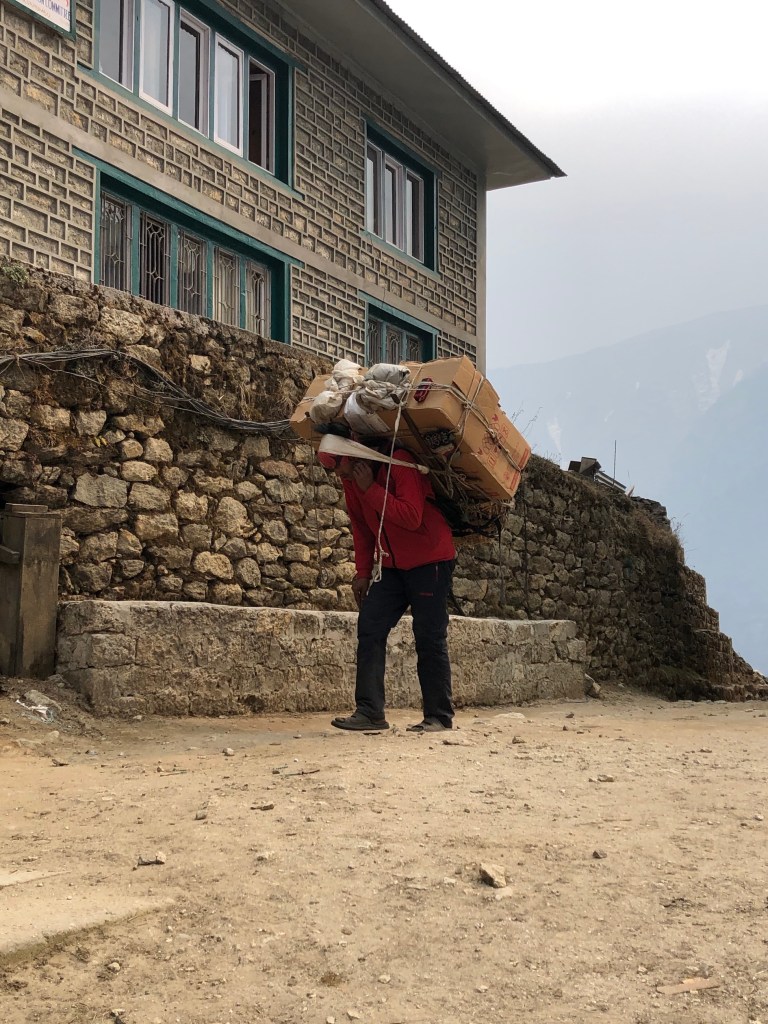
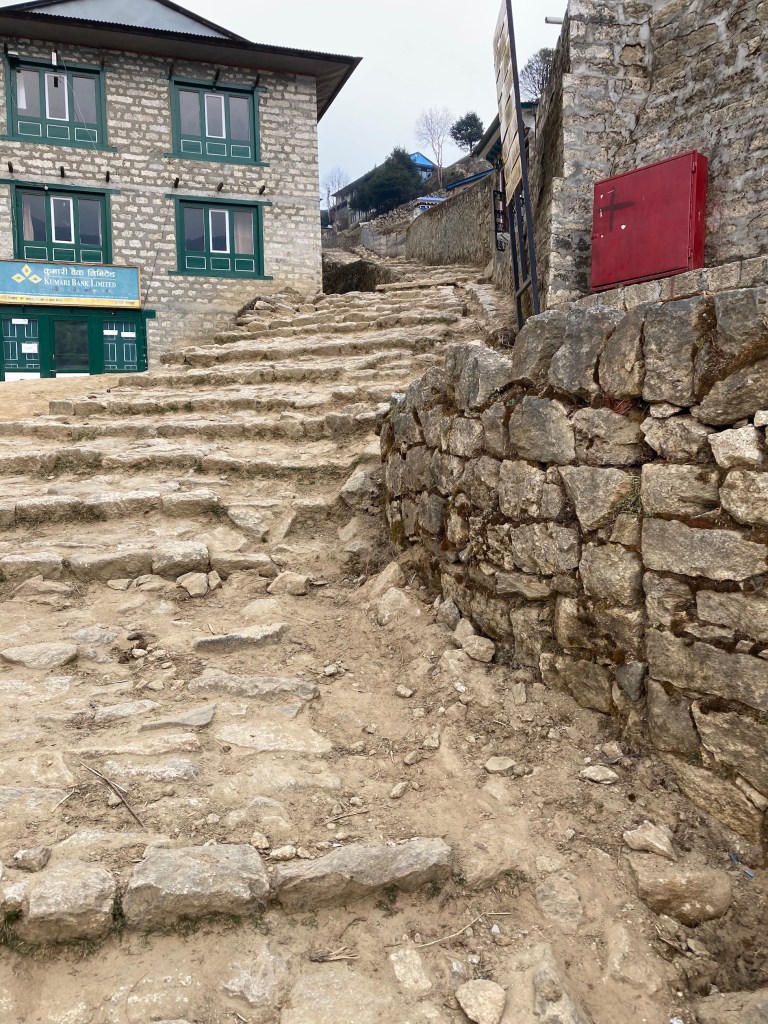
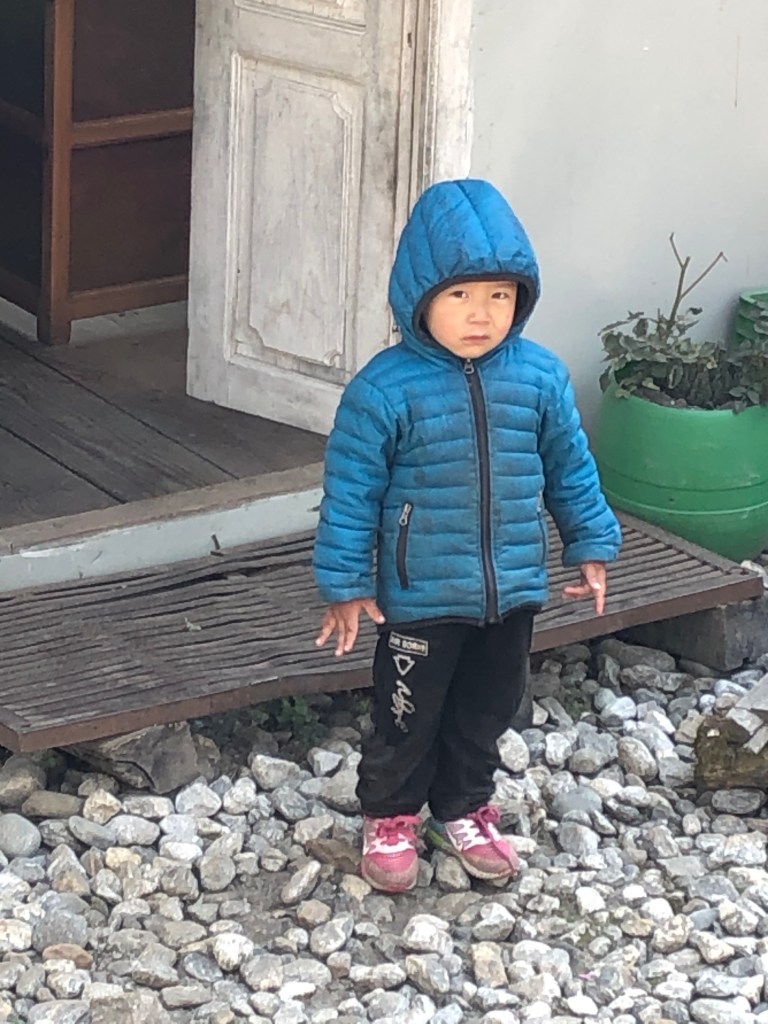
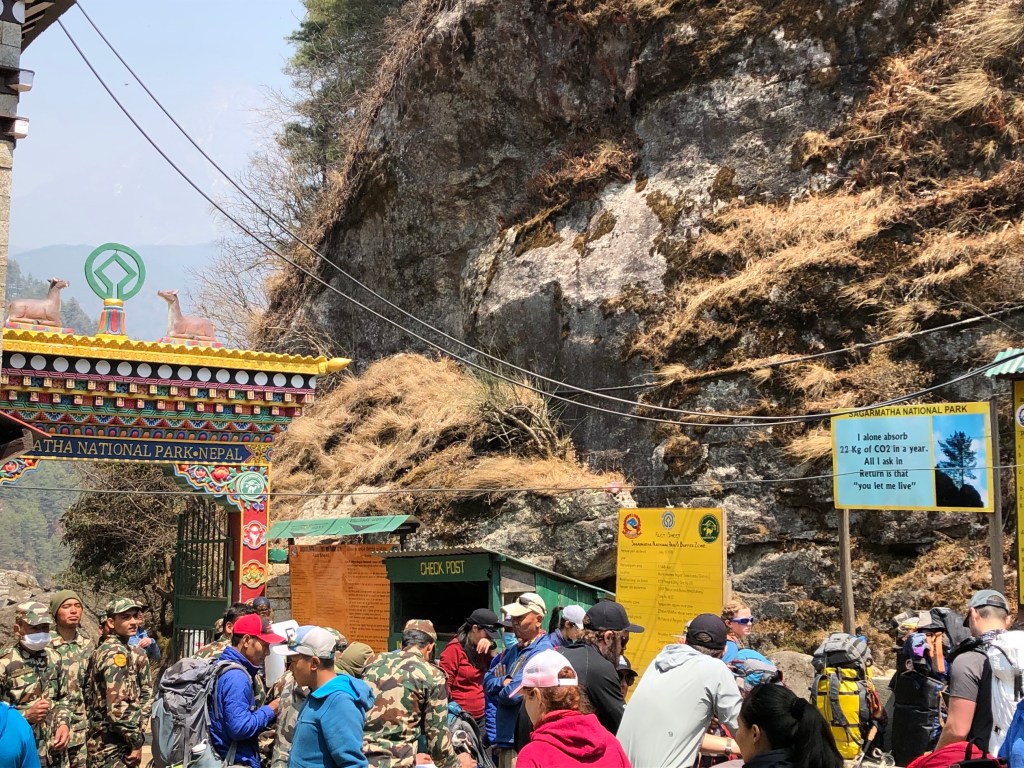
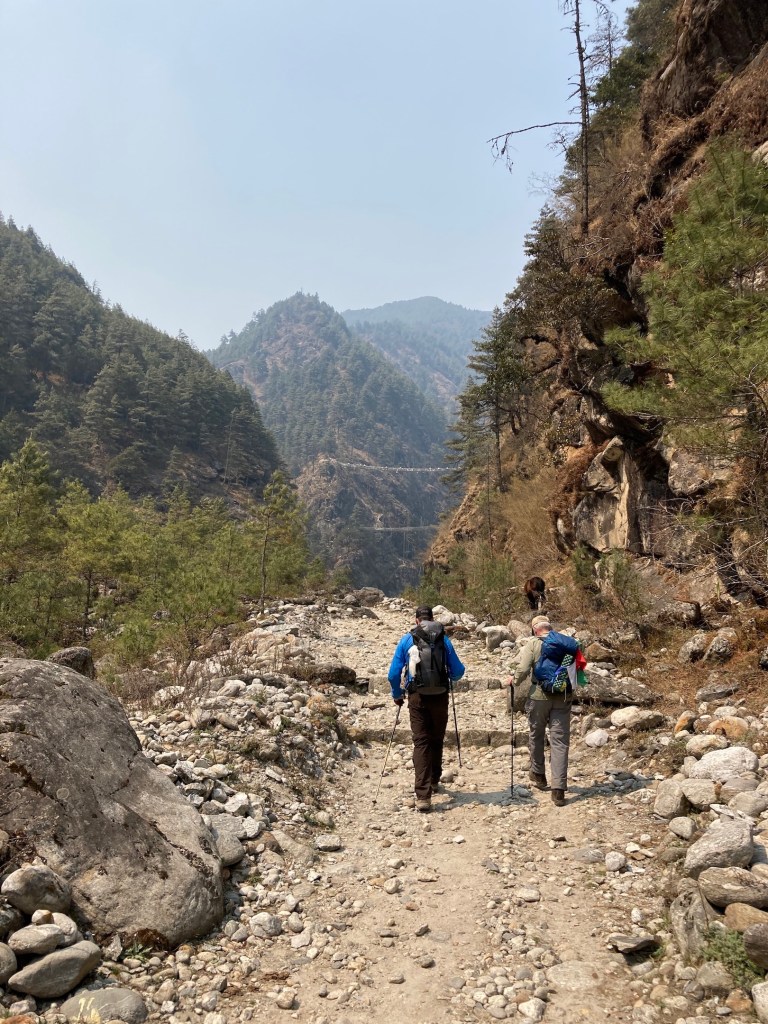
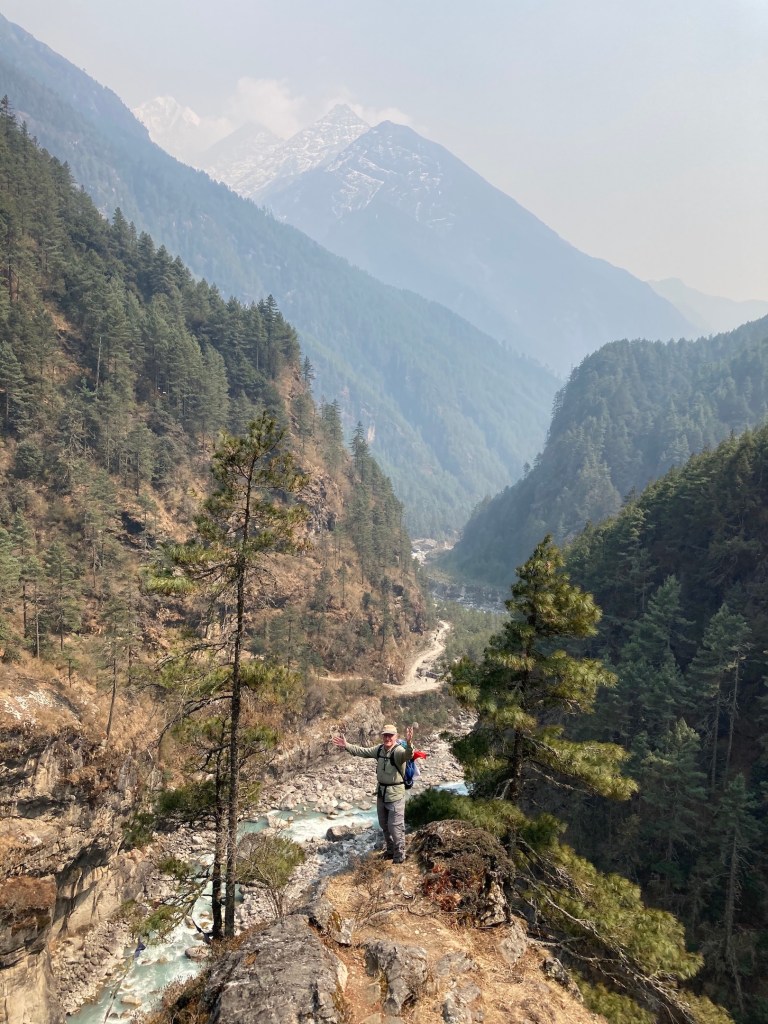
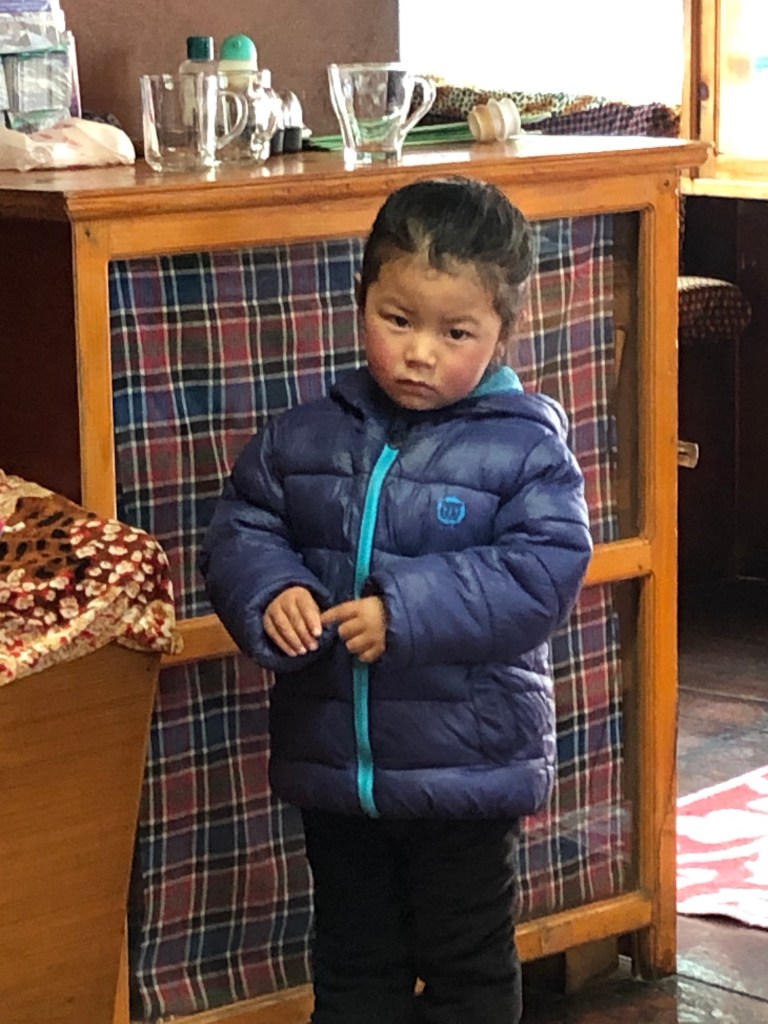
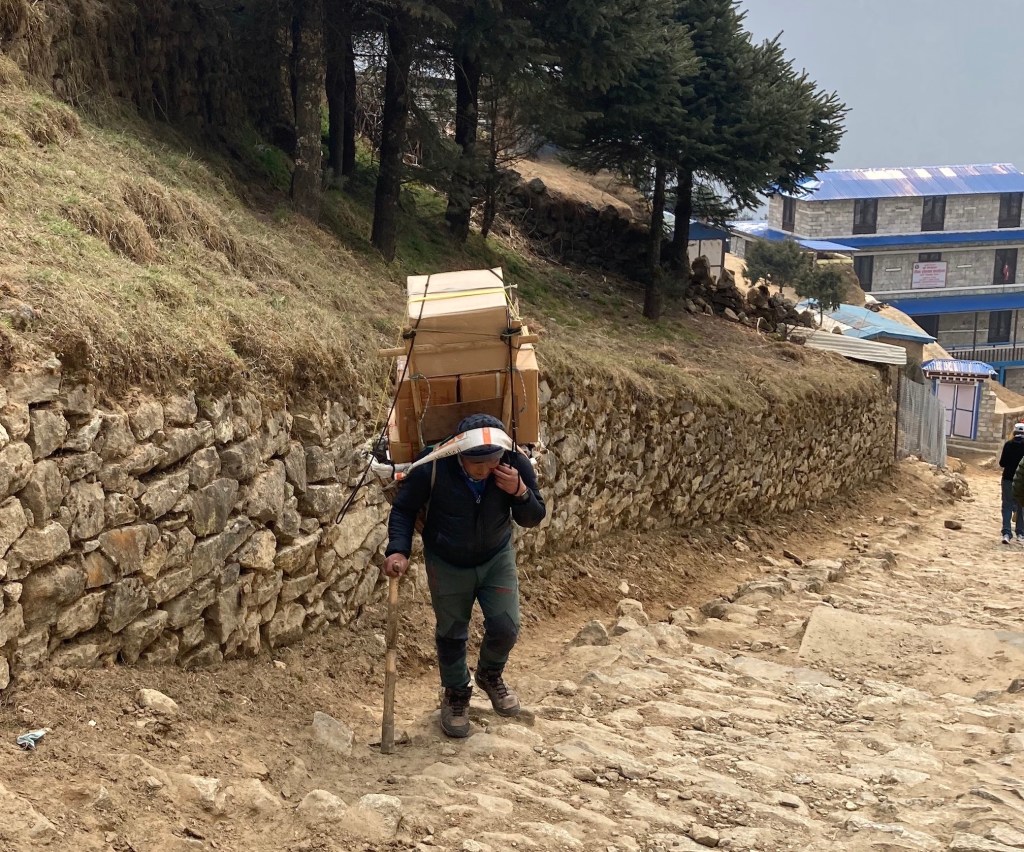
This hard leg took us up the Dudh Koshi river across several suspension bridges, including the highest of all, past several more villages. Pictures show the place at which we stayed in Phakding, one of oodles of attractive young Nepalese children, through the entrance to the Sagarmatha National Park (Everest is called Sagarmatha – the headwaters of oceans), and finally to our hotel at around 3500m (10850ft). Some notes about the people and the place: almost all Nepalese and others who live here are amazingly fit. It would be hard not to be. Other than helicopters, there is no mechanized transportation here. Everything generally comes to all the villages and tea houses on the backs of yaks, yochios (hybrid cow-yak), or mules or is carried by men and women in baskets on their backs held lashed bands over their foreheads. And the size of their ‘packs’ is often twice that of two large duffel bags. Simply astounding. Pack trains number from just a few or over a dozen animals. They are mostly docile, certainly to humans, and worked very hard often carrying 2-2 ½ times what people carry. Getting from point A to B, however short or long, is on foot, and most paths are steep and rough. Actual steps are rare but exist, produced by men doing back-breaking work to hammer large rocks into small ones for walkways and walls. A never ending task it seems.We did hike a stretch along the Dudh Koshi yesterday with “yak gates” at both ends to exclude hoofed creatures who were led along a different route. Our meals have been substantial starting with a bowl of soup – lentil, garlic, or the one we had last night which was richer – all vegetarian so far. Copious quantities of rice are served sometimes with bok choy, onions/garlic, and egg. Mo-mo’s are dumplings with either vegetable filling (spinach, bok choy, garlic) or spicy meats. New potatoes are common, and sauces are made – lentil, tomato-based, to put on rice or potatoes. Steamed cauliflower, carrots, and bok choy are often available. And to wash it all down are many refills of lemon water, tea, and good coffee.
Bridge with the Draves continued. They are quite good!
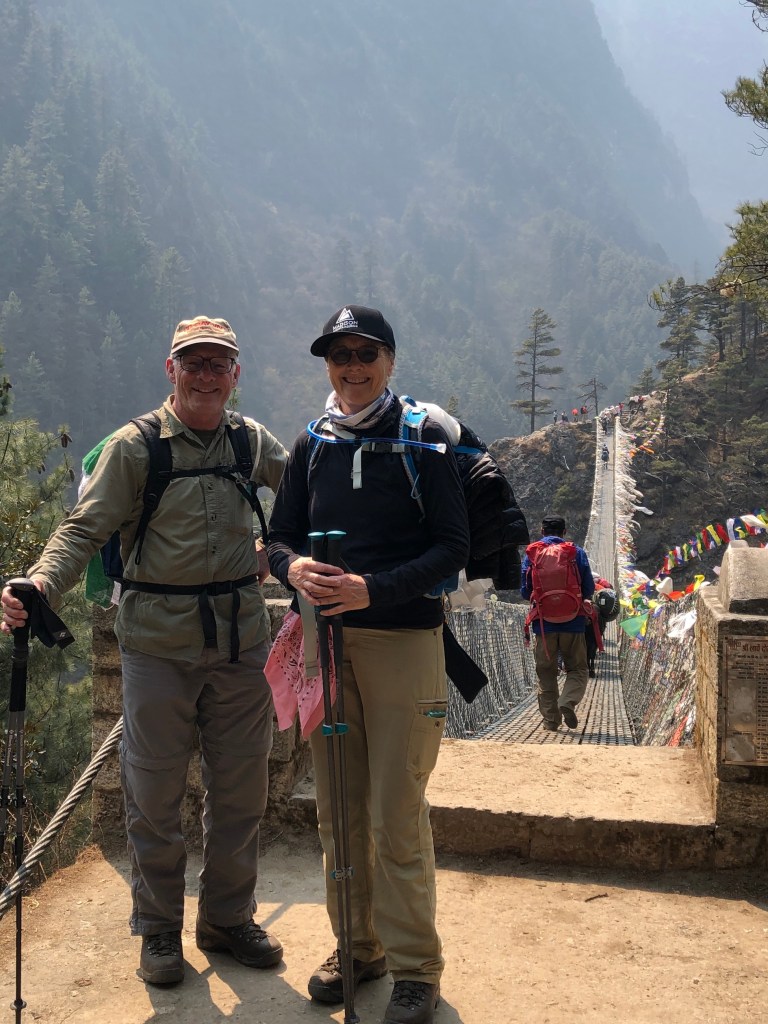
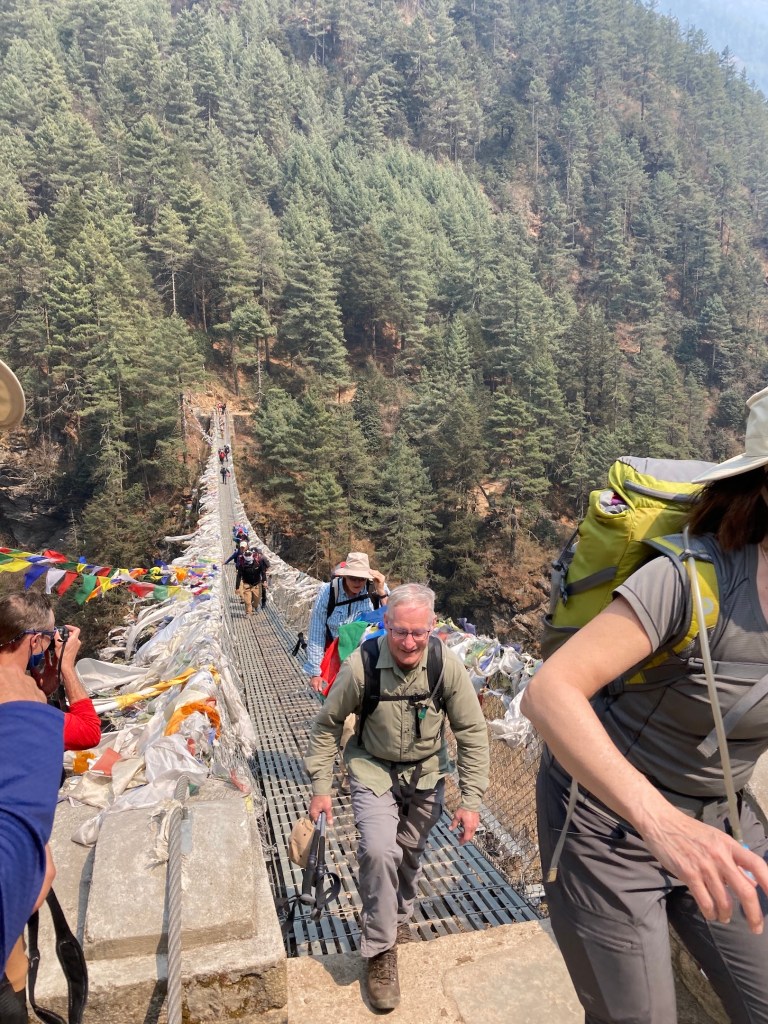
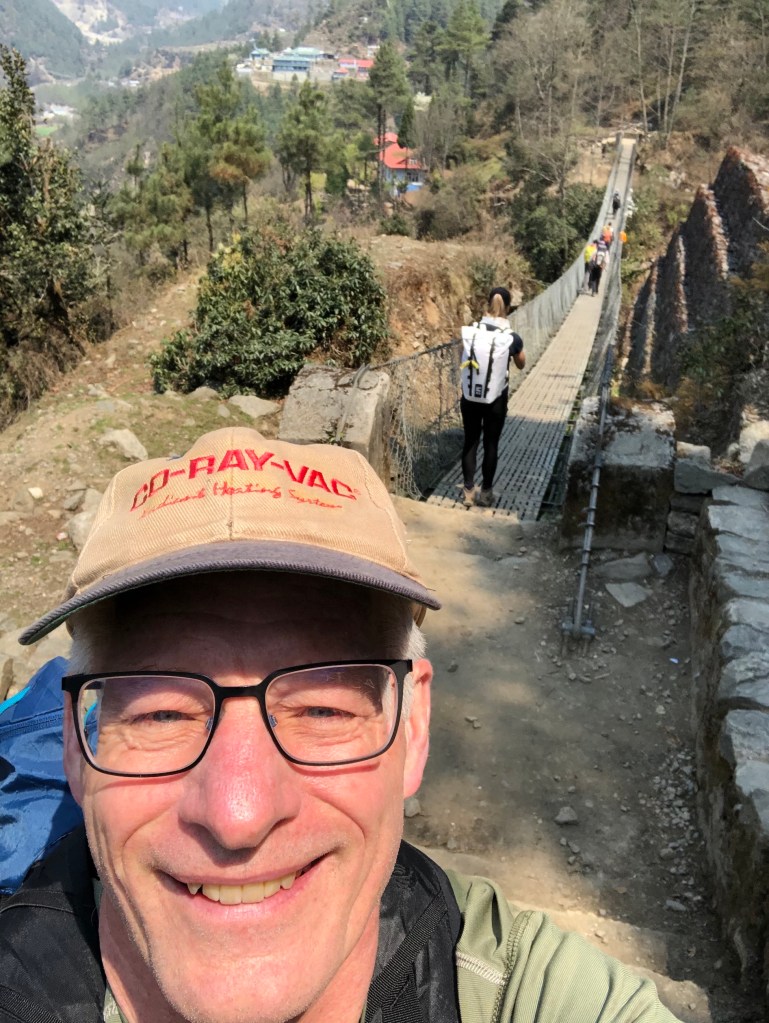
The suspension bridge to our teahouse for night 1.Nepalese kids are beautiful.Entry gate to Sagarmatha National Park. Sagarmatha is the Nepalese name for Everest. From Quora: Sagar means sea and matha means forehead. It may be due to the reason that In place of Himalayas there used to be a sea by the name of tethys which rose up due to tecto platonic contraction and became a mountain of which Mt. Everest is the highest peak. It appears as if it is the forehead of the the risen up sea.The one obvious place along this trail to see the “old road”… suspended beneath the new one.
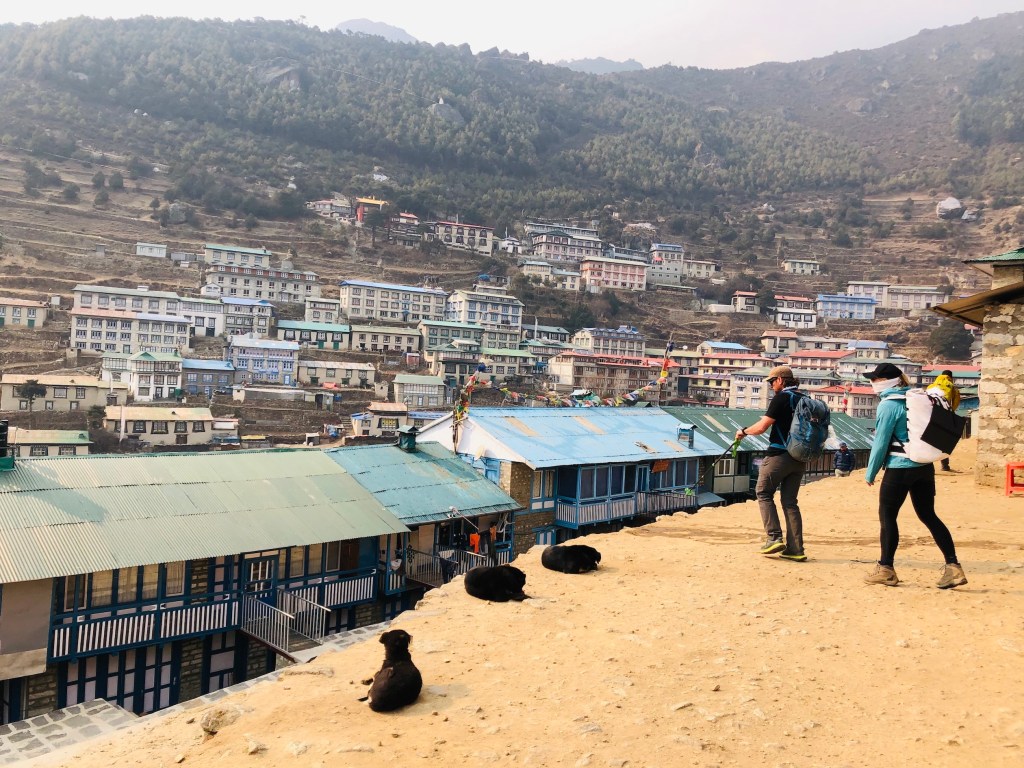
At the high road/new road crossing. Too much wind mid-span to consider photos. One focussed on things other than ones acrophobia.Dudh (Milk) Koshi / Imja Khola (river)Like I said earlier, these kids are beautiful.Namche Bazar – no bulldozers here, nor apparent granite block-making industries. Expansive terraces everywhere. And plenty of dogs.Principle means of moving goods from points A to B. There are no mechanized vehicles here save helicopters. Heavier loads are managed by zochios (cow-yak cross), true yaks, and mules.Namche Bazar
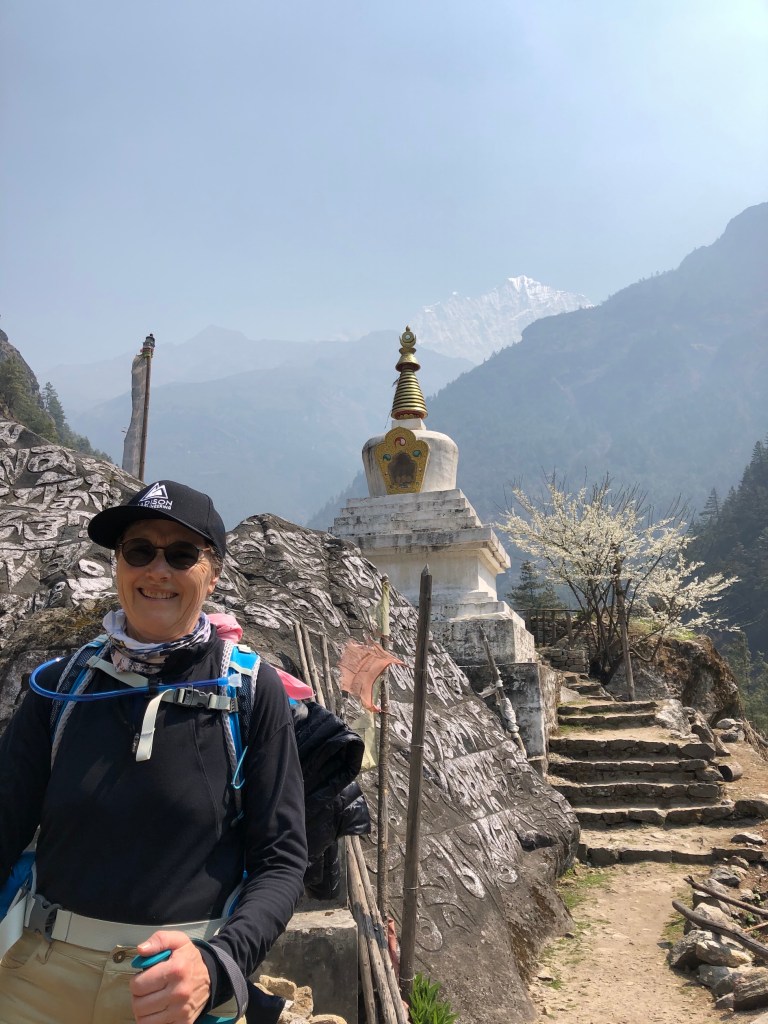
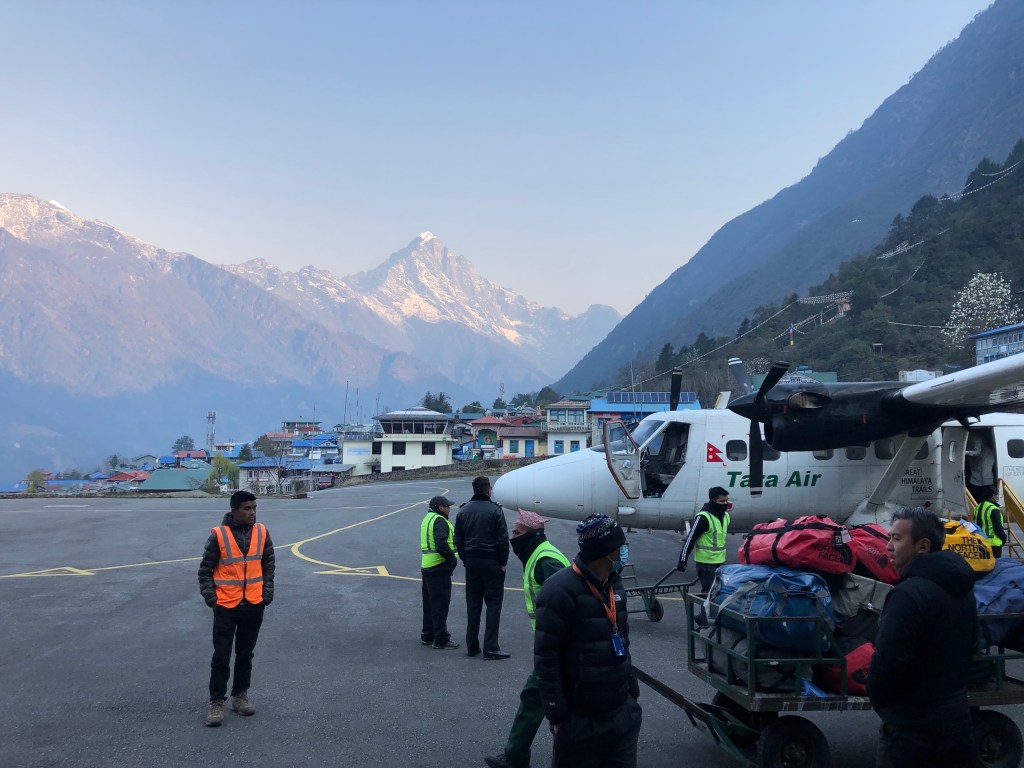
Today we flew to Lukla – the most dangerous airport in the world – and enjoyed the surprisingly fast, efficient process of checking in, getting tickets, boarding the aircraft, and taking off. Upon landing, climbers and trekkers (us) enjoyed breakfast together and set off to Phakding with our day packs leaving the heavy lifting to yaks. (see picture of our yaks crossing the Dudh Koshi (Milk River)) The trek carried us from 2840m (8800ft) to 2610m (8100ft) past numerous small temples, prayer wheels, and monk-carved rocks bearing ancient prayerful messages and across the first two of many cabled suspension bridges. We enjoyed a substantial lunch of soup and rice dishes at a tea house along the way. Our guides posed for a picture, and a good dinner was capped off by Milky Way and Snickers bars wrapped in crepes.
We met and got to know Rich and Wendy Draves better. They’re from Madison Park and they play bridge and so we did!
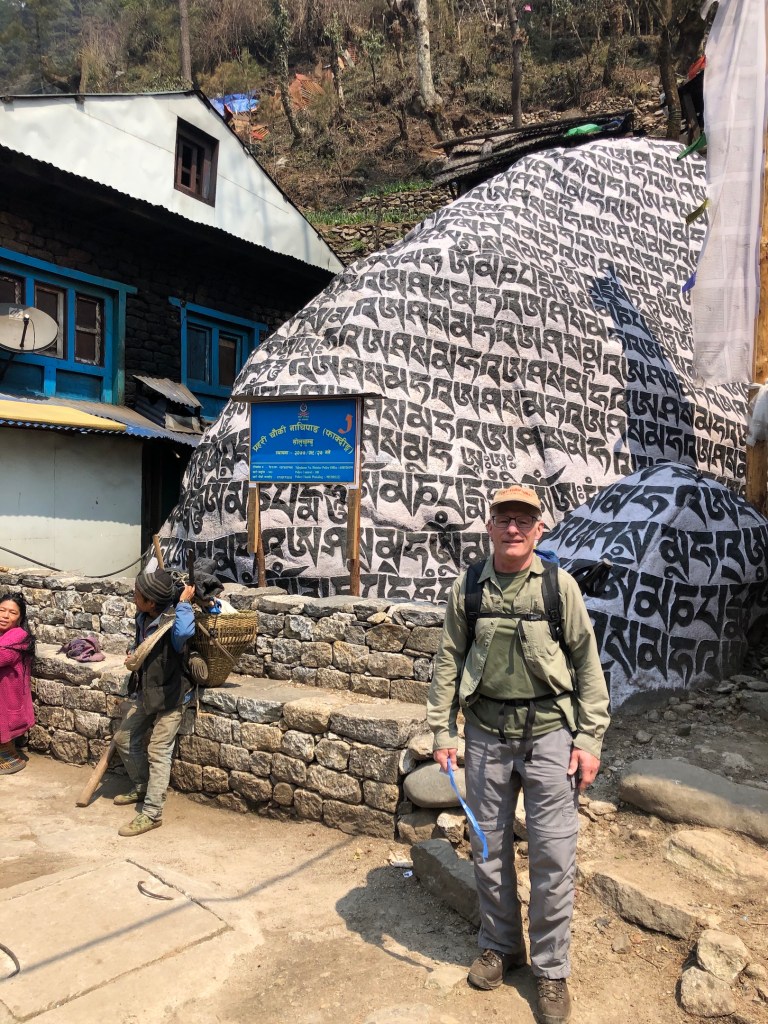
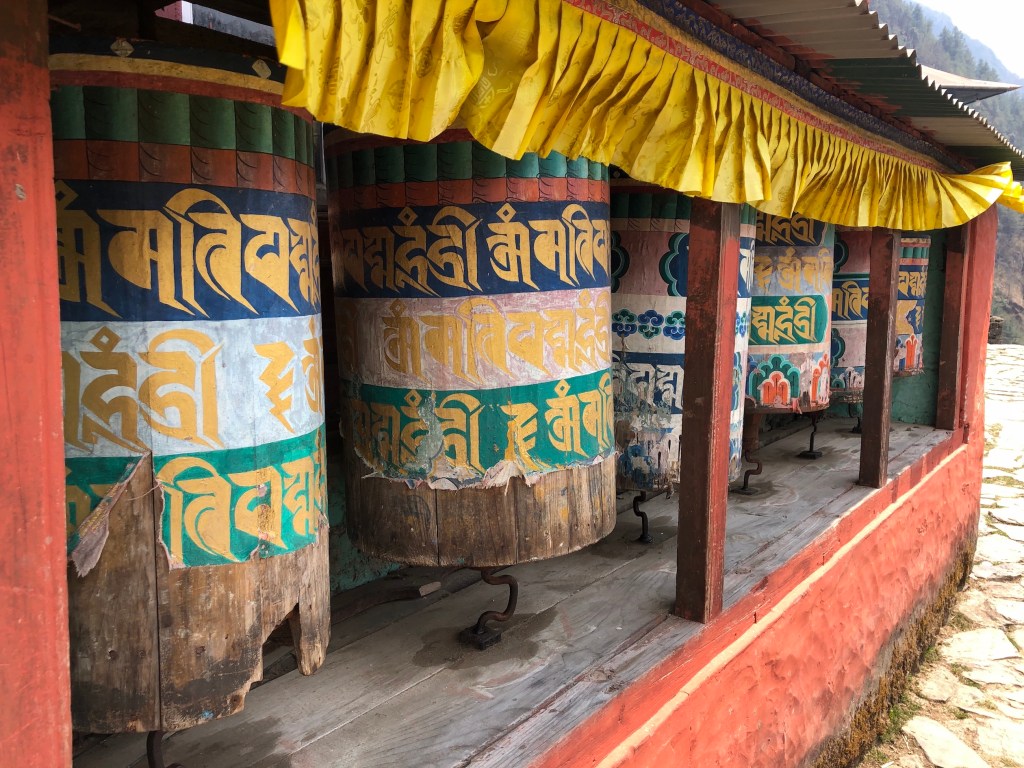
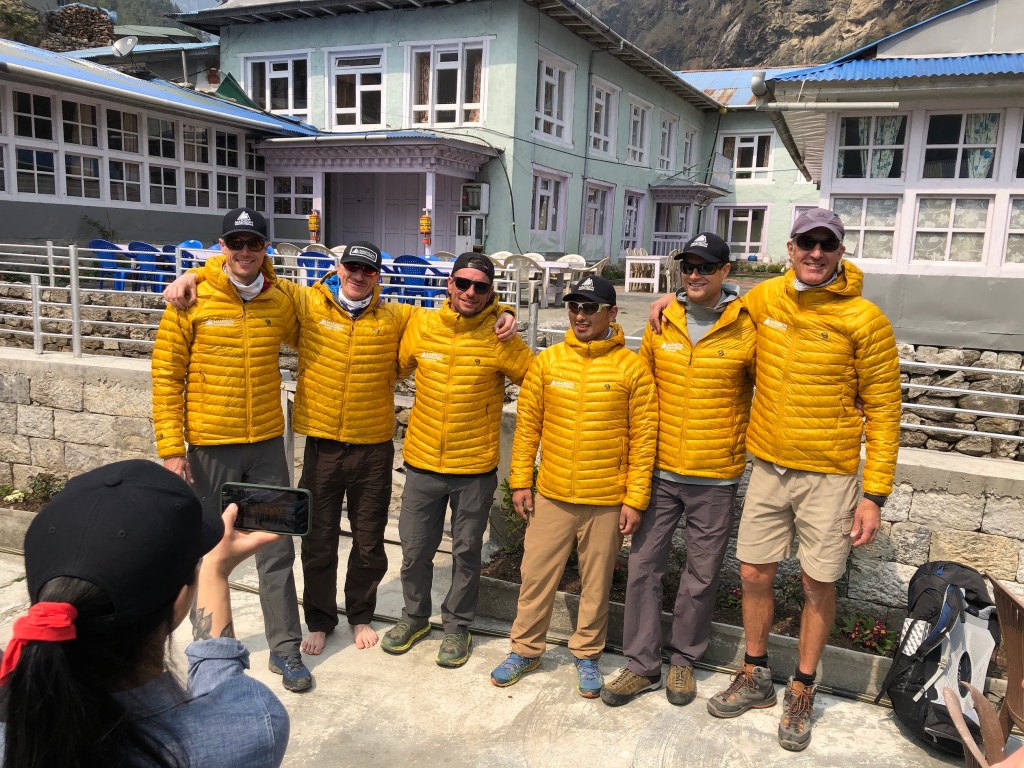
Well-built suspension bridges are … everywhere along the trail. Livestock doesn’t flinch crossing these things … despite the bounce. Like prayer flags, prayers scripted on rocks like this and on rock plates (see later pics) appear at regular intervals along the trail. Some are dolled up like this one. Many are not. They date to the 14-15th century. Passers by are to pass these objects on their right.A very old set of prayer wheels. Many are metal. All are kept well-oiled for passers by who spin them to receive blessings.One awesome and sharp looking guide team: left to right – Terray, Rob, Sid, sirdar Ang Phurba, Garrett, and our fearless leader, Conan.You’ll never guess. A Milky Way bar wrapped in a crepe. Novel dessert @ Phakding.
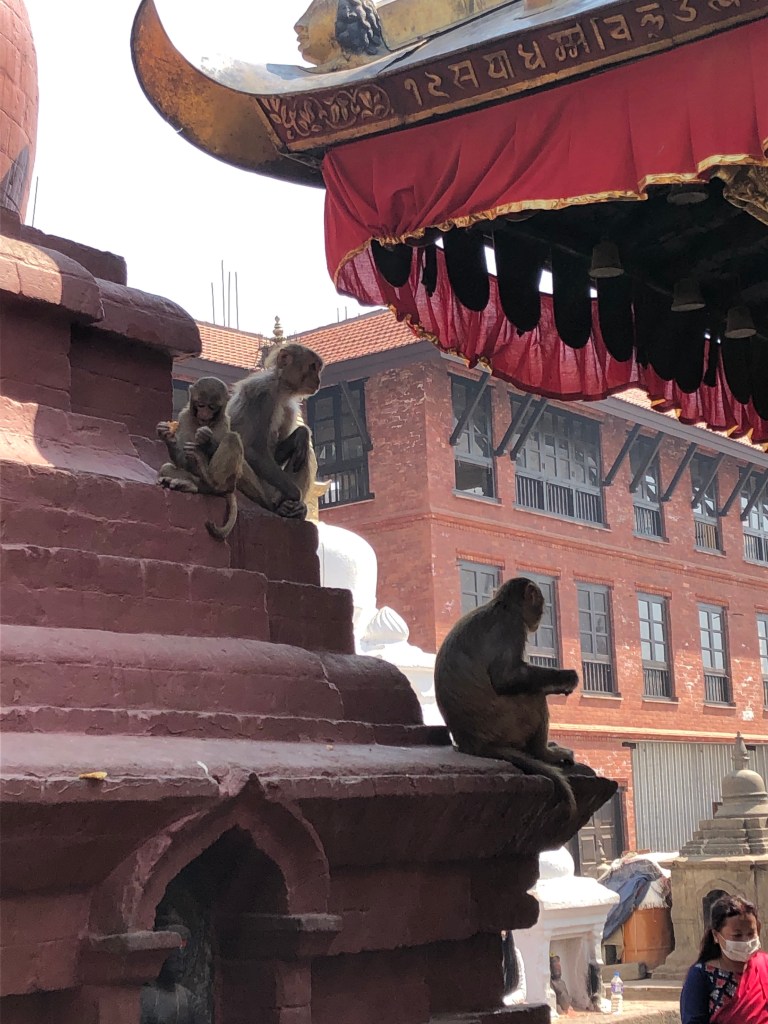
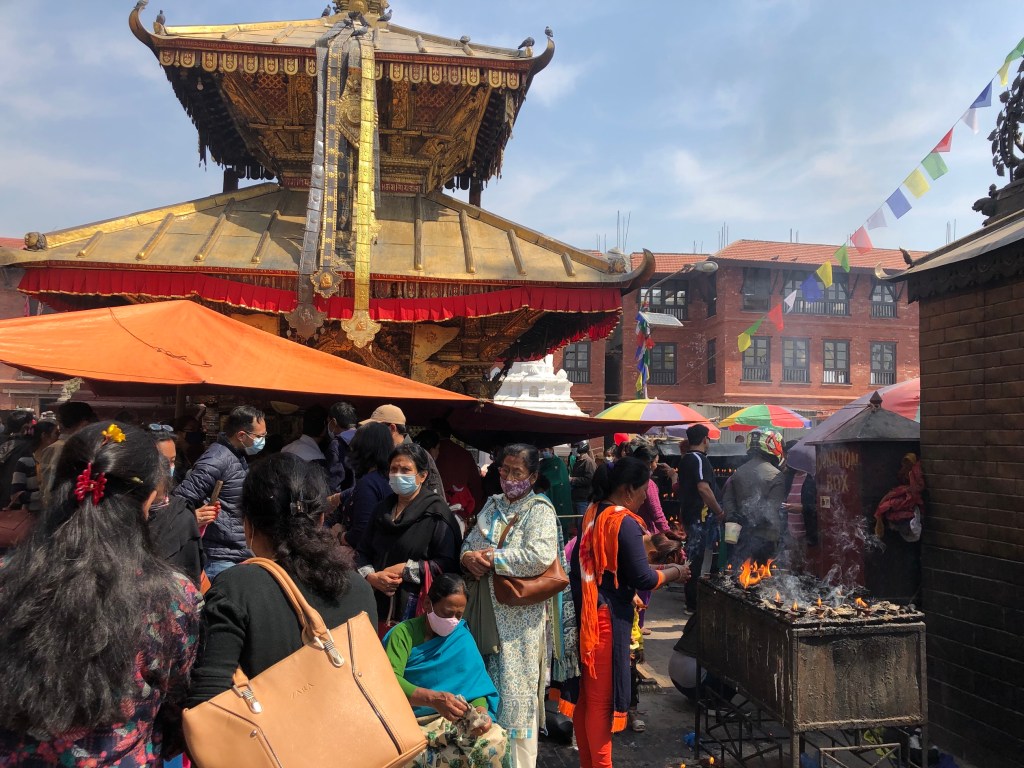
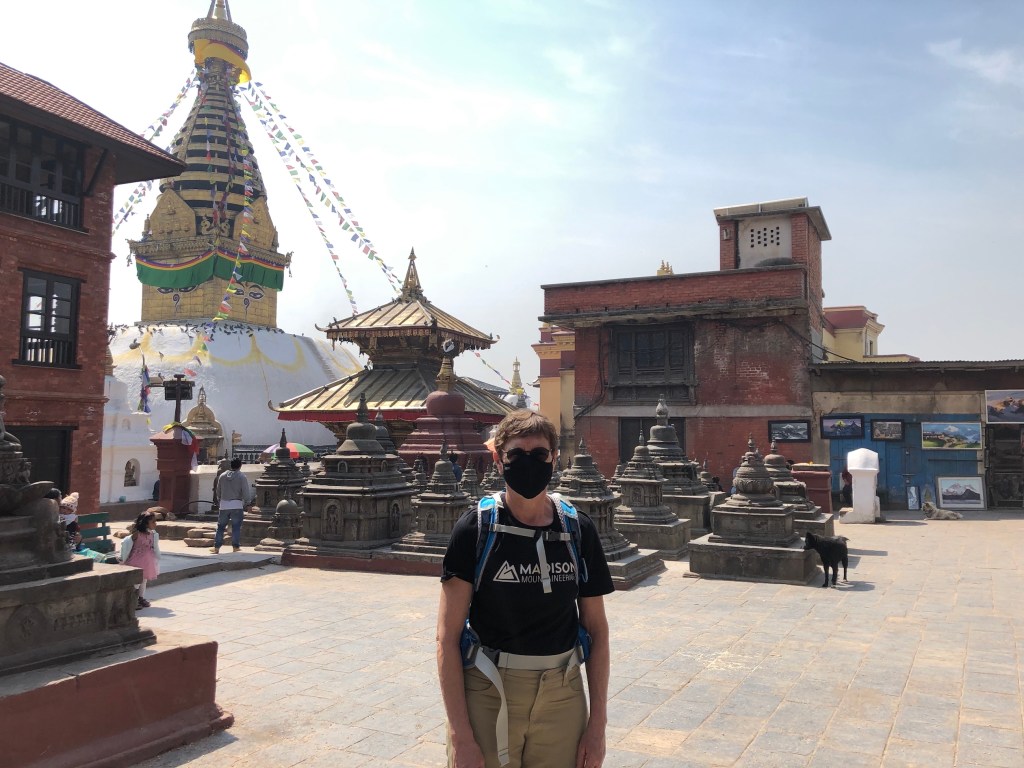
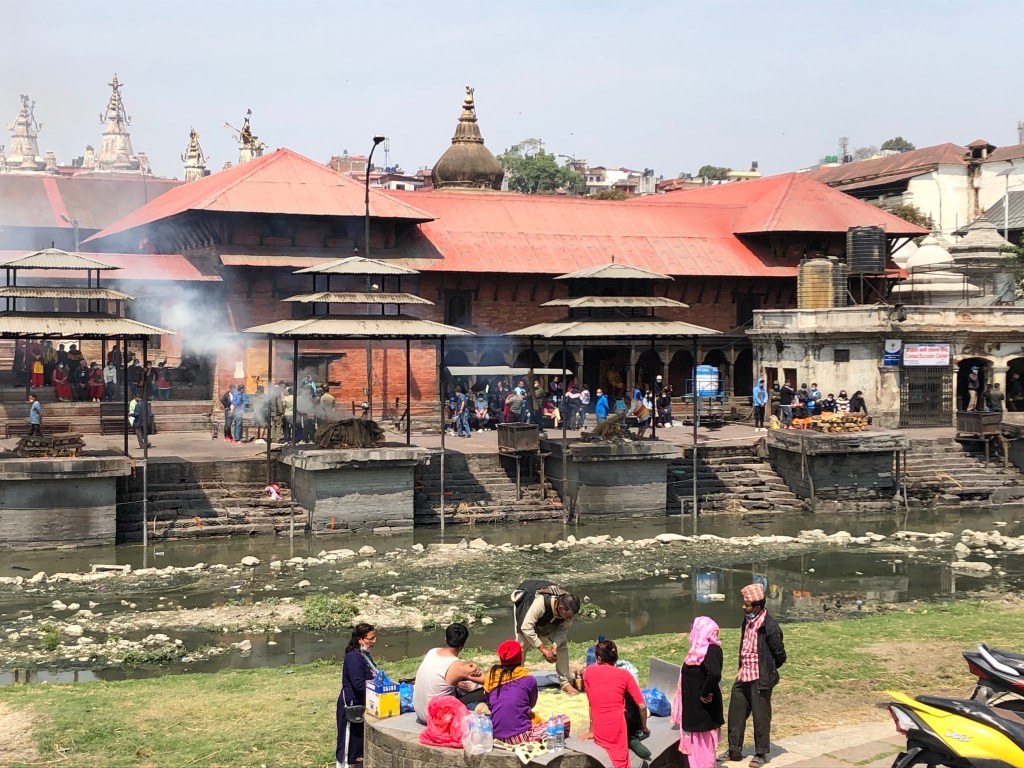
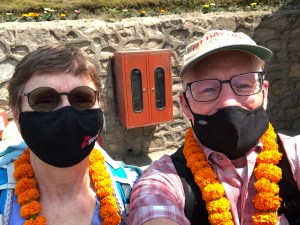
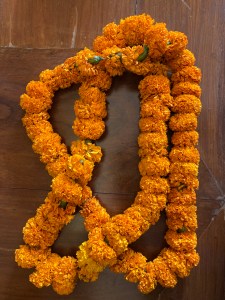
We spent several hours touring the of the large temples in the city. Two are Buddhist and one is Hindu. To say the least, the day provided the degree of sensory overload one might expect in a large city in a “developing” country. Unruly and loud traffic, comprised more than half by motorcycles and scooters, was the norm, but it all rather flowed, like water! At the first Buddhist temple, The Monkey Temple, and the Hindu temple, panhandlers were persistent and – discovered the hard way – dishonest. Some were very young children. Monkeys and fly-covered sleeping dogs appeared many places at the first Buddhist temple. Incense, votive candles, and small fires filled the air with aromatic smoke. The Hindu temple sported all stages of cremation alongside a sickly green trickle of a stream into which ashes are dumped once the pyre has cooled. At the second Buddhist temple we enjoyed listening to a young chap describe thangka art – highly detailed, colorful painting on impregnated cotton cloth with limitless variation on three themes: lives of Buddha, the circle of life, and mandala – generally circular designs each telling stories.
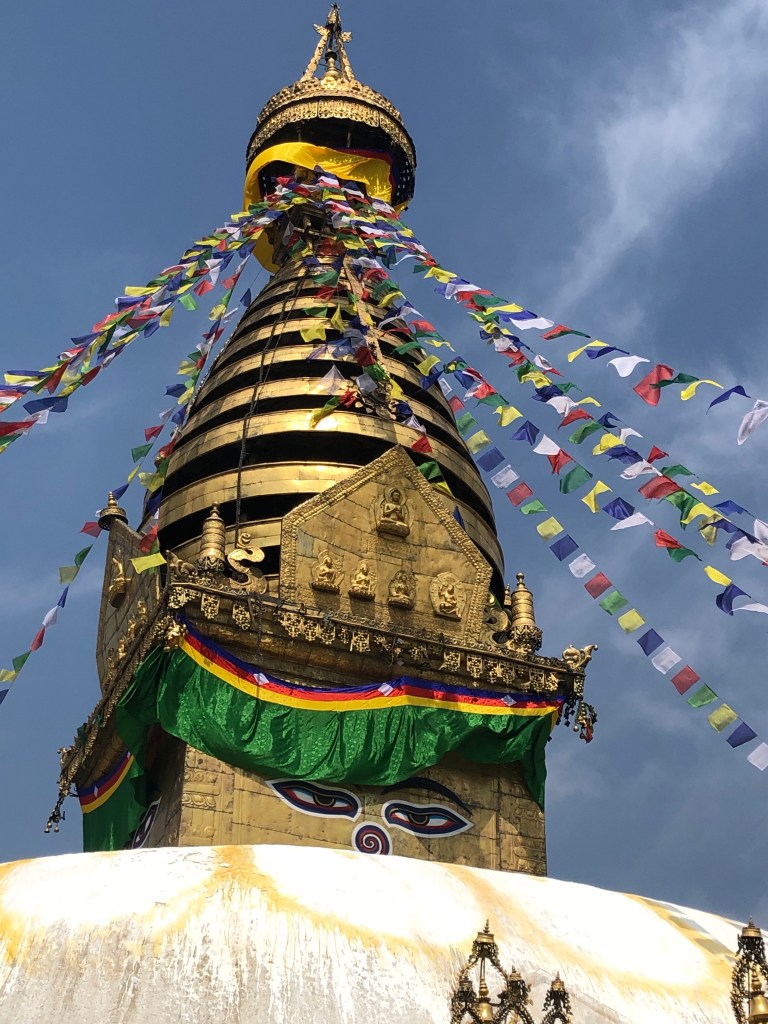
Entry to the “Monkey Temple.” Scroll down to be convinced …
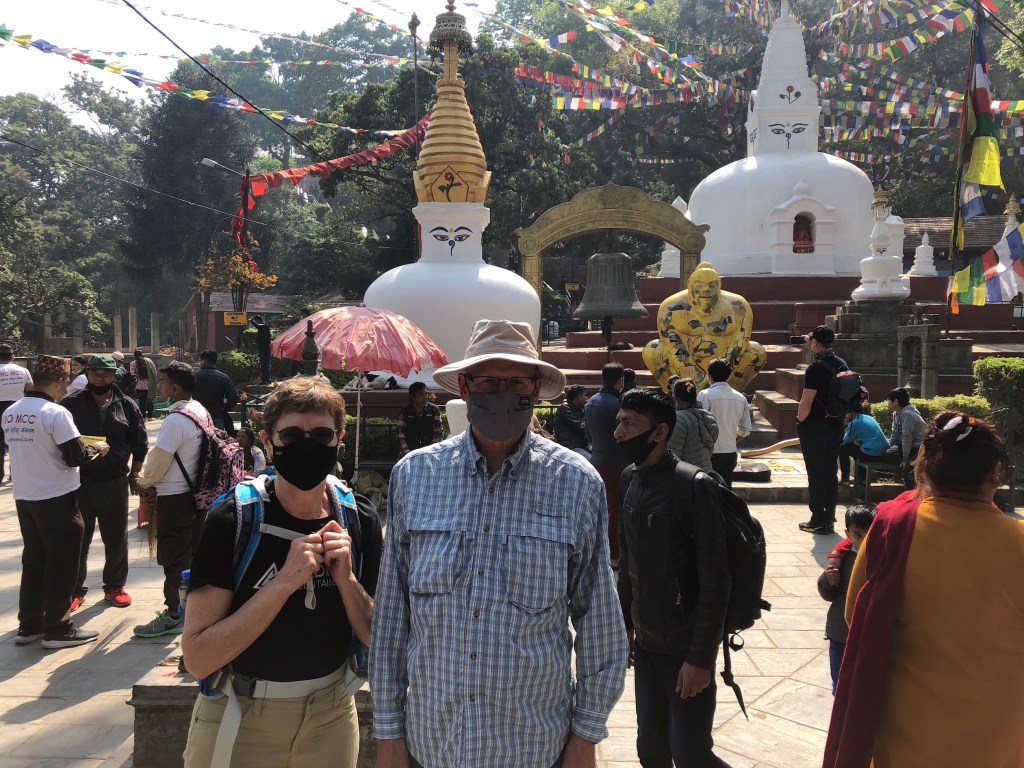
They eyes of Buddha – on all four sides of this temple Stupa. Note ubiquitous prayer flags. The breeze carries good blessings from them down-wind.…just a few. Watch your fingers.Long lines of locals seeking blessings from different shrines within the temple grounds. Today was a national holiday – so it was busy.Small stupa-like monuments to Nepalese who were married.Hindu temple in the background. Various stages of multiple cremations in process. Ashes are swept into the stream at the end. Circle of life(!)
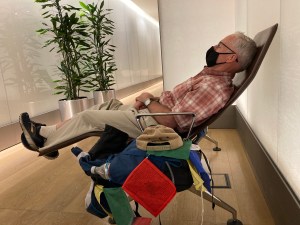
2 April – A quiet, uneventful half-day was spent at the Hamad International Airport in Doha, Qatar. Directions to certain things are rather lacking, but there was ample time to wander around. On the home-bound layover, we will try the Stay N Sleep bunk pods. Madisons liked them.
Not many places to crash in Doha, Qatar, but these reclining chairs worked okay.
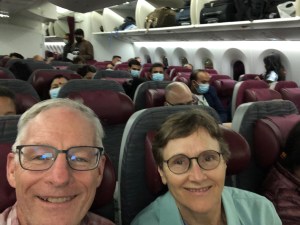
The Doha-Kathmandu leg began at 0205am and ended at 0900am.
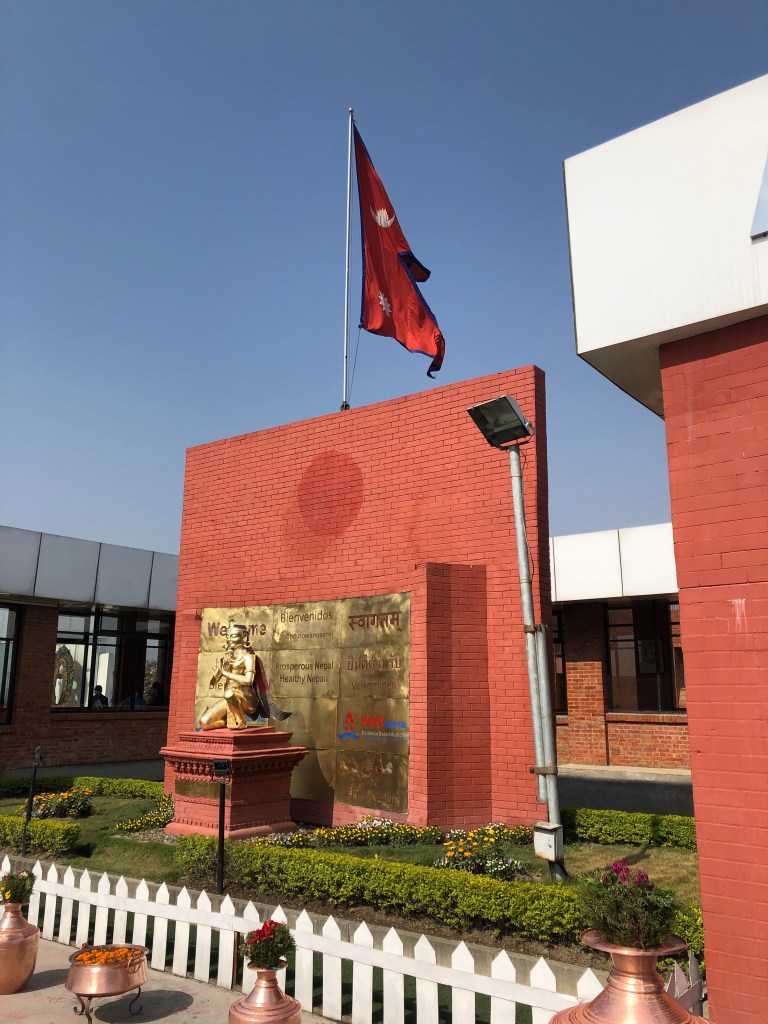
Made it to Tribhuvan International Airport a half-hour early!
Will spare readers details of the anxieties of obtaining a visa on the premises (with computers that don’t print) and discovering that, by sheer fortune, we’d held onto our boarding passes which were expected at customs.
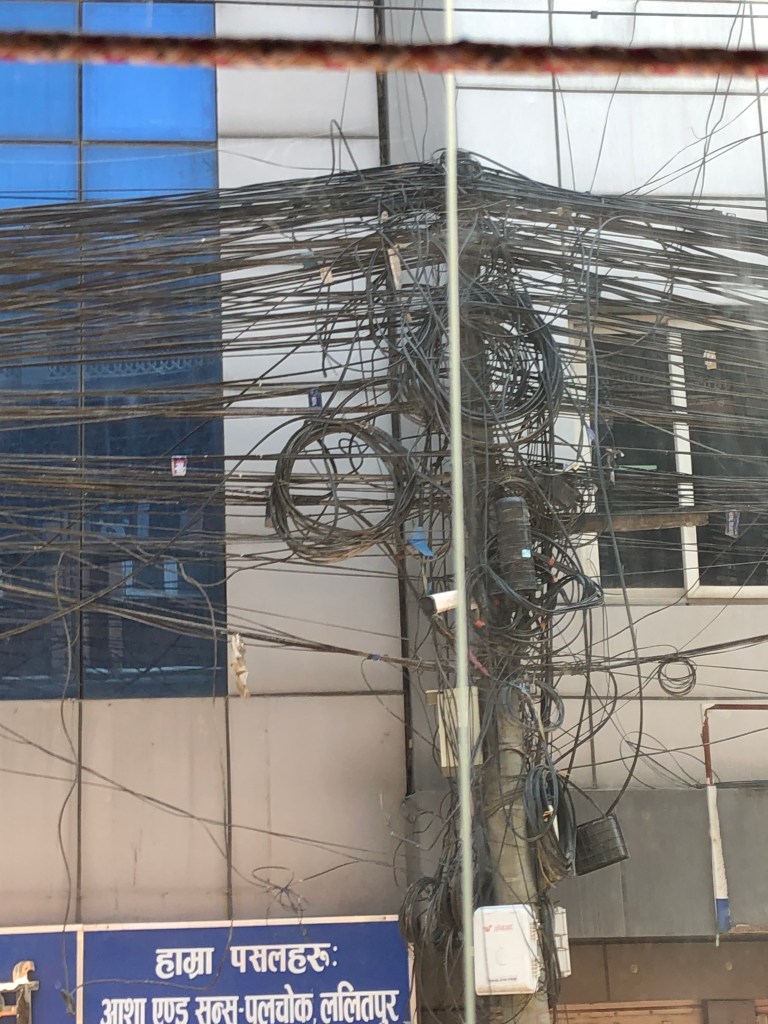
The Yak and Yeti Hotel is an oasis tucked within a hustling bustling town of narrow streets and lots of noisy scooters and motorcycles. It would be interesting to talk with a Nepalese electrician.
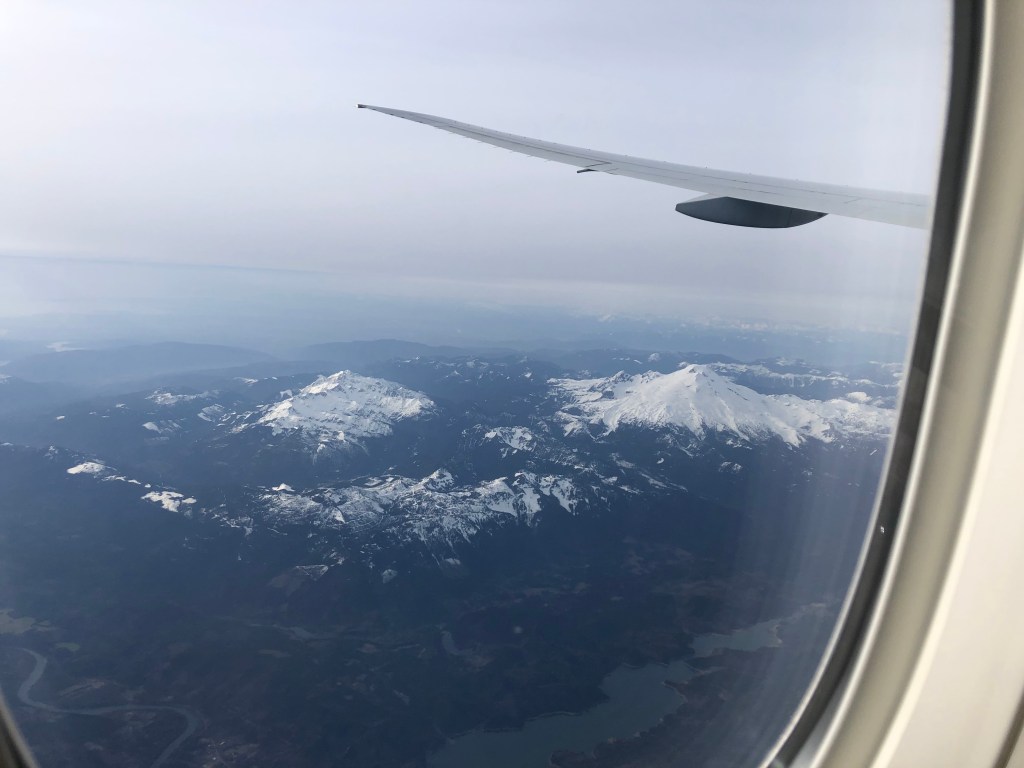
1 April – It is already midnight local time where we are, so Happy Birthday to my brother Chris and nephew Rick … and Happy April Fool’s Day! Voyage and visit to Doha, Qatar It should have been expected that QA720 would take off on a great-circle route northbound from SeaTac and assume a heading north by northeast given Qatar’s situation well southeast of central Europe. Instead, it came as a surprise as was the fly-by immediately east of Mt Shuksan and Mt Baker. Very cool as were views of snow coated Canadian Rockies that followed. The 777 was largely empty, and passengers used most of the four-seat center sections to snooze on. I used this unique occasion to at last finish Paul Kildea’s Chopin’s Piano, a thoughtful Christmas gift from daughter Mary. CP is a copiously detailed account of the life of Frederick Chopin and, later, Wanda Landowska who, respectively, initiated the Romantic era of music with his Twenty Four Preludes for piano written on Majorca and championed those preludes and other Romantic scores in France and, at the onset of war, the United States framed within an intriguing history of a particularly unique piano. The piano is likely lost to antiquity courtesy of winds borne of an especially virulent form of progressivism that sparked WWII. The music endures, and one day soon I will endeavor to play more of it. We have enjoyed getting to know Garrett’s girl-friend Mikki Seagren, a medical assistant on our trek – her first to EBC also.
Marc and Jane Stewart decided year ago to join another couple, Chris and Mary Madison, whose son is Garrett Madison of Madison Mountaineering, on a bucket-list trip to Everest Base Camp alongside another group with intentions to summit Mt Everest in May. The trip has come together given the ebb and flow of Covid 19 throughout the past year. In fact, the quarantine in Nepal was lifted a week before our trip started. We don’t anticipate wearing masks on the trek except possibly in/around tea houses if they are crowded. Covid has kept travel down, so we expect relatively uncrowded conditions. Additionally, it appears we will actually be able to spend a night at EBC. The original itinerary had us staying at Gorek Shep, walking up to EBC and returning to Gorek Shep.



 Stewart Travels