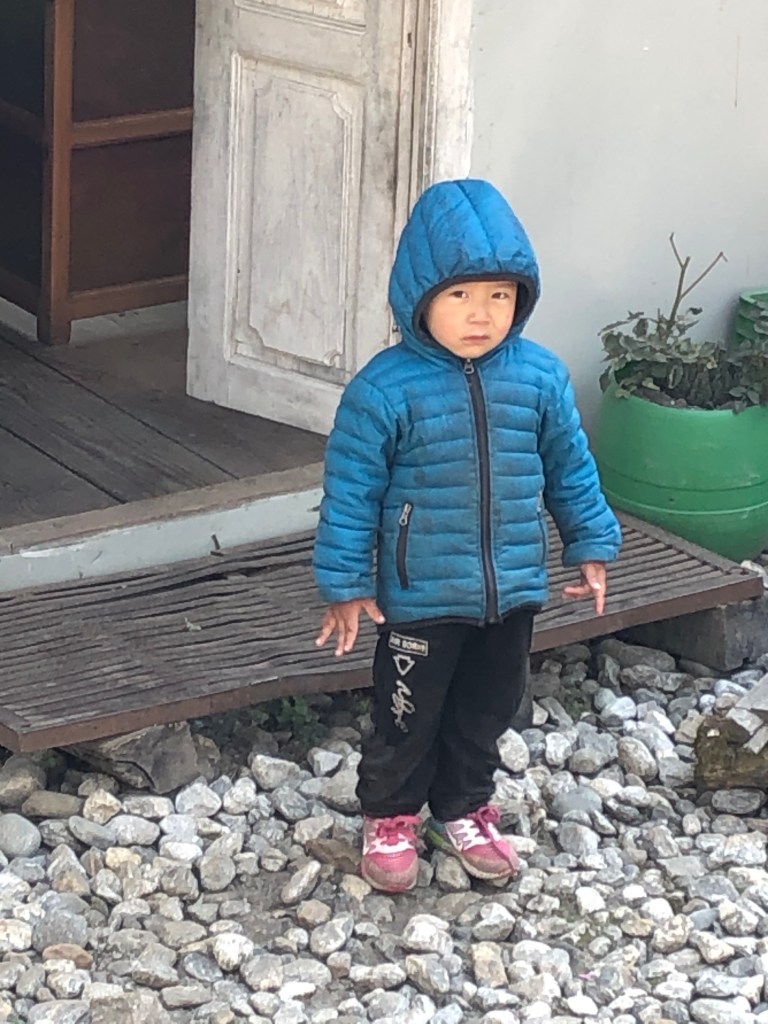
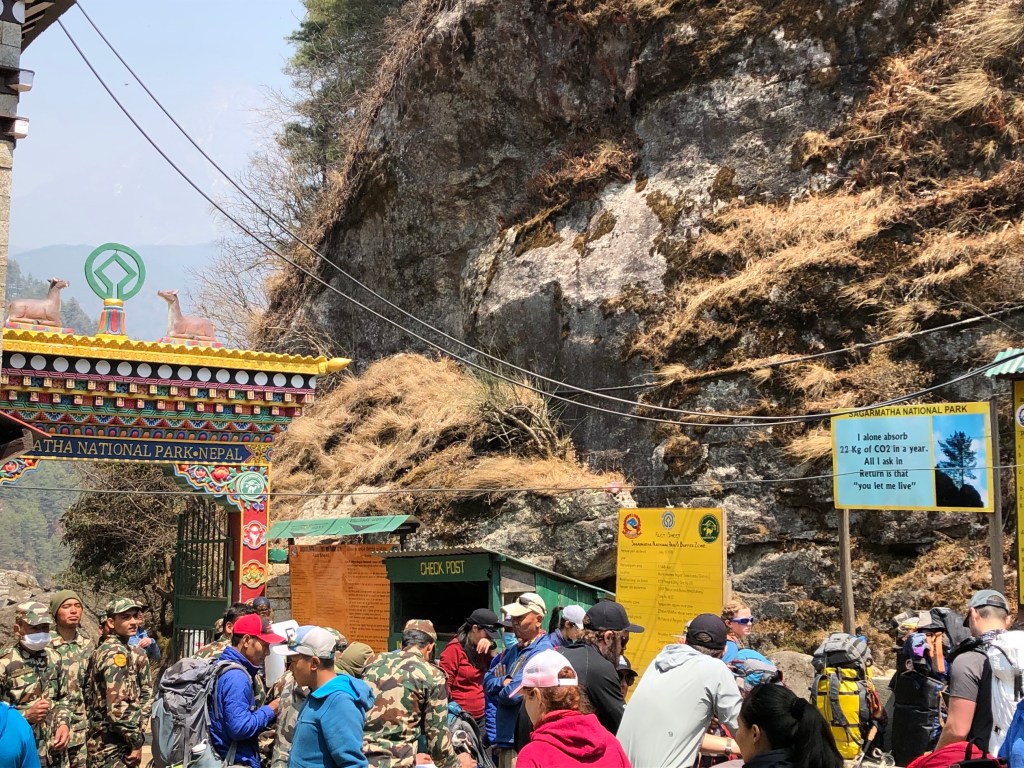
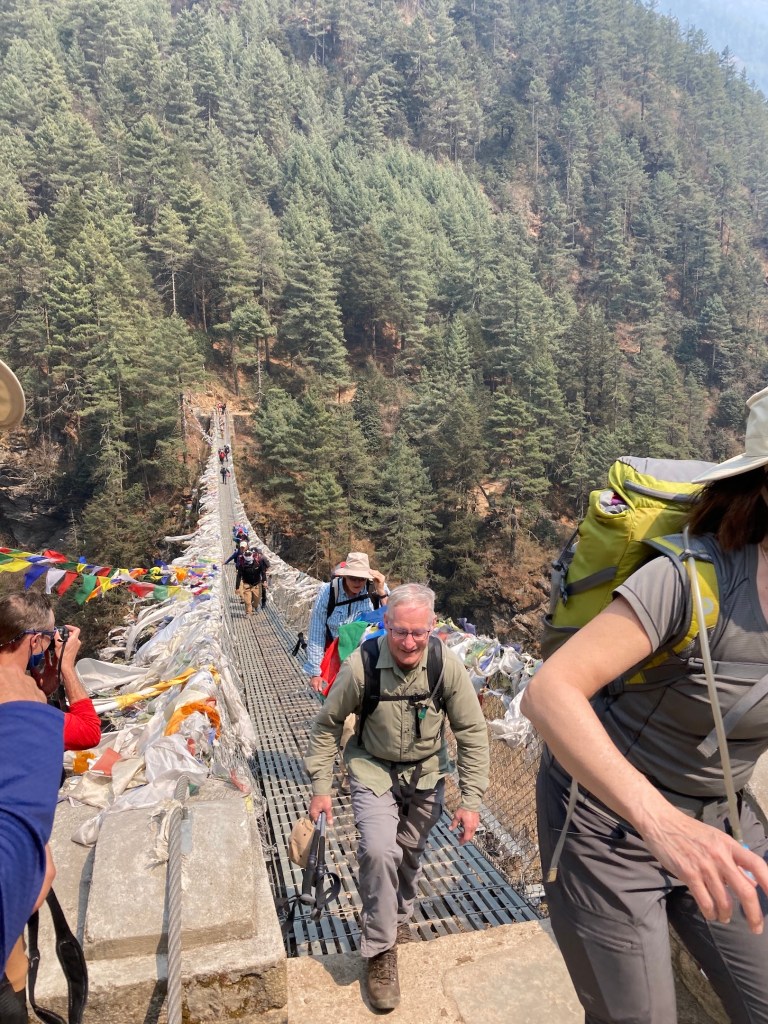
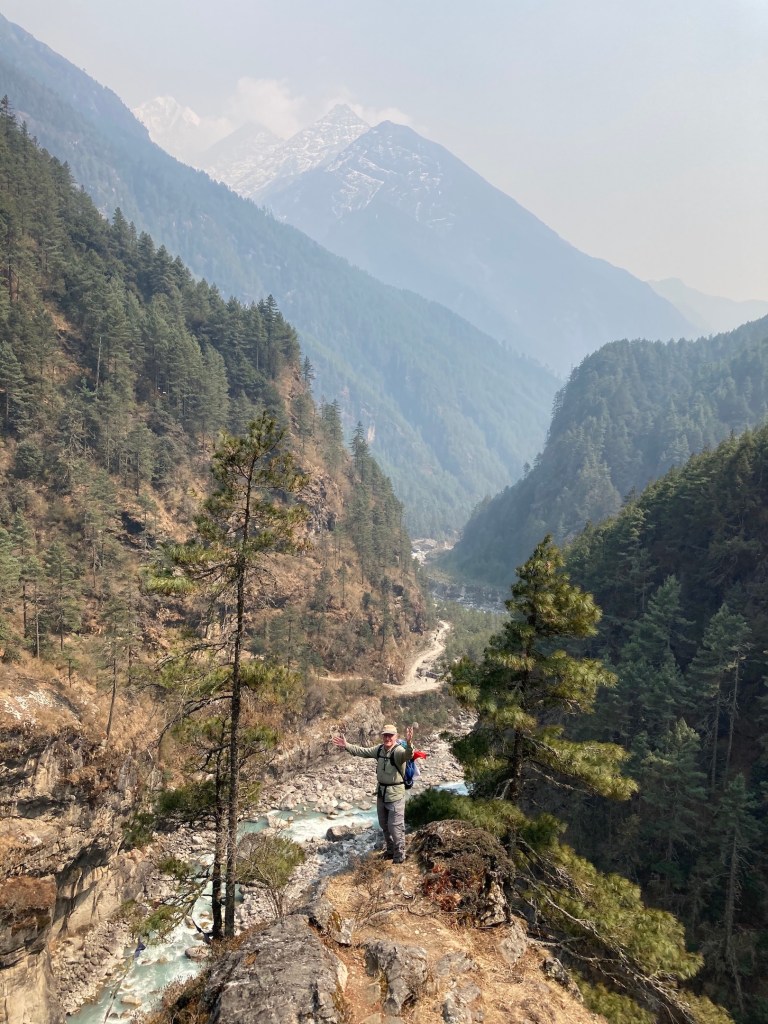
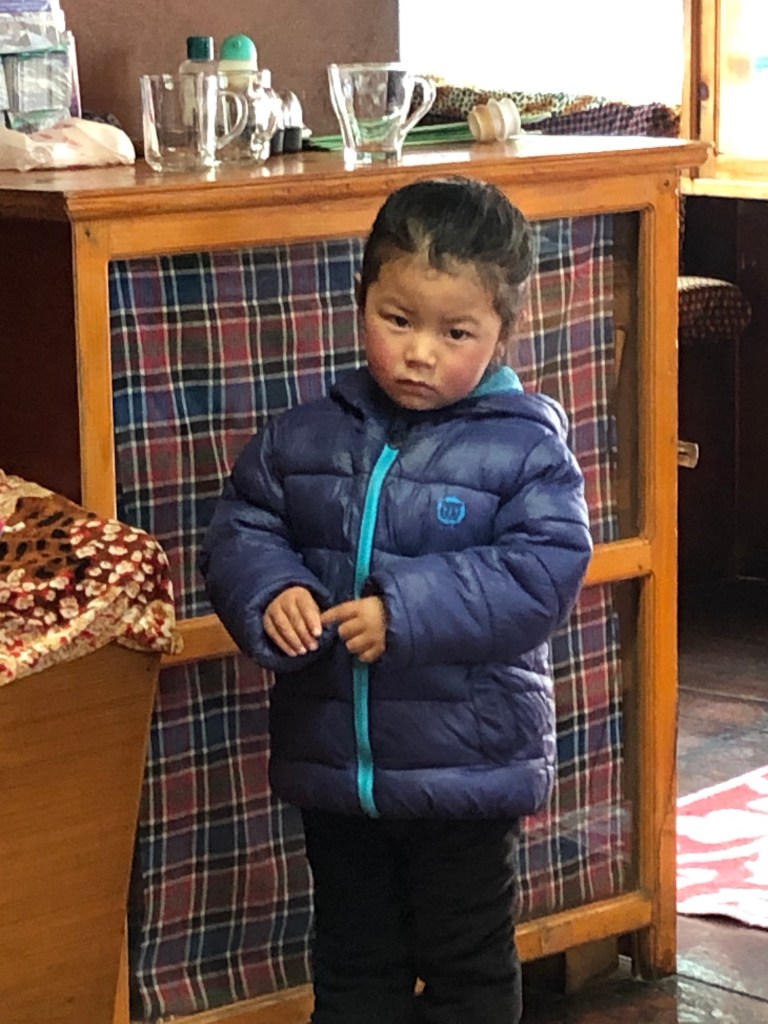
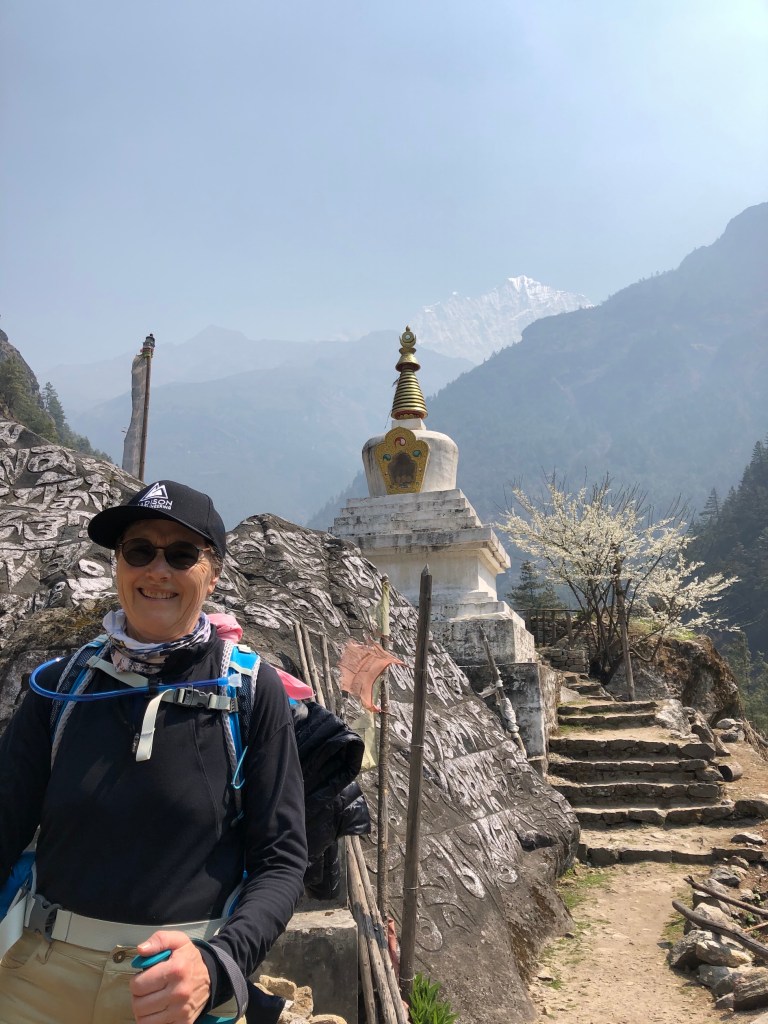
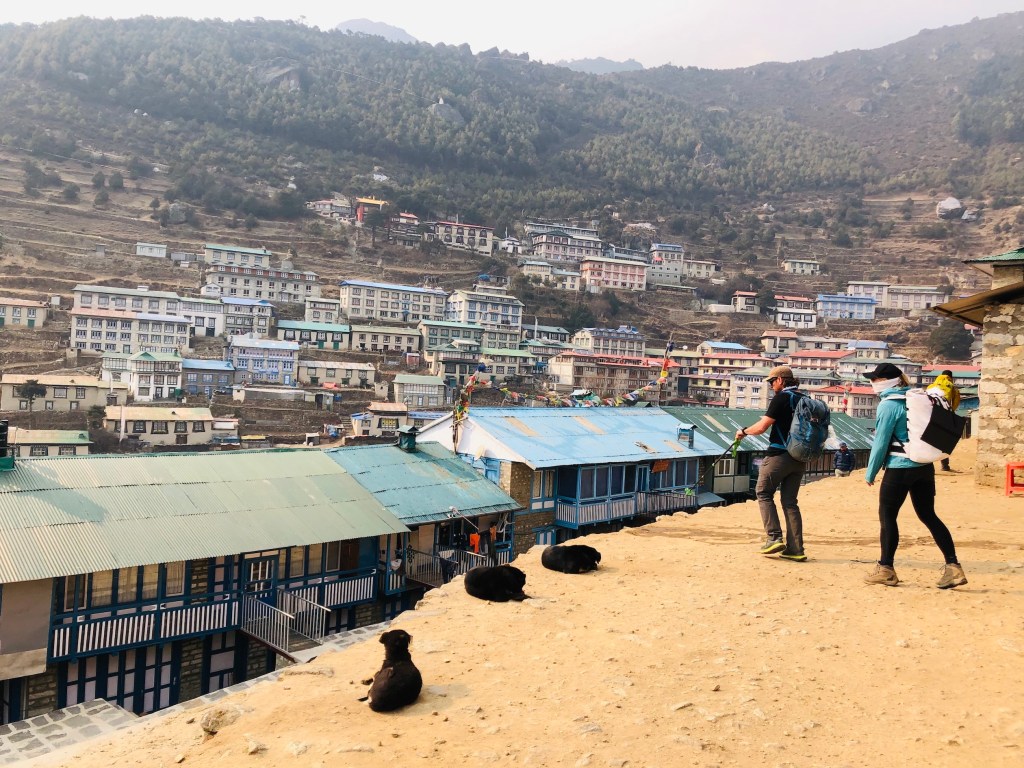
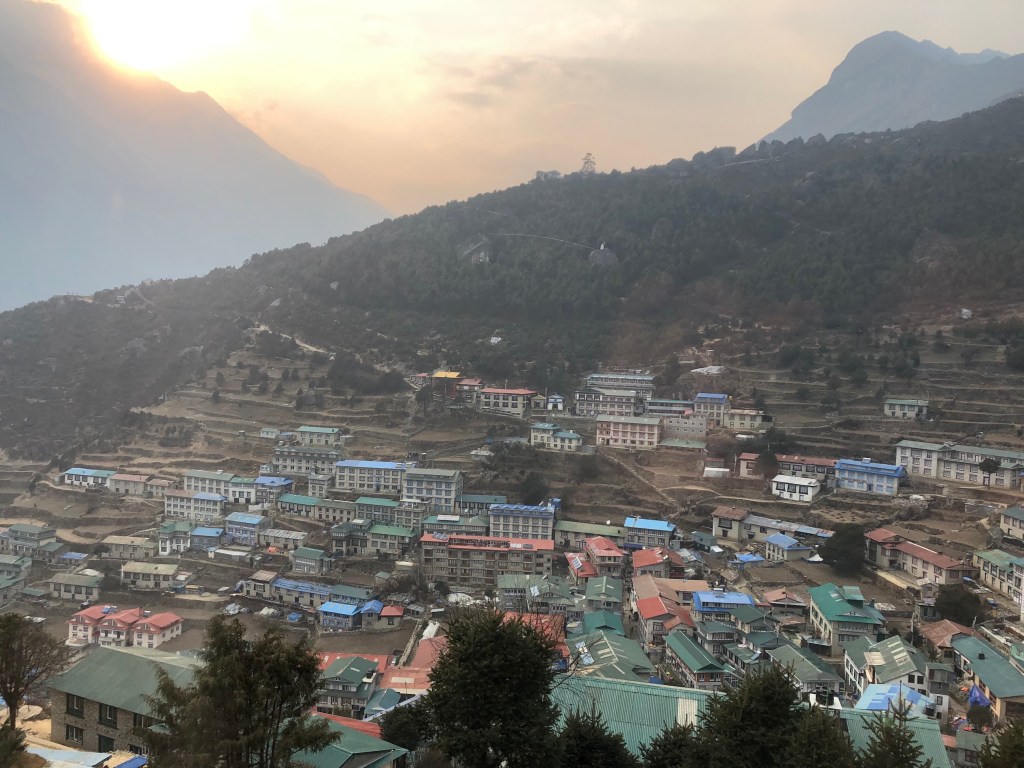
This hard leg took us up the Dudh Koshi river across several suspension bridges, including the highest of all, past several more villages. Pictures show the place at which we stayed in Phakding, one of oodles of attractive young Nepalese children, through the entrance to the Sagarmatha National Park (Everest is called Sagarmatha – the headwaters of oceans), and finally to our hotel at around 3500m (10850ft).
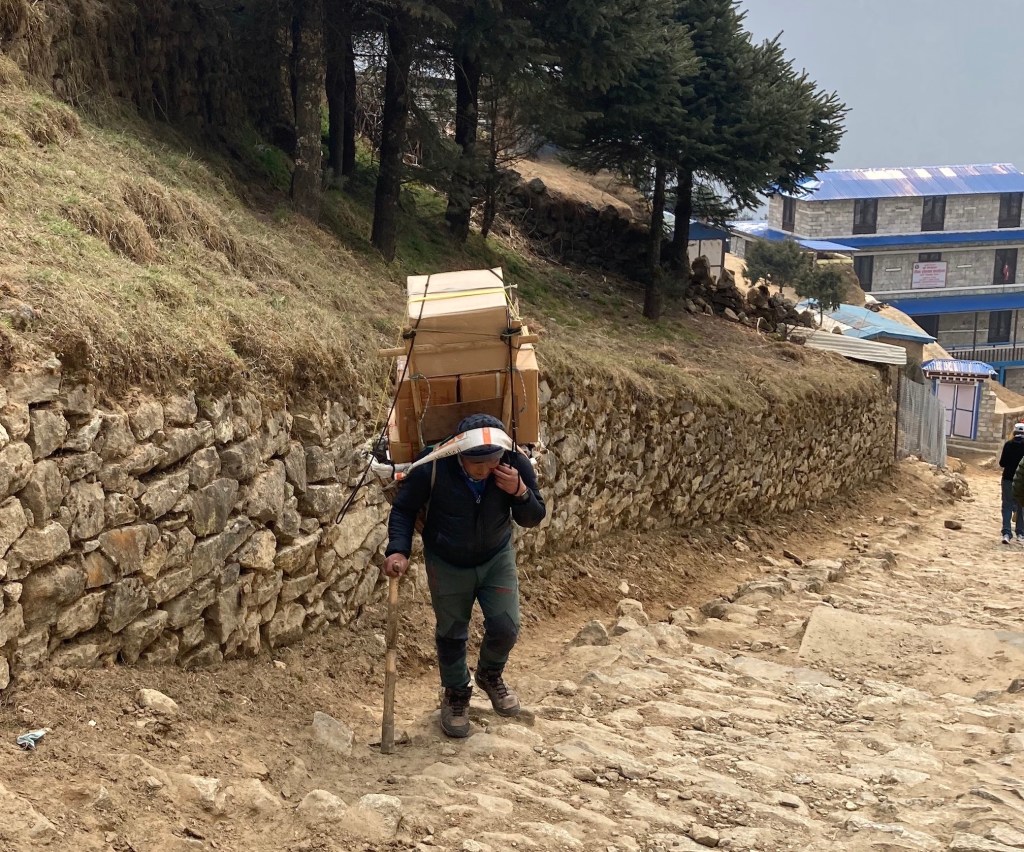
Some notes about the people and the place: almost all Nepalese and others who live here are amazingly fit. It would be hard not to be. Other than helicopters, there is no mechanized transportation here. Everything generally comes to all the villages and tea houses on the backs of yaks, yochios (hybrid cow-yak), or mules or is carried by men and women in baskets on their backs held lashed bands over their foreheads. And the size of their ‘packs’ is often twice that of two large duffel bags. Simply astounding. Pack trains number from just a few or over a dozen animals. They are mostly docile, certainly to humans, and worked very hard often carrying 2-2 ½ times what people carry.
Getting from point A to B, however short or long, is on foot, and most paths are steep and rough. Actual steps are rare but exist, produced by men doing back-breaking work to hammer large rocks into small ones for walkways and walls. A never ending task it seems.We did hike a stretch along the Dudh Koshi yesterday with “yak gates” at both ends to exclude hoofed creatures who were led along a different route.
Our meals have been substantial starting with a bowl of soup – lentil, garlic, or the one we had last night which was richer – all vegetarian so far. Copious quantities of rice are served sometimes with bok choy, onions/garlic, and egg. Mo-mo’s are dumplings with either vegetable filling (spinach, bok choy, garlic) or spicy meats. New potatoes are common, and sauces are made – lentil, tomato-based, to put on rice or potatoes. Steamed cauliflower, carrots, and bok choy are often available. And to wash it all down are many refills of lemon water, tea, and good coffee.
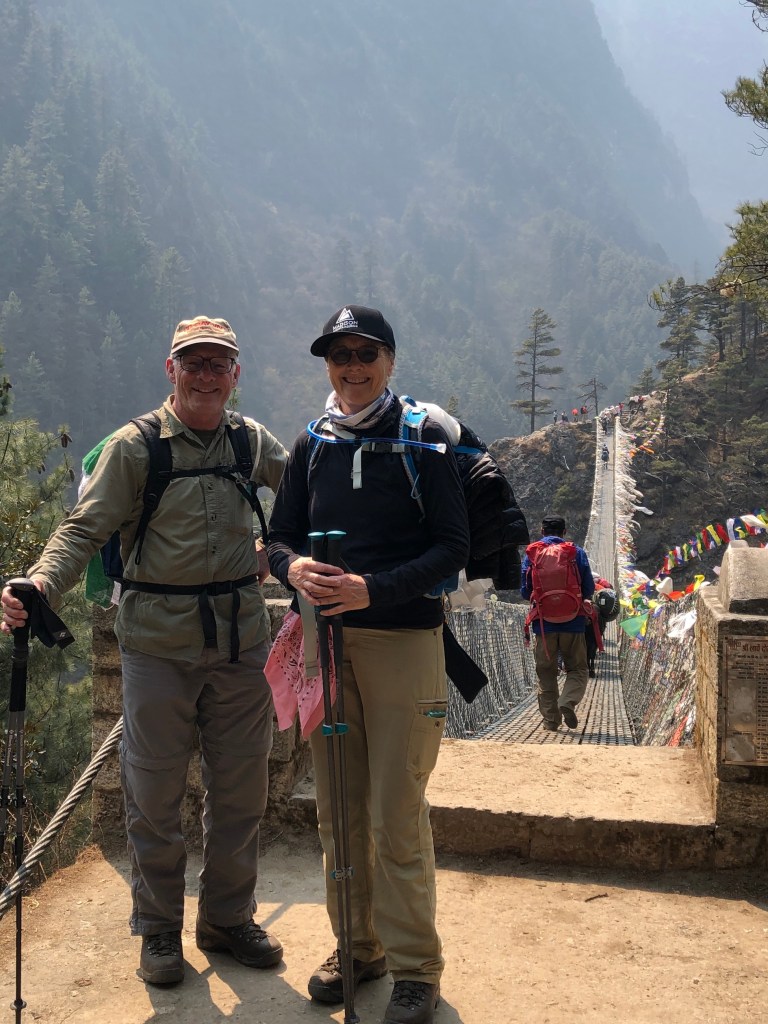
Bridge with the Draves continued. They are quite good!

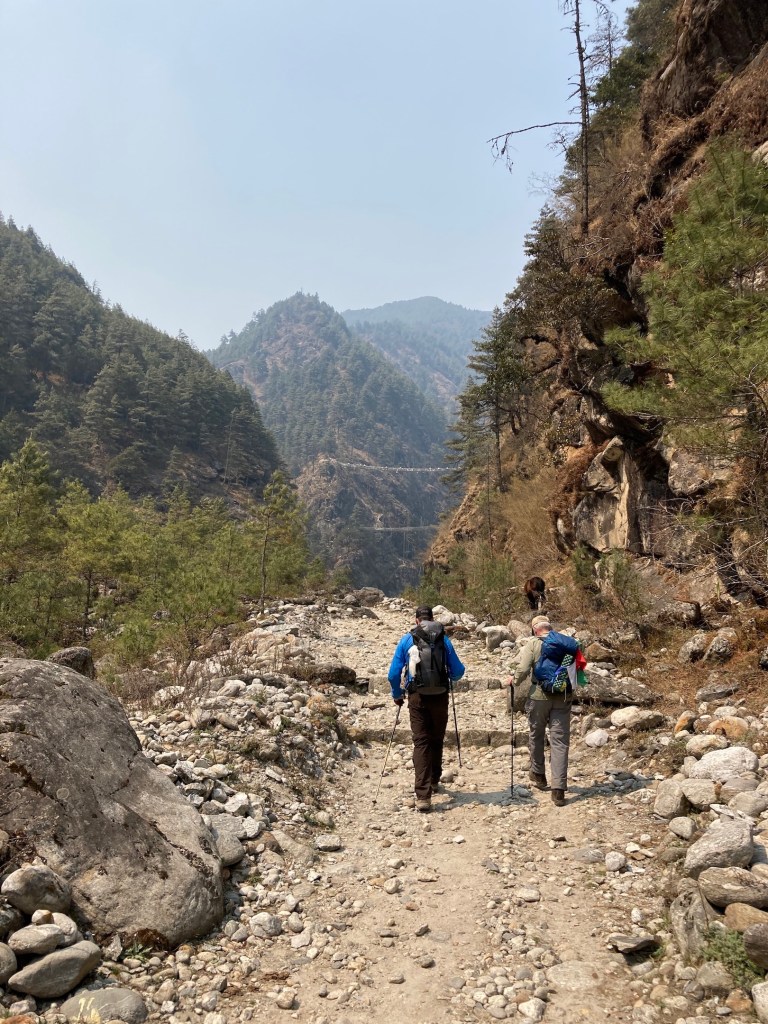
Short link walking here with high bridge in background.
 Stewart Travels